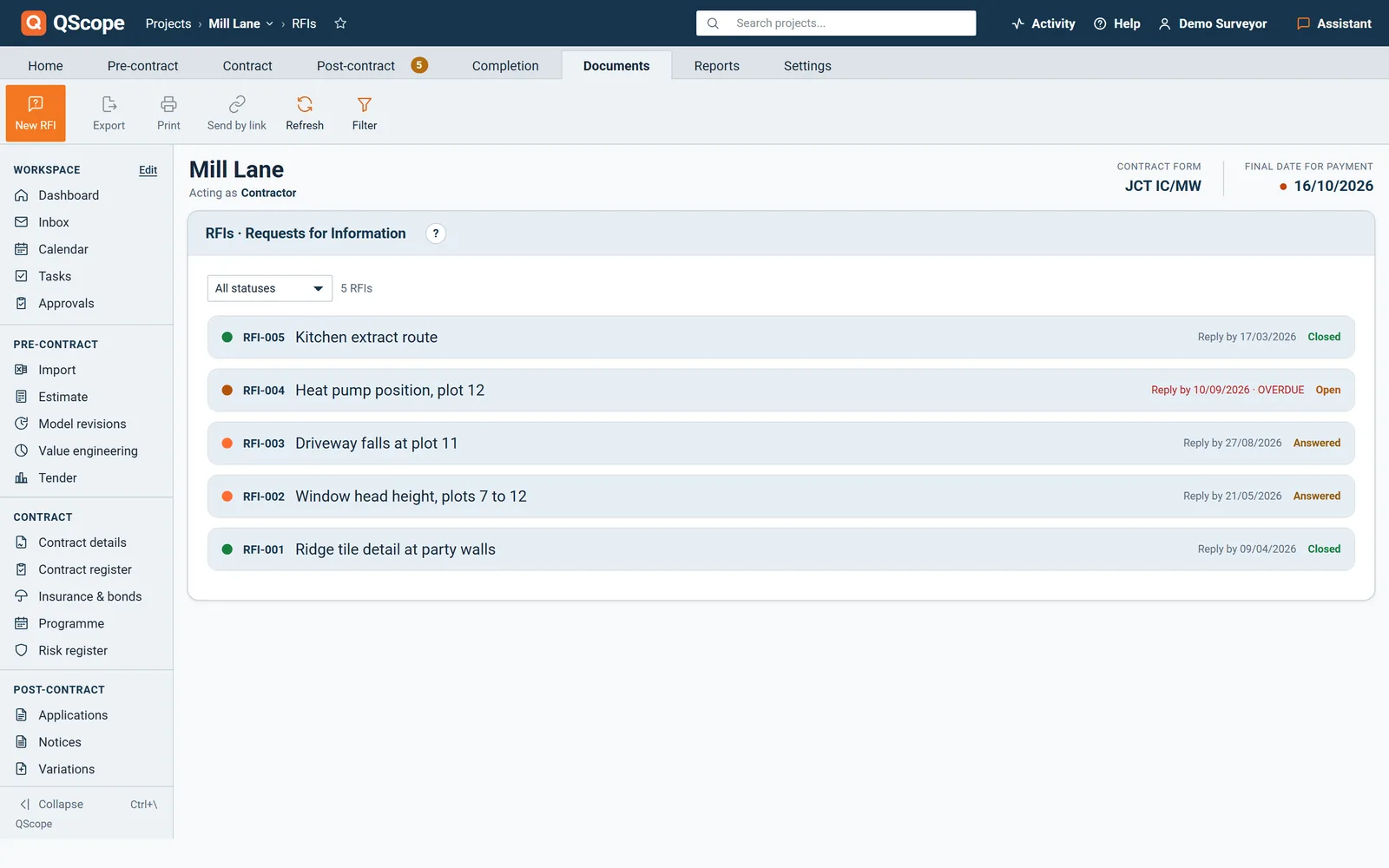
RFIs and tasks
The problem is never raising the question. It is noticing three weeks later that nobody replied, by which time the delay has already happened and somebody is going to pay for it.
30 days free, no card.
RFI-011 asked which lintel to use over a new opening. The answer changed the works, so it was instructed and raised as VO-06 with its own valuation basis.
Most RFIs close with an answer and cost nothing.
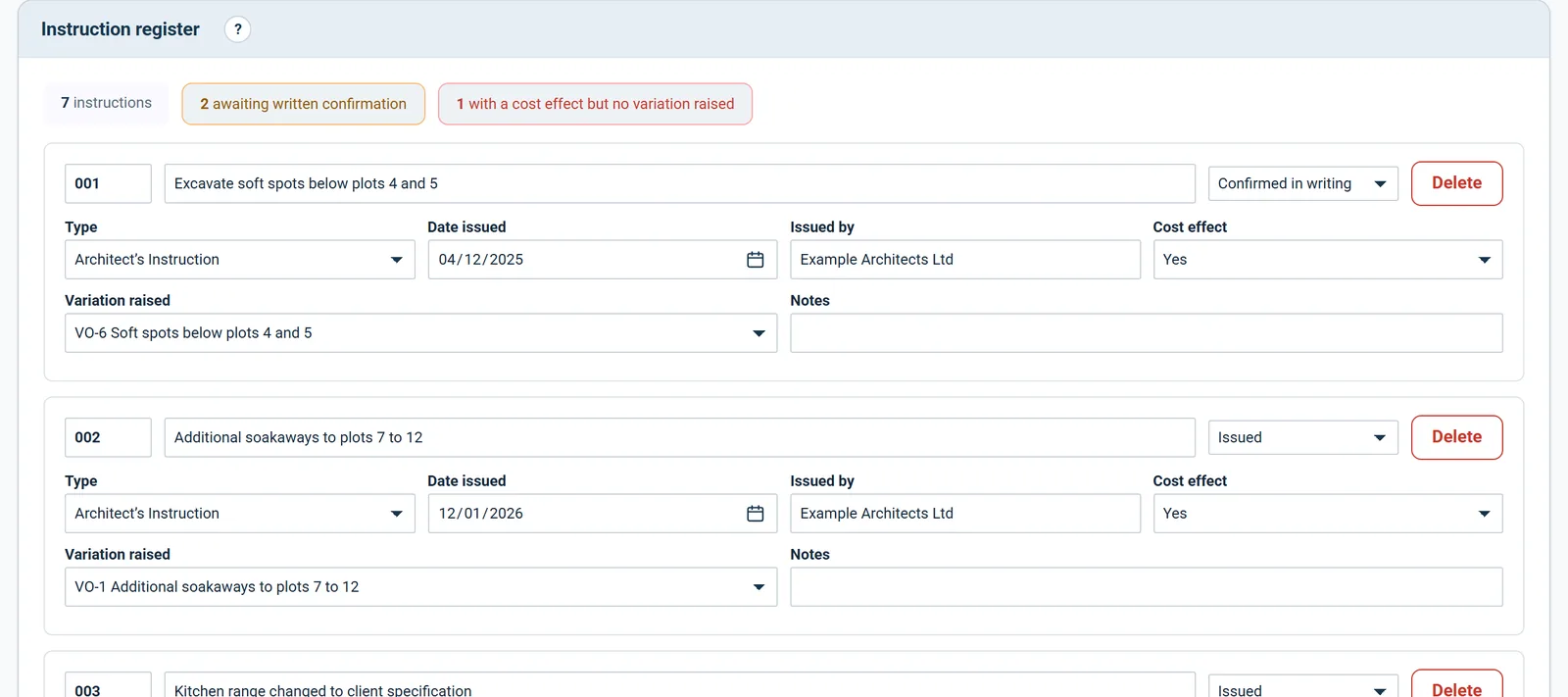
Some reveal that the works have to change, and the moment an instruction confirms it, the question becomes a variation with its own basis of valuation. Keeping RFIs and variations as separate records is deliberate. A question is not a change until somebody instructs it, and pretending otherwise fills the account with variations nobody priced.
RFIs
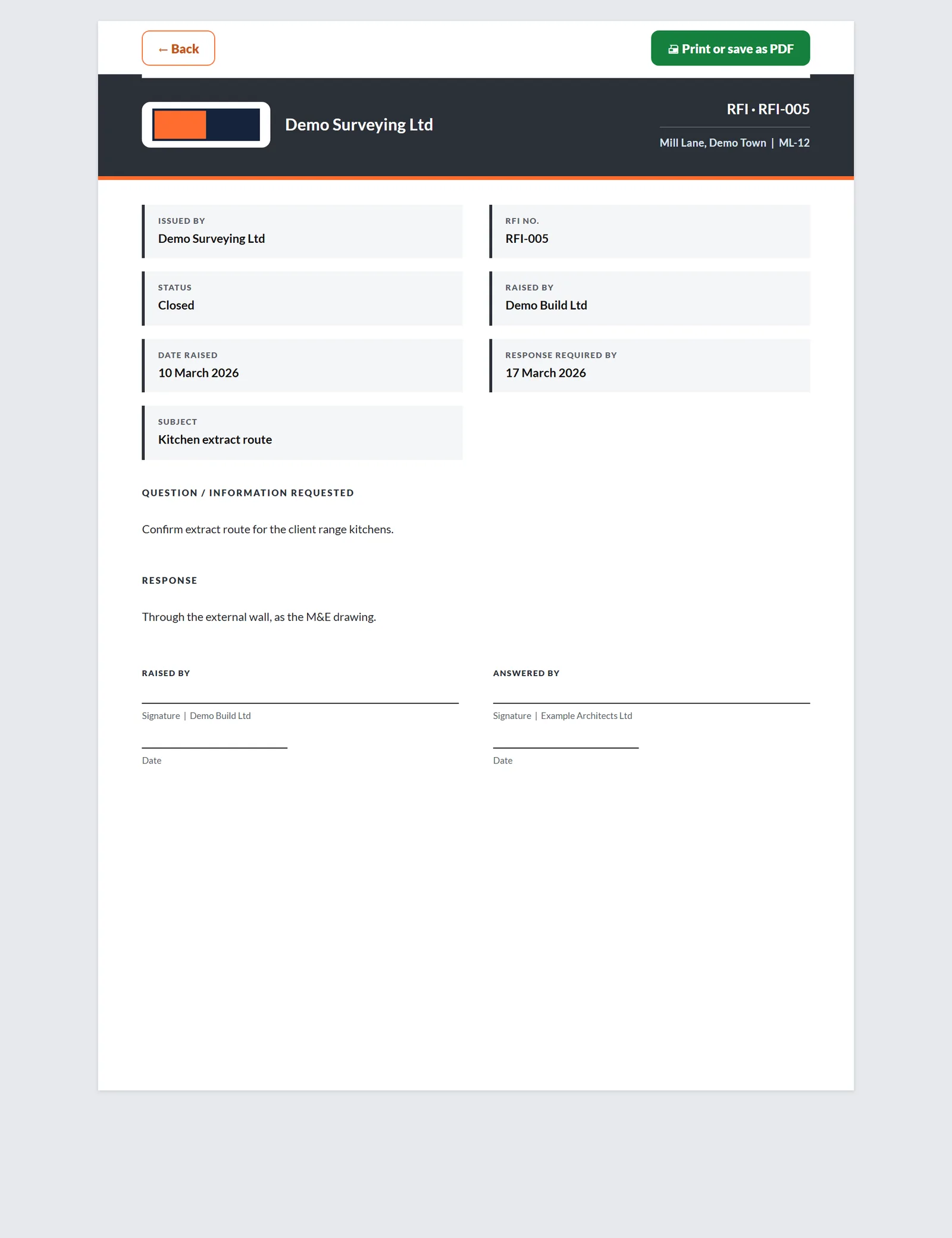
An RFI is worth exactly as much as the record of when it was asked and when it was answered.
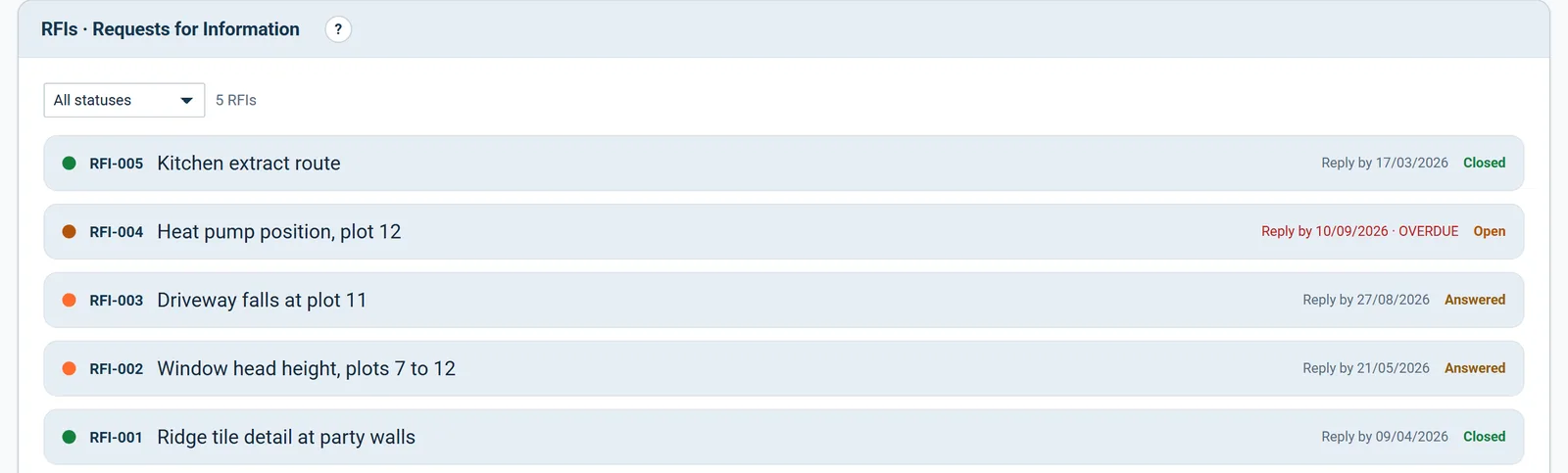
QScope keeps the question, the answer and both dates on one record, and counts the days it has been open.
Tasks
A list of open items on a report nobody opens is not a reminder.
Tasks work the same way: an owner, a due date and a status, counted in the same place.
Instructions
An RFI asks a question.
An instruction that answers an RFI and changes the cost of the works needs a variation against it, or it will not reach the final account.
Files and plans
An RFI is worth what the surrounding file can prove.
QScope keeps the RFI beside the drawings, photographs and files for the same project, so when the answer matters two years later the whole record is in one place.
Who it is for
You are applying
You price the change and defend itYou price the instruction, submit the variation and defend it when it comes back cut. Instructed work with no variation against it is money you have already spent.
Applying for paymentYou are certifying
You value the change and answer for itYou value the variation from the other chair and account for what you cut. The register you keep is the one the final account will be argued from.
Certifying paymentYou are doing both
You build the change, paid or notYou absorb the small changes as they come, and the ones nobody wrote down are the ones you end up building for free.
Doing both yourselfYou are reporting
You fund the change, priced or blindYou check that scope changes are priced and approved before money moves, because an unpriced variation is risk the facility is carrying blind.
Recommending a drawdownThe client, the architect and the tenderer are not on this list. They are the people you let in on a link: they see the one document you sent them, answer it, and that answer is written into the record. No account, no licence, no charge, on every plan.
The questions this page raises most often, answered without a sales pitch at the end.
No. If your main contractor runs RFIs through a dedicated site platform, keep using it. This exists so the commercial record of a question that affected time or cost sits beside the valuations, rather than in a system you lose access to at the end of the job.
Yes, with comment level access. Their entry is recorded against them in the audit trail, so the record of who asked and when survives.
Not automatically. An RFI that turns into an instruction becomes a variation, and you record it as one with its own valuation basis. Keeping them separate is deliberate: a question is not a change until somebody instructs it.
They stay on the record. Closed and open alike, with their dates, exportable with the rest of the project.
From the blog
Three pieces from the same corner of a contract as this page, answered at length and without a sales pitch at the end.
Instruction first, then the valuation ladder your contract sets: contract rates, adjusted rates, a fair price or dayworks. Where each rung applies, and why the smallest variations are the ones that never get paid.
Read nowNo single extra under two hundred pounds feels worth the awkward conversation, and thirty of them are a month’s wages. The three-sentence habit that captures small changes without souring the job, and the quote clause that makes the habit expected.
Read nowTime and money are separate entitlements with separate tests. Why an extension of time does not carry money with it, what has to be ascertained, and where these claims usually fail.
Read nowKeep reading
The problem is never raising the question. It is noticing three weeks later that nobody replied, by which time the delay has already happened and somebody is going to pay for it.
30 days free, no card.
Rather ask first? Write to help@qscope.co.uk and you will get a reply within one working day, Monday to Friday.