Instructions
A variation with no instruction behind it is the first thing an auditor pulls out, and the first thing a payer refuses. The register exists so that the answer is on file before the question is asked.
30 days free, no card.
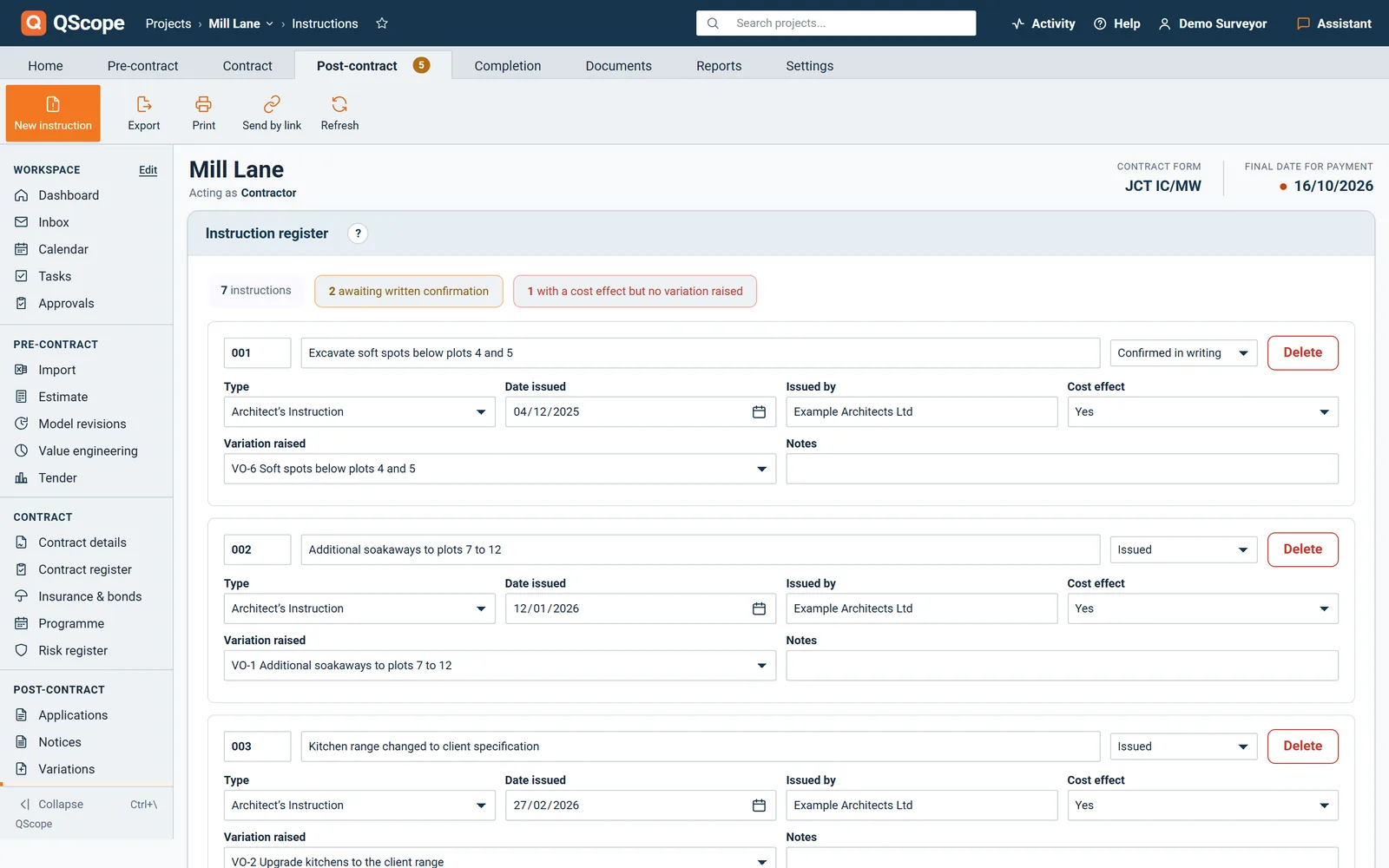
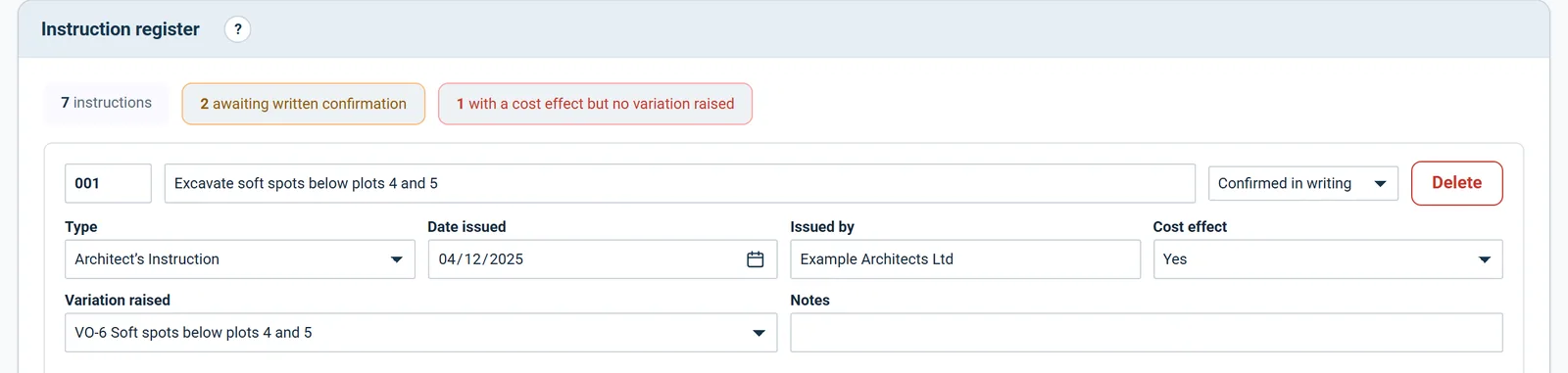
An instruction is the authority for a variation. This one has a cost effect and nothing has been raised against it.
Instructions are referred to by number in correspondence long after the project team has changed.
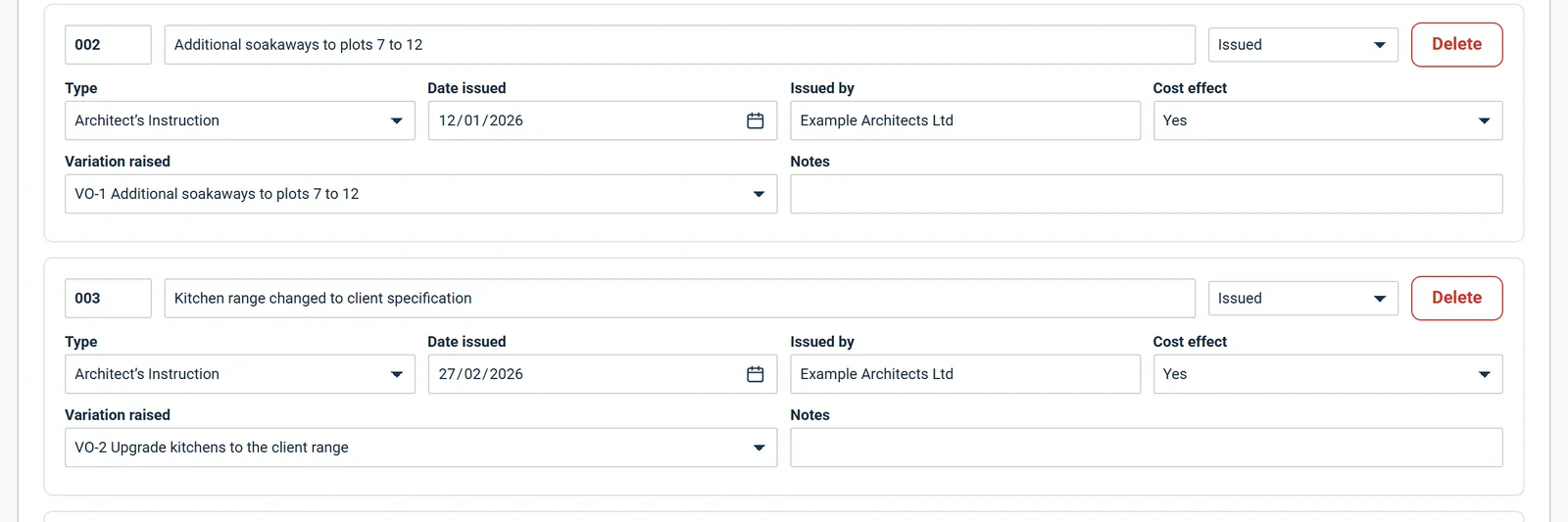
Keep the contract’s own numbering and the file stays readable; renumber it to suit a spreadsheet and it does not. QScope holds the number you give it, the date, who issued it and what it said, and prints the register as a document. Dayworks and variations both point back at it.
Instructions
The first is an instruction that changes the cost of the works and never becomes a variation.
AI-019 changes the cost of the works and has no variation against it. As things stand it will not reach the final account.

Variations
An instruction is the authority.
Link the instruction to the variation and both point at each other, so the account can be traced from the authority to the figure and back.
RFIs
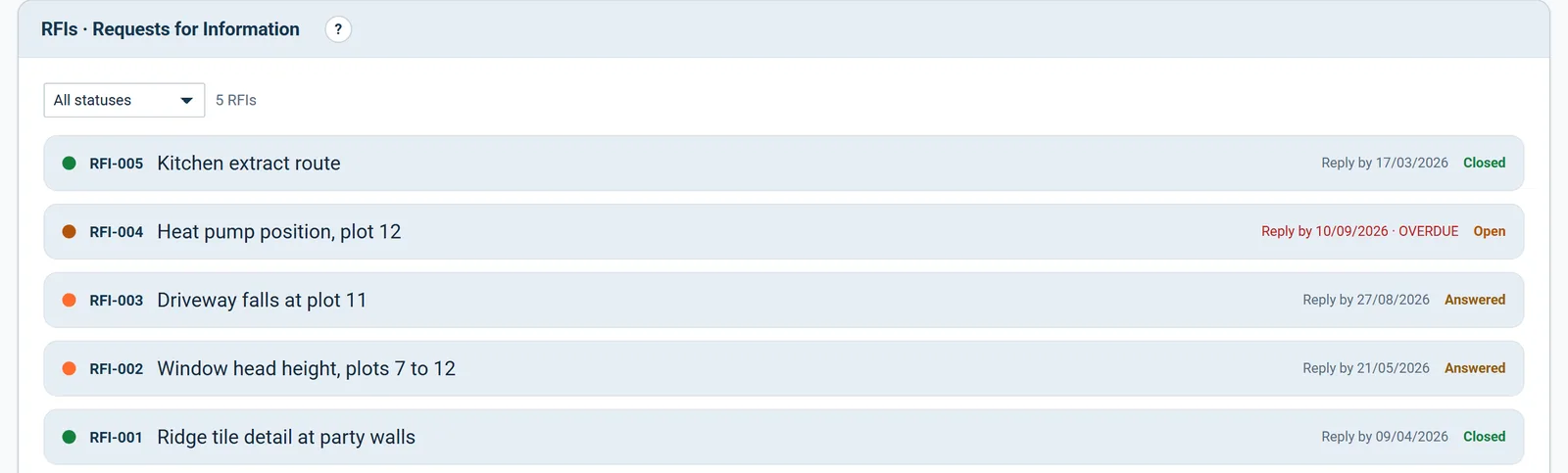
An instruction often begins as a question.
When a question becomes an instruction it becomes a variation, and the register keeps the thread from RFI to instruction to change on the same project.
Dayworks
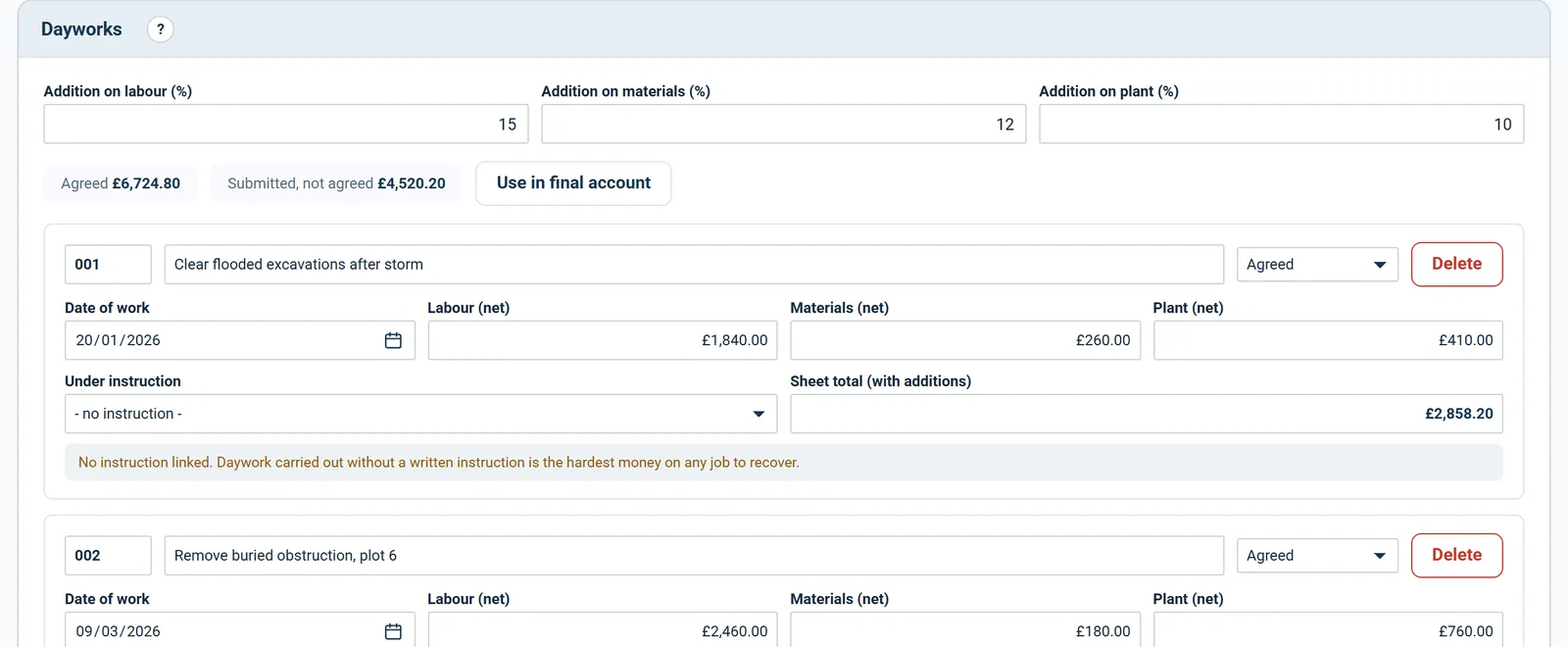
Where work cannot be measured at contract rates it is valued as daywork, and every sheet needs the instruction that authorised it.
Each daywork sheet links back to the instruction in the register, so the authority for the labour, materials and plant is on file before the sheet is submitted.
Instructions
Outside the UK the authority often sits with the Engineer, not an architect or contract administrator.
On FIDIC the Engineer instructs under 3.3 and the Variation is valued under Clause 12. The authority and the figure still point at each other.
Who it is for
You are applying
You price the change and defend itYou price the instruction, submit the variation and defend it when it comes back cut. Instructed work with no variation against it is money you have already spent.
Applying for paymentYou are certifying
You value the change and answer for itYou value the variation from the other chair and account for what you cut. The register you keep is the one the final account will be argued from.
Certifying paymentYou are doing both
You build the change, paid or notYou absorb the small changes as they come, and the ones nobody wrote down are the ones you end up building for free.
Doing both yourselfYou are reporting
You fund the change, priced or blindYou check that scope changes are priced and approved before money moves, because an unpriced variation is risk the facility is carrying blind.
Recommending a drawdownThe client, the architect and the tenderer are not on this list. They are the people you let in on a link: they see the one document you sent them, answer it, and that answer is written into the record. No account, no licence, no charge, on every plan.
The questions this page raises most often, answered without a sales pitch at the end.
A confirmation of verbal instruction. Where the contract administrator gives an instruction other than in writing, the contractor may confirm it in writing, and it takes effect if the administrator does not dissent within the period the contract allows.
Only the person named in the contract. An instruction from a clerk of works or a project manager who is not named does not vary the works, however reasonable it was.
No. It shows you the instruction has a cost effect and no variation against it, and you decide what to raise. Automatic creation would produce variations nobody had priced.
Yes, as CSV, and it prints as a formal register for issue with the final account.
The Engineer. On the FIDIC Red Book the Engineer issues instructions under Sub-Clause 3.3 and instructs Variations under Clause 13, valued under Clause 12 with daywork under 13.6. QScope holds the Engineer’s instruction in the same register as an architect’s instruction, under your own numbering.
From the blog
Three pieces from the same corner of a contract as this page, answered at length and without a sales pitch at the end.
Instruction first, then the valuation ladder your contract sets: contract rates, adjusted rates, a fair price or dayworks. Where each rung applies, and why the smallest variations are the ones that never get paid.
Read nowNo single extra under two hundred pounds feels worth the awkward conversation, and thirty of them are a month’s wages. The three-sentence habit that captures small changes without souring the job, and the quote clause that makes the habit expected.
Read nowTime and money are separate entitlements with separate tests. Why an extension of time does not carry money with it, what has to be ascertained, and where these claims usually fail.
Read nowKeep reading
A variation with no instruction behind it is the first thing an auditor pulls out, and the first thing a payer refuses. The register exists so that the answer is on file before the question is asked.
30 days free, no card.
Rather ask first? Write to help@qscope.co.uk and you will get a reply within one working day, Monday to Friday.