QScope

How it works

From an empty project to an issued certificate

Five steps, and you only do the first two once per job. Start with the next valuation on one live project rather than moving your whole portfolio.

30 days free, no card.

Tell QScope which contract you are on

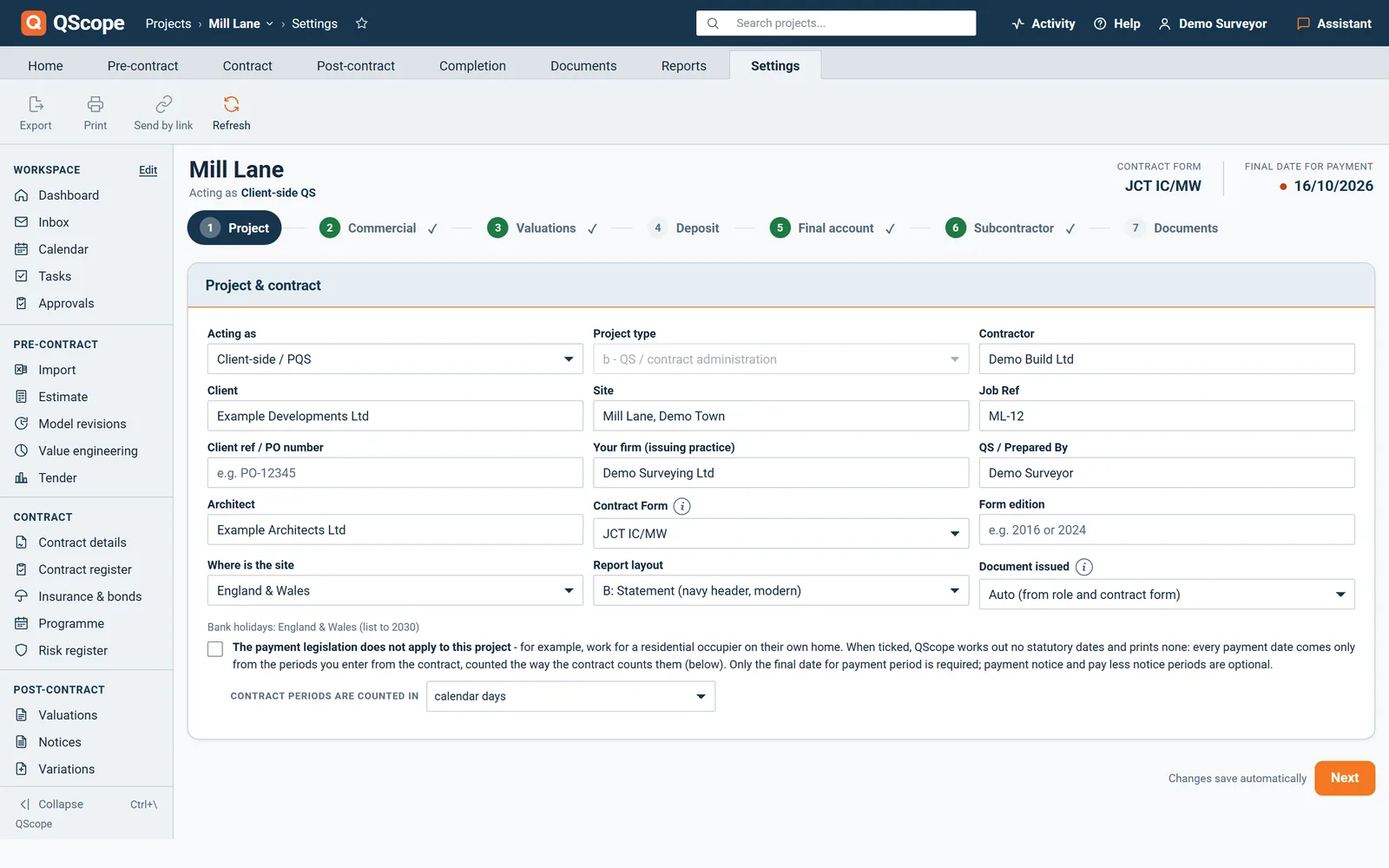
The contract form is not a label. It decides the day counts, the default retention rate and what your periodic document is called. On a UK contract the day counts are statutory; on FIDIC they are the contractual certificate and payment periods. Get it right here and every date after it follows.

  • Contract form: JCT, NEC, the Scheme or FIDIC
  • Contract sum, retention rate and rectification period
  • Valuation cycle and the day of the month you value
  • Your role on the job, which sets the document names

Once per project, about ten minutes.

Step 2

Put the priced works in

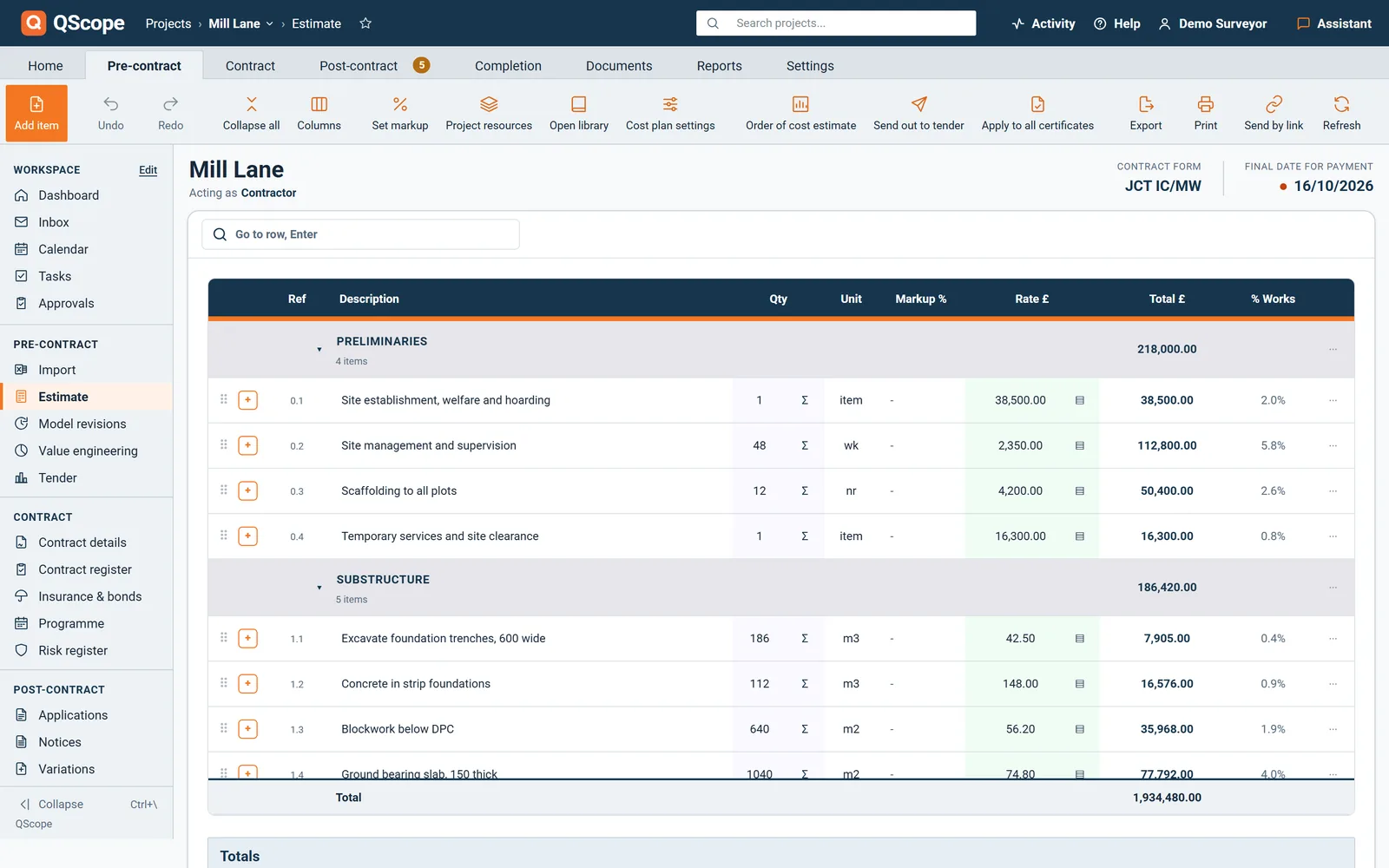
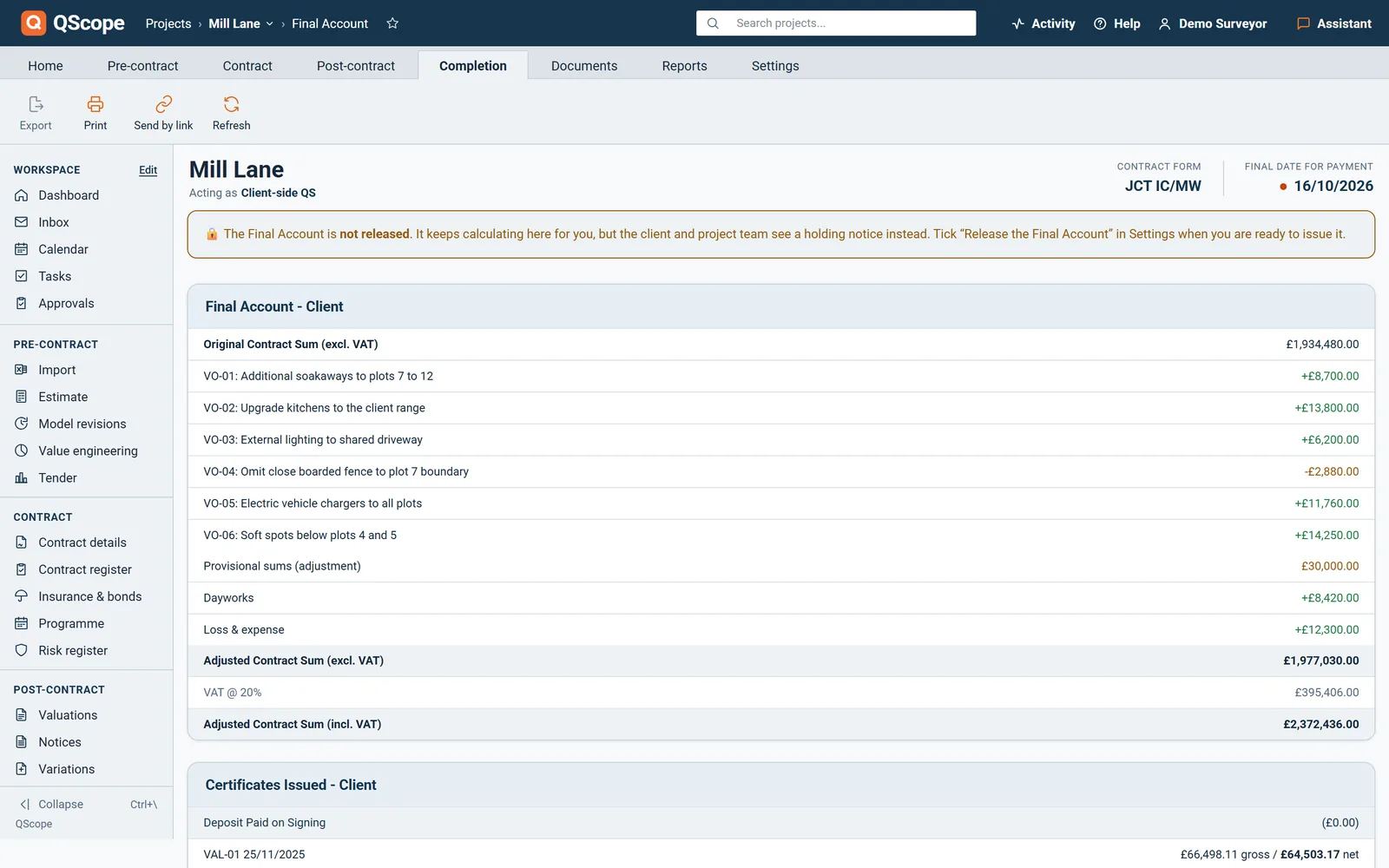
Enter your bill of quantities, or bring it in from the pricing you already did. Sections, provisional sums and omissions all carry through, so the certificate the client receives has the same structure as the bill they signed.

  • Sections and subtotals kept as you priced them
  • Omitted work marked, not deleted, so the audit trail holds
  • Subcontract packages priced separately where you have them
  • Nothing re-typed at valuation time

Once per project. The longest step, and the last time you touch it.

Step 3

Value the works, your way

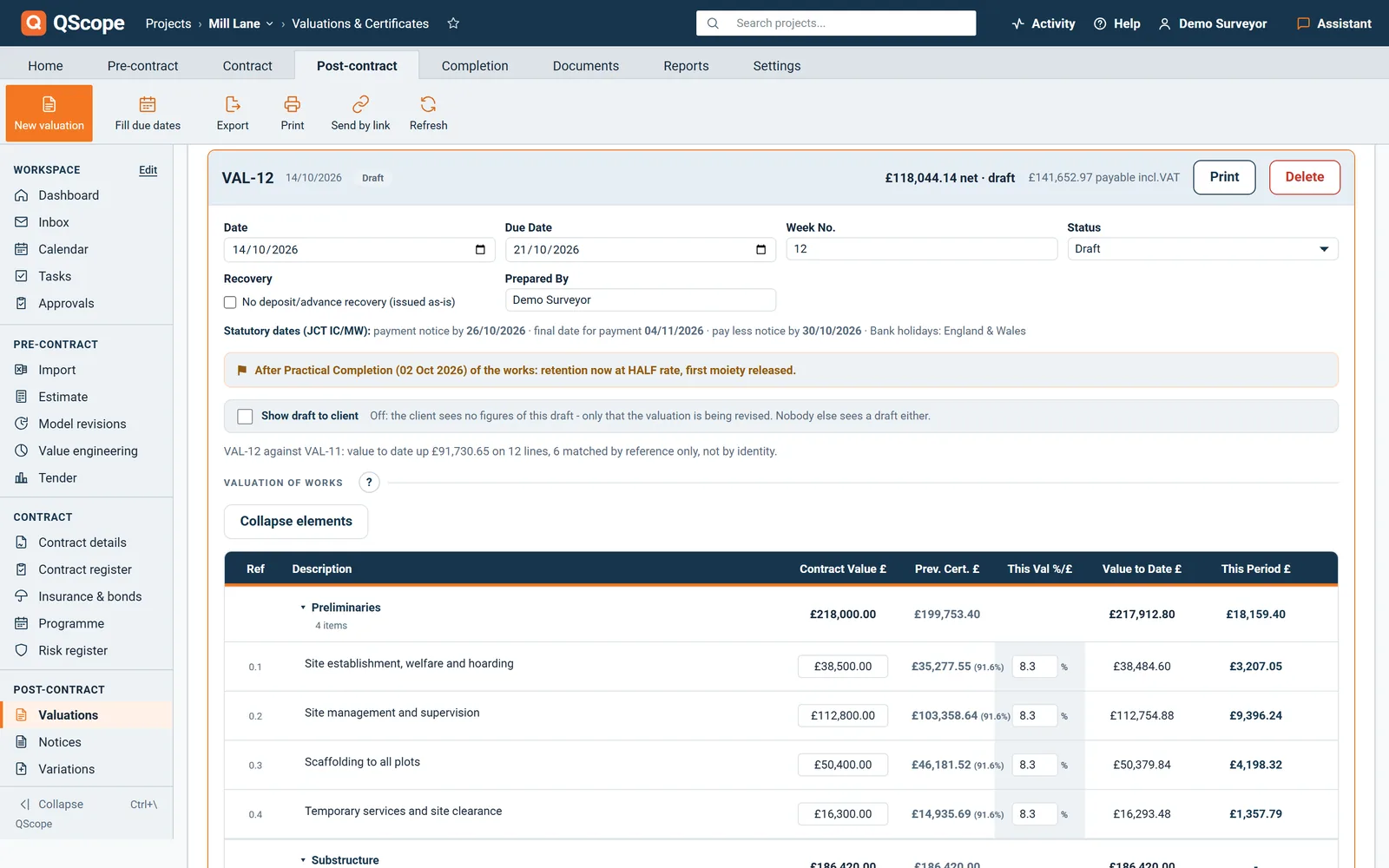
Go down the lines and put in a percentage where the work is measured, or a fixed sum where it is a lump, a provisional sum drawn down, or dayworks off a sheet. Retention and previously certified calculate as you type.

  • Percentage or fixed sum, switchable line by line
  • No line can be certified past 100 per cent of its value
  • Approved variations pulled in as valuation lines
  • Materials on site added as an advance and recovered later

Every valuation. This is the step QScope exists to shorten.

Step 4

Check the dates before you issue

Enter the date and QScope returns the payment dates for your contract form. On a UK contract that is the payment notice deadline, the final date for payment and the pay-less deadline, with weekends and bank holidays excluded. On FIDIC it is the certificate and payment dates, counted in calendar days.

  • Dates printed on the face of the certificate, not just on screen
  • The statutory statement of the sum due and its basis included
  • Deadlines repeated on the project list across every job
  • Recalculated if the due date moves

Every valuation. The step that costs the most when it is skipped.

Step 5

Issue it, and let the client look

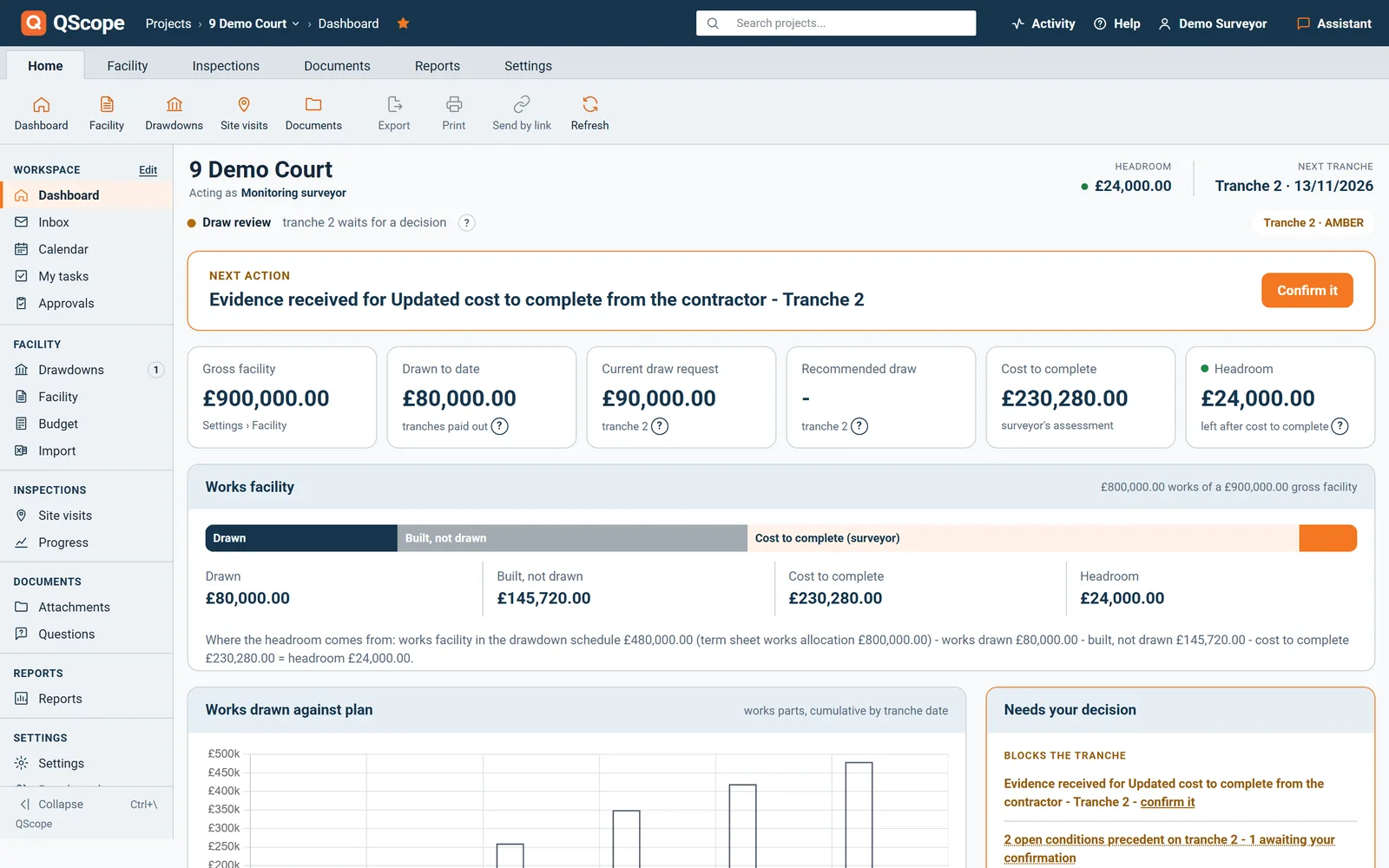
Print on your own letterhead with your firm name and logo. Then send the client a guest link so the next time they want an update they look for themselves instead of emailing you.

  • Documents carry your branding, never QScope
  • Guest link needs no account and costs nothing
  • Cost report and risk register stay hidden from guests
  • Every step recorded in an audit trail you cannot edit

Every valuation, and the reason your inbox gets quieter.

Getting started

What the first afternoon looks like

You do not need to move your whole portfolio to find out whether this works for you.

Which project should I start with?

A live job with a valuation due in the next two weeks. Not the biggest and not the most awkward. You want to reach an issued certificate on the first afternoon, because that is the point where you can judge whether QScope saves you time.

Do I have to enter the whole bill?

Not to start. Enter the sections you are actually valuing this period and add the rest as you go. A partial bill still produces a correct certificate for the work you have priced.

What about the certificates already issued on that job?

Enter the previously certified figure against each line and carry on from there. QScope does not need the history of every past valuation to produce the next one correctly.

What if I decide against it?

Export everything and walk away. Export stays available during the trial, after it ends, and for 60 days after a cancellation. Your data is not held hostage to the subscription.

Start free trial

From an empty project to an issued certificate

Set the contract up once, put the priced works in, and the valuations, notices and certificates come out of the same record from then on.

30 days free, no card.

Rather ask first? Write to help@qscope.co.uk and you will get a reply within one working day, Monday to Friday.