Functions 1 to 28
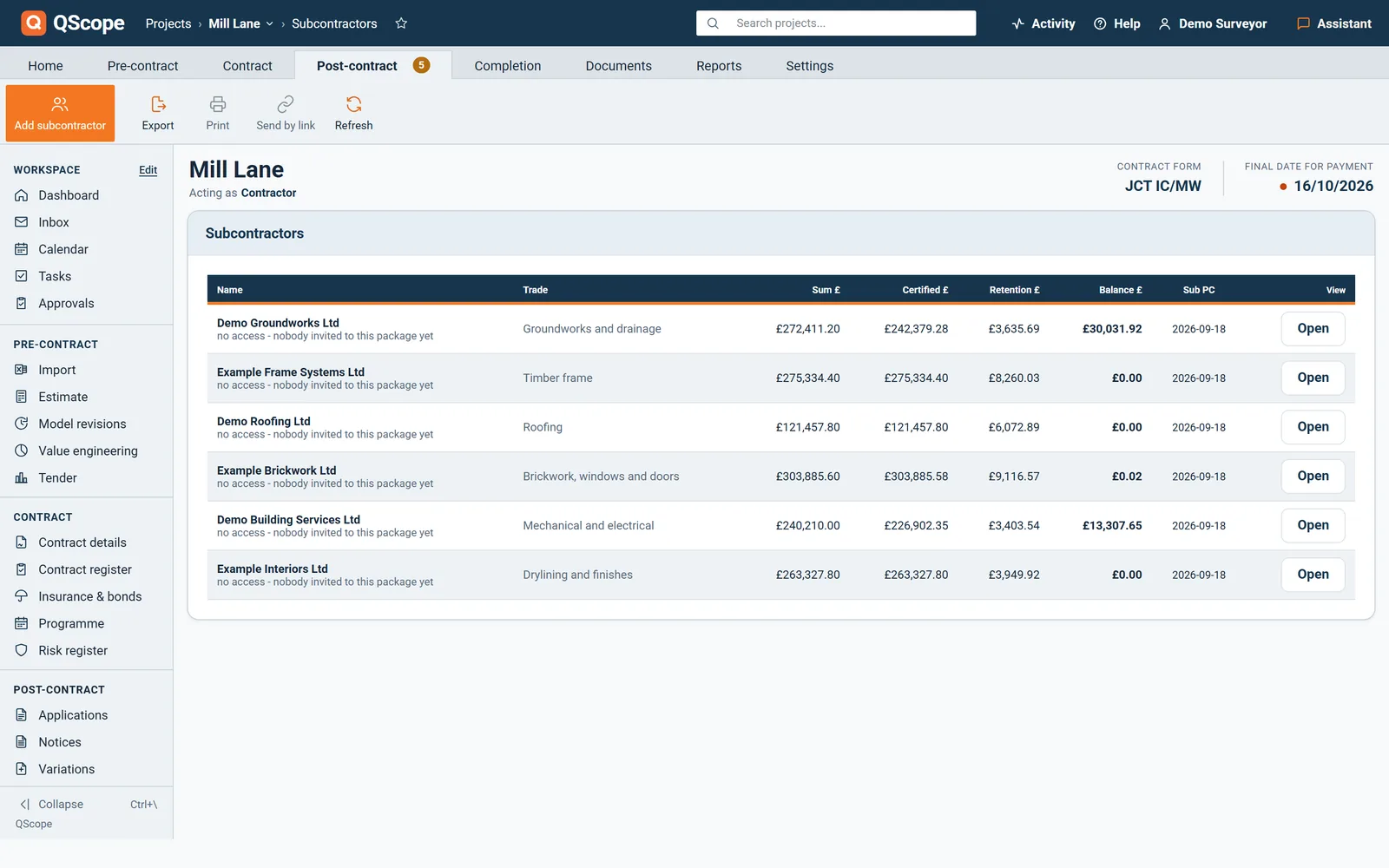
01Add a subcontractor from the Subcontractors tab with a name, a trade and the sections of your cost plan they work on.
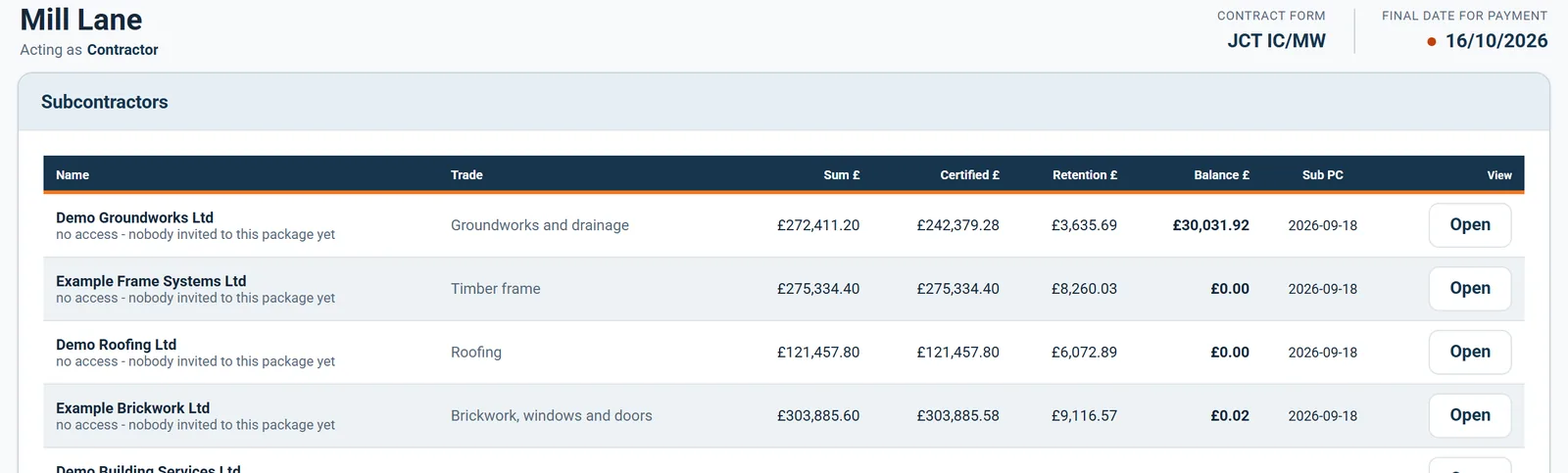
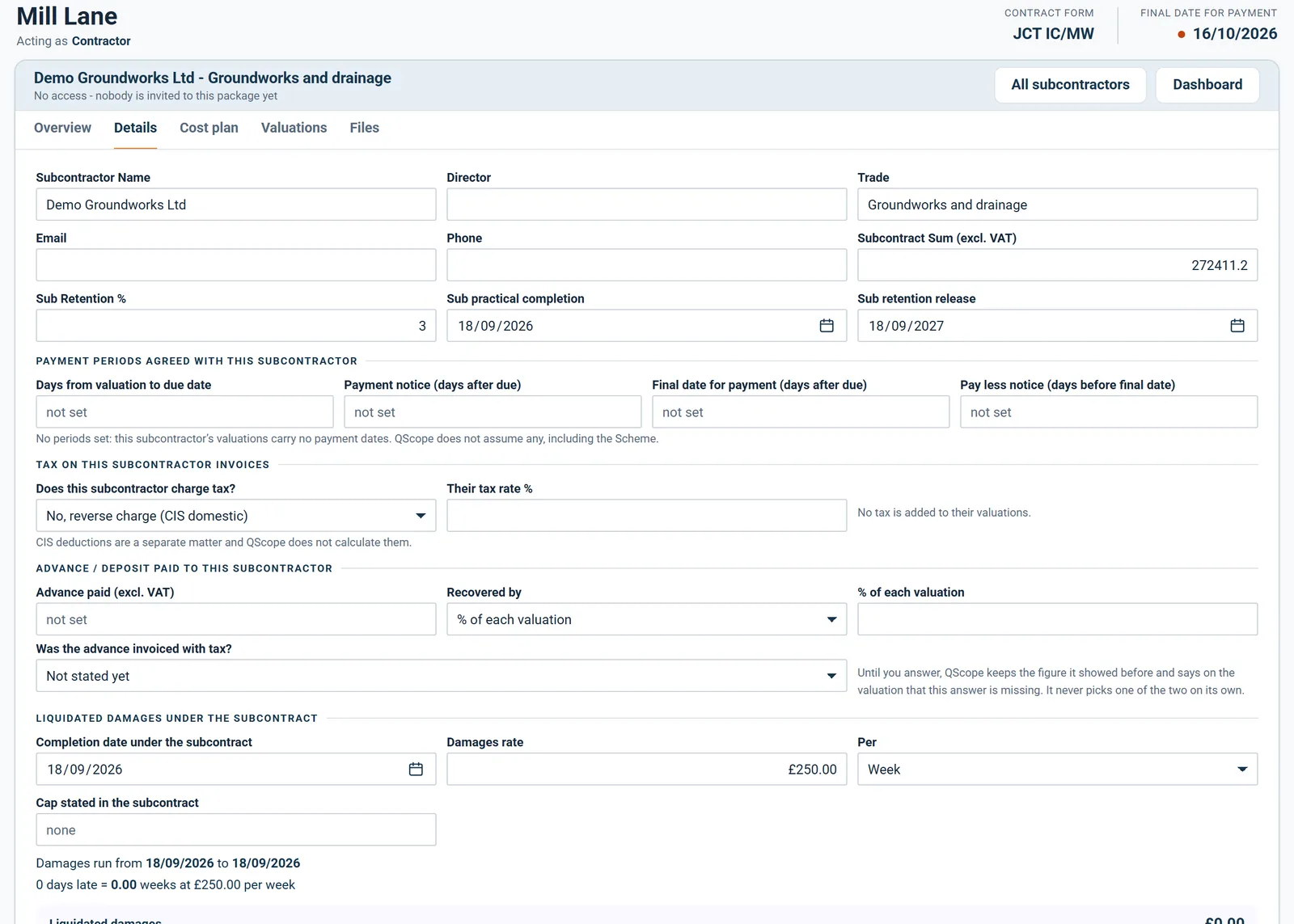
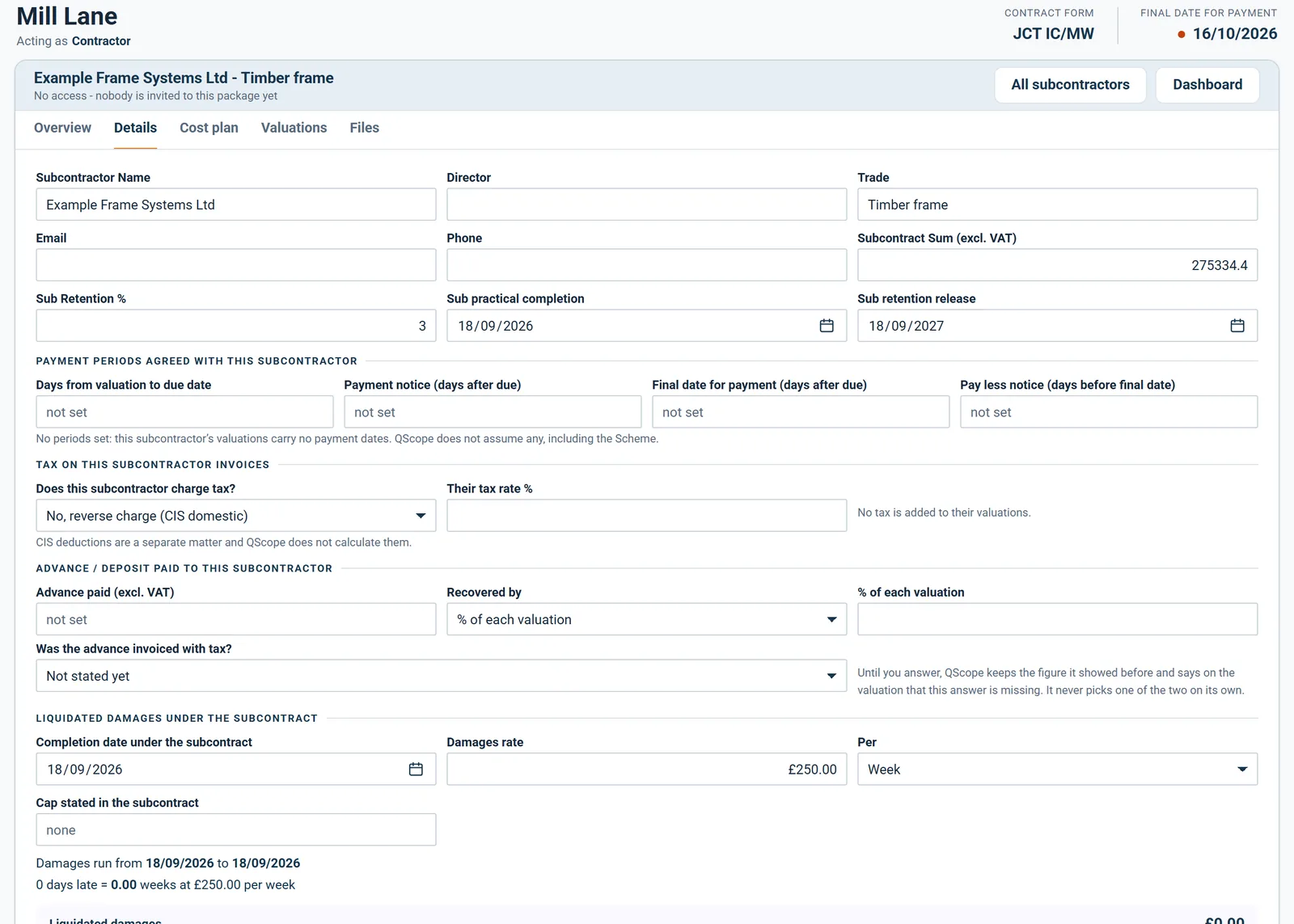
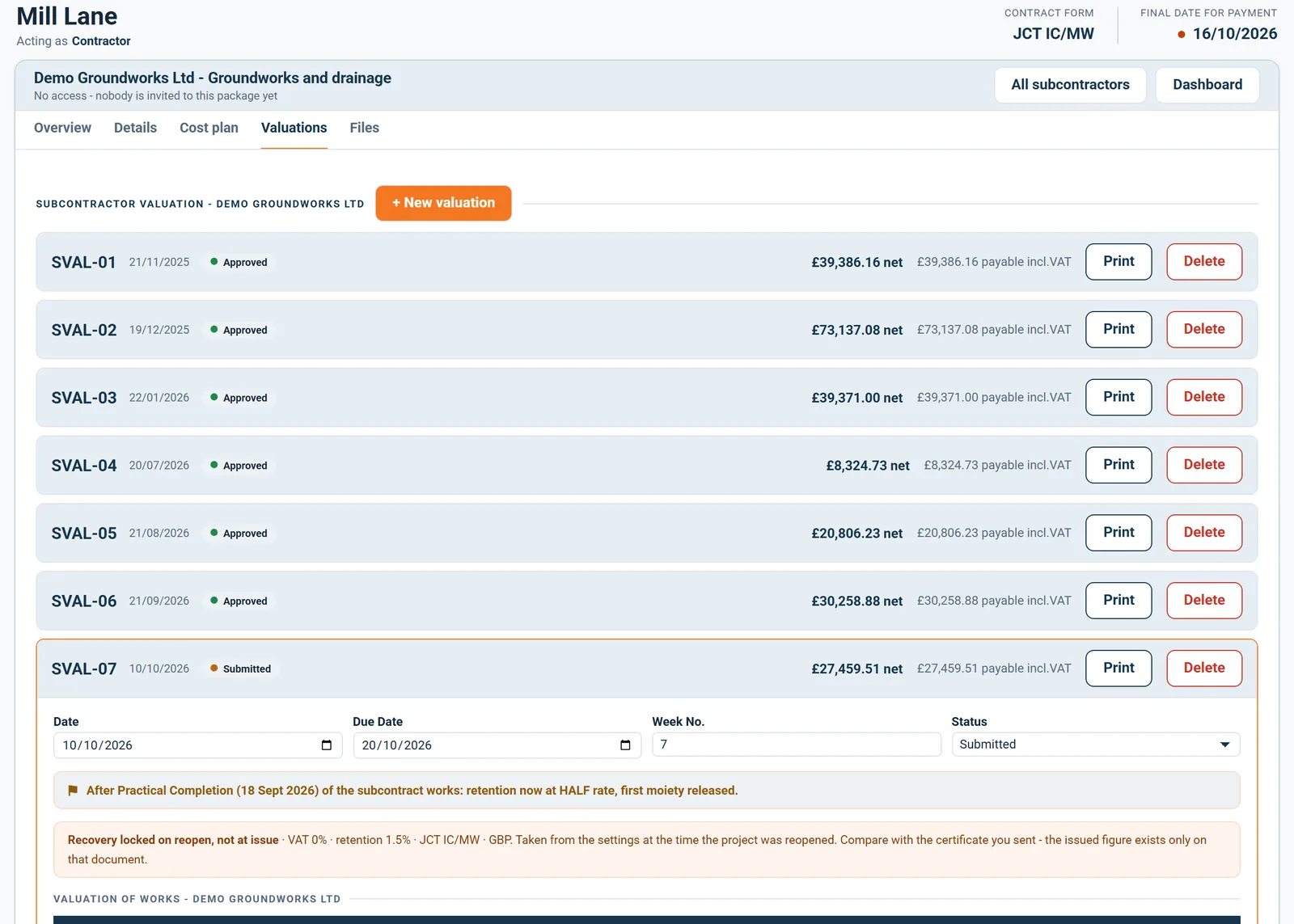
02Each package on the list says who has access to it, or that nobody is invited yet.
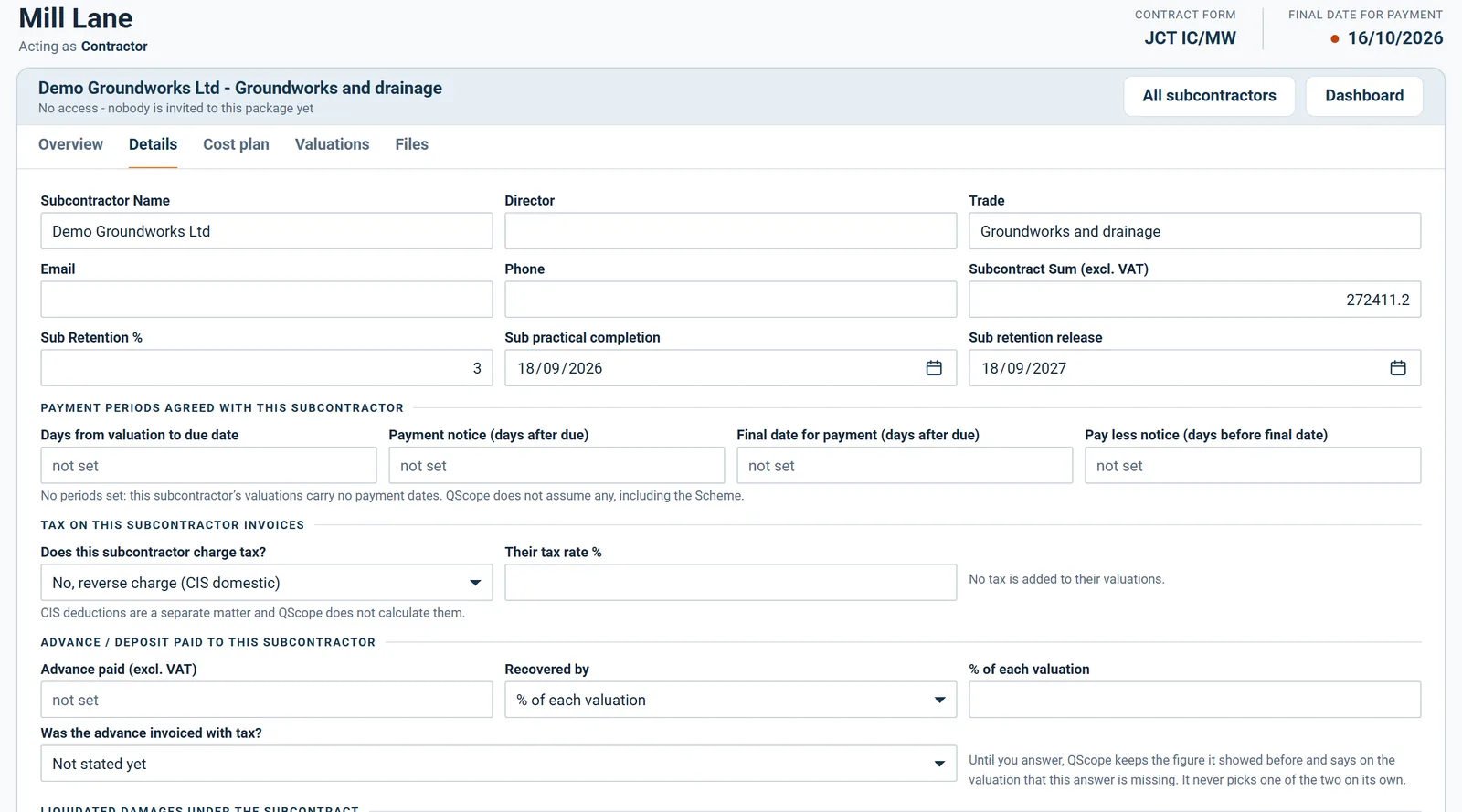
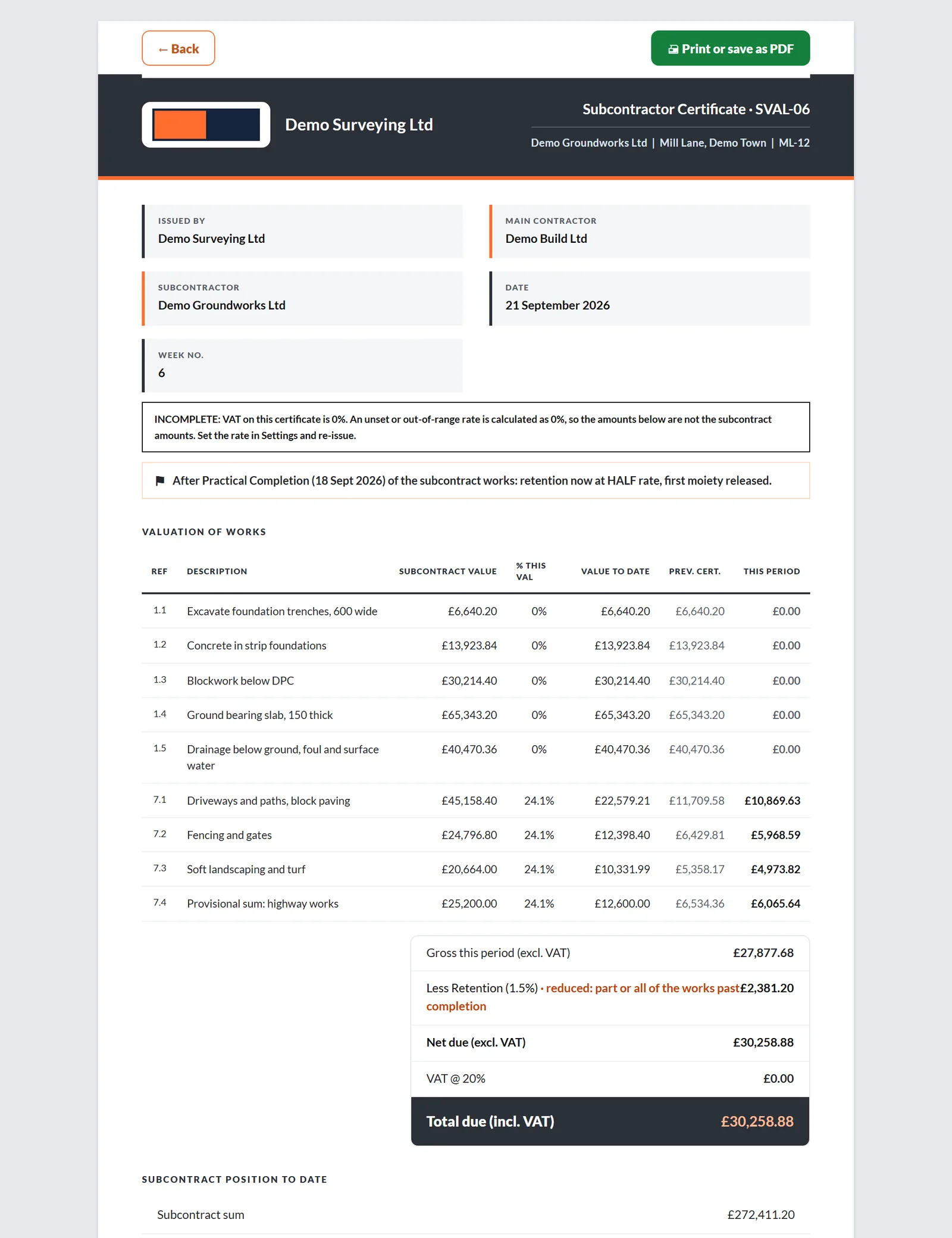
03Details holds the subcontractor's director, email and phone, and the director's name goes on the signature block of the certificate.
04Say whether the advance was invoiced with tax, and the valuation charges tax on the right figure.
05Keep a register of delay events for each subcontractor, and only weeks marked Awarded move their completion date.
06Tick which sections of the main cost plan each subcontractor works on.
07A subcontractor can only be removed when nothing points to the package, and QScope lists what still does.
08A subcontractor's estimate comes in through Import from spreadsheet on the Estimate tab, choosing the subcontractor side on the review screen.
09Each line in a subcontractor's cost plan has the same row menu as your own: add a row, insert a section, build up a rate, omit or delete.
10Every further package gets its own cost plan table with rows and section dividers.
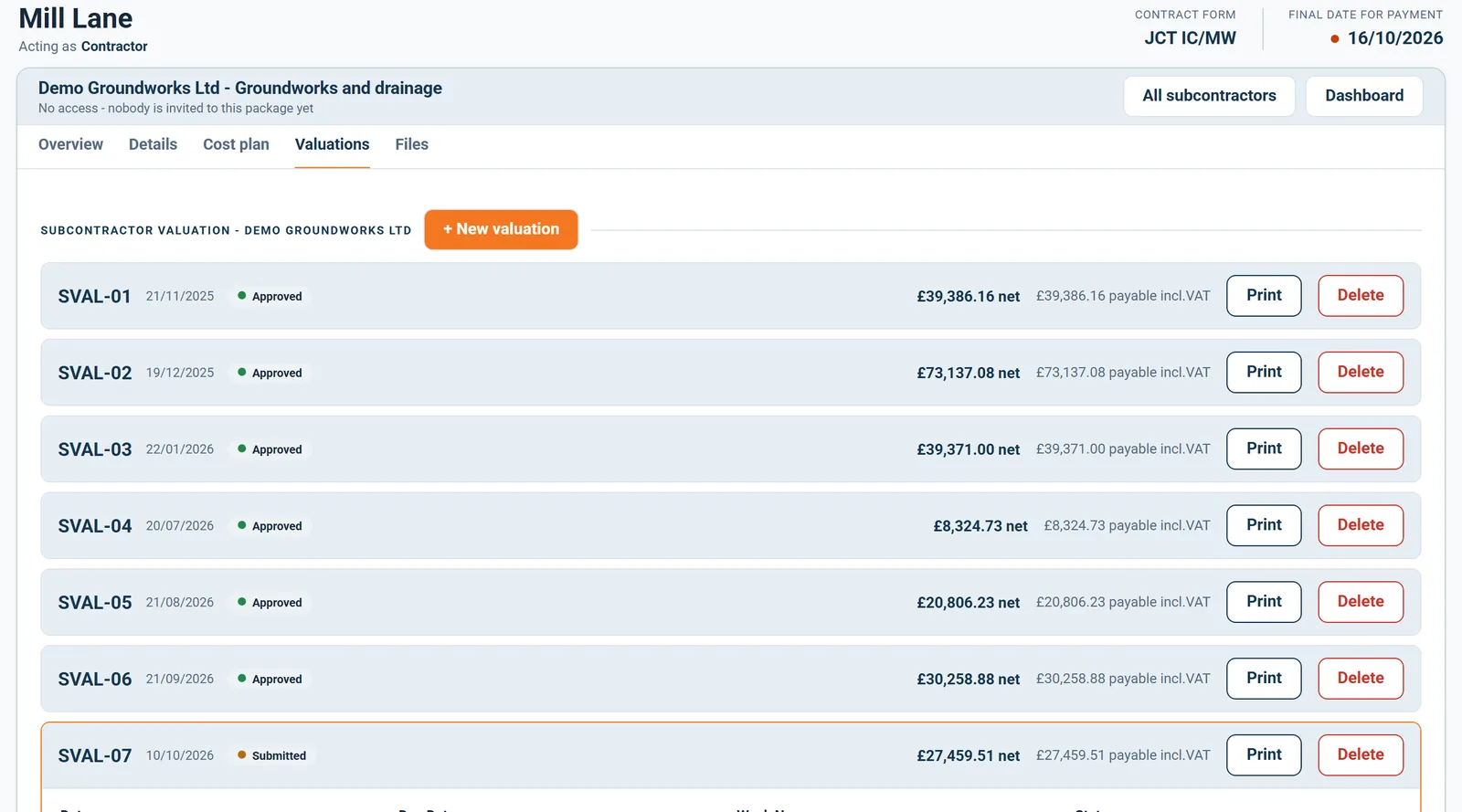
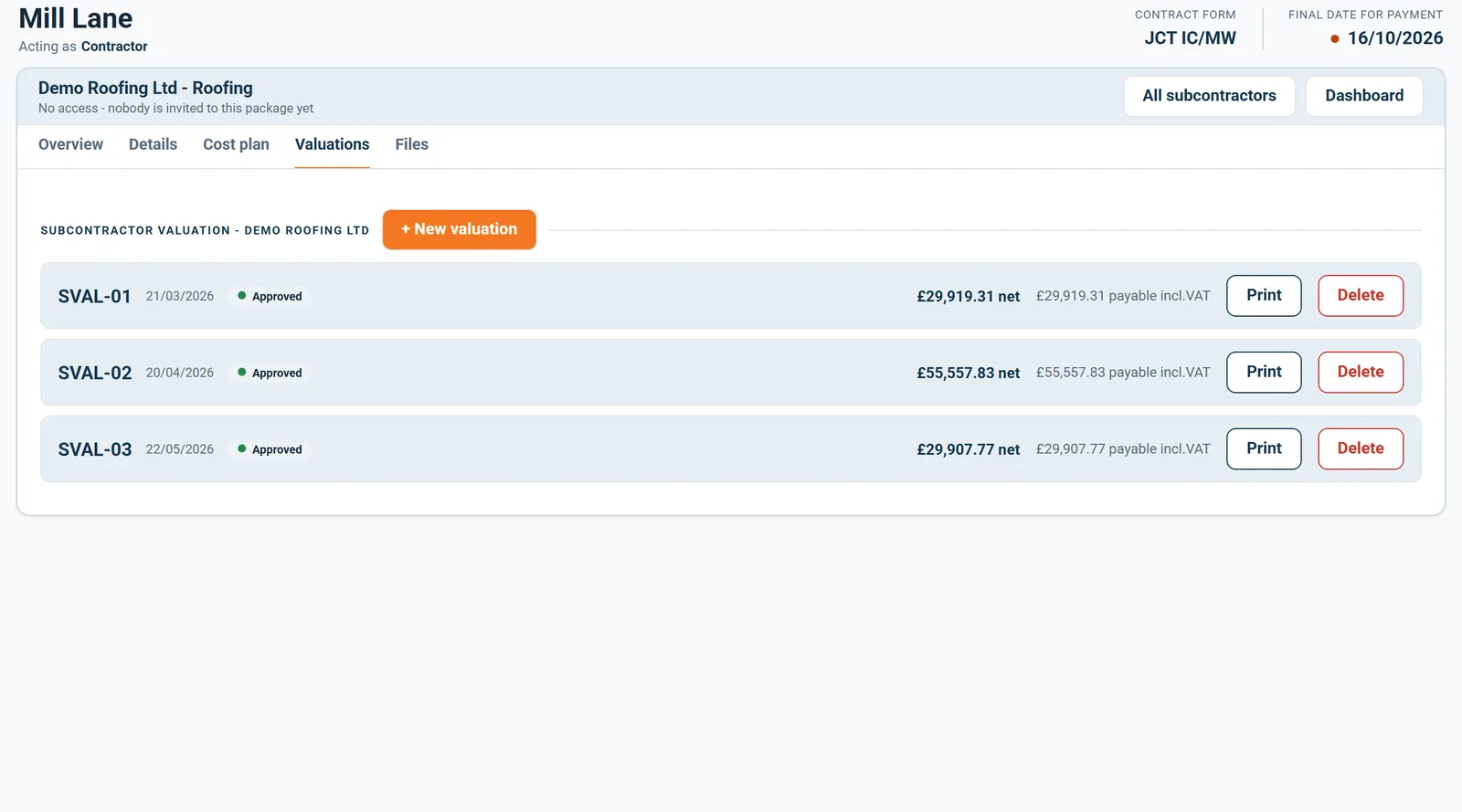
11Each subcontractor valuation is numbered SVAL with its date, status, net amount and amount payable.
12A subcontractor valuation is Draft, Submitted or Approved, and Submitted or Approved counts as issued.
13Value any line by percentage or by a fixed sum for the period.
14Add the subcontractor's approved variations to a valuation, and they are valued like any other line.
15Remove lines that are not claimed this period with one button.
16Skip advance recovery on a single valuation with one tick.
17Each subcontractor valuation has its own notes box.
18Issuing a valuation that puts you ahead of the subcontractor shows a warning but does not stop you.
19Putting an issued valuation back to Draft needs a reason, which is recorded in the project journal with your name.
20A draft valuation can be deleted, an issued one cannot.
21Settings has a grid showing which subcontractor works on which section of the cost plan.
22A package cannot be added without a name, and a new package opens on its Details tab.
23Balance counts only issued valuations, so a draft never reduces it.
24If you invite someone on the subcontractor side without picking their package, the list tells you they get no figures until you do.
25The heading of each package shows whether anyone has access to it.
26Once all four periods are set, each valuation shows its payment notice, pay less and final payment dates, fixed when it is issued.
27Until you answer the tax question, QScope adds no tax to that subcontractor's valuations and says so on the valuation.
28An overpayment warning appears when certified money plus the unrecovered advance is more than the works are worth.
Functions 29 to 56
29QScope shows how many days late the subcontractor is and what that comes to, and states that the figure is not deducted.
30A damages rate with no subcontract completion date produces a warning instead of a figure.
31Deleting an awarded extension asks first, because it increases the damages you would claim.
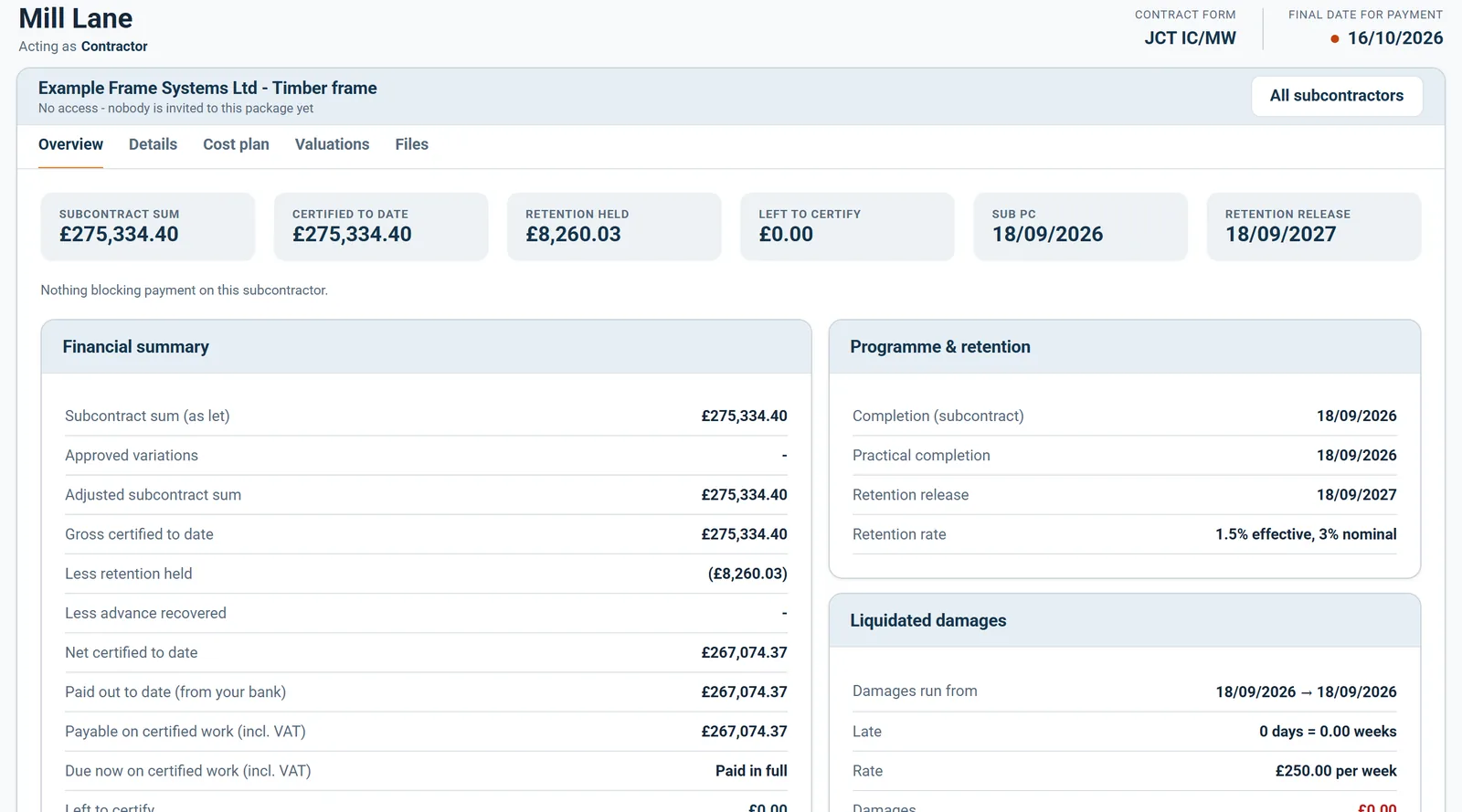
32Omitting a line in a subcontractor's cost plan marks it omitted on their valuations.
33If more money has left your account than the certified works are worth, the Overview says by how much and how much retention you hold as security.
34A package with no retention rate is flagged before you issue a valuation.
35A package with no sum and no cost plan is flagged, because balances and the overpayment check cannot work without one.
36Liquidated damages that have been calculated but not deducted appear as a warning on the Overview.
37When nothing stands in the way, the Overview says nothing is blocking payment.
38The financial summary separates net certified to date from paid out to date, so certified money is never read as paid.
39The programme card shows the subcontract completion date, extensions awarded, the revised date and the retention rate in force.
40Variations raised for a subcontractor are totalled on their Overview, with any still awaiting a decision.
41The valuations card shows how many have been issued and the latest net amount.
42A line cannot be certified past 100 percent, and QScope says how much is left on it.
43A line certified beyond its own value is marked with the amount and percentage over.
44A valuation that certifies more than the whole subcontract shows the excess before you sign.
45After the subcontract practical completion, retention on their valuations drops to half rate, and it is released in full after the release date.
46When an advance is recovered, the valuation states what it came to before the recovery.
47If the advance tax question is unanswered, the valuation says the figure rests on that assumption.
48A payment date can only go on an issued valuation.
49A valuation that recovers part of an advance with tax cannot be issued until you say whether the advance was invoiced with tax.
50Issuing with an unset or out of range rate asks you first, because that rate is calculated as zero.
51If settings change after issue, the valuation is marked revised since issue and lists what changed.
52The certificate states when no tax has been added and why, and that this is not a statement that tax is not chargeable.
53Every change to a subcontractor valuation is recorded in the project journal, and the server refuses edits to issued ones.
54If you are the PQS or the subcontractor on a project, the Subcontractors tab does not appear.
55A variation assigned to a subcontractor changes only that subcontract and can be certified on their valuations.
56The dashboard shows subcontractor payments falling due in the next 30 days against valuations coming in.