Construction Act 1996
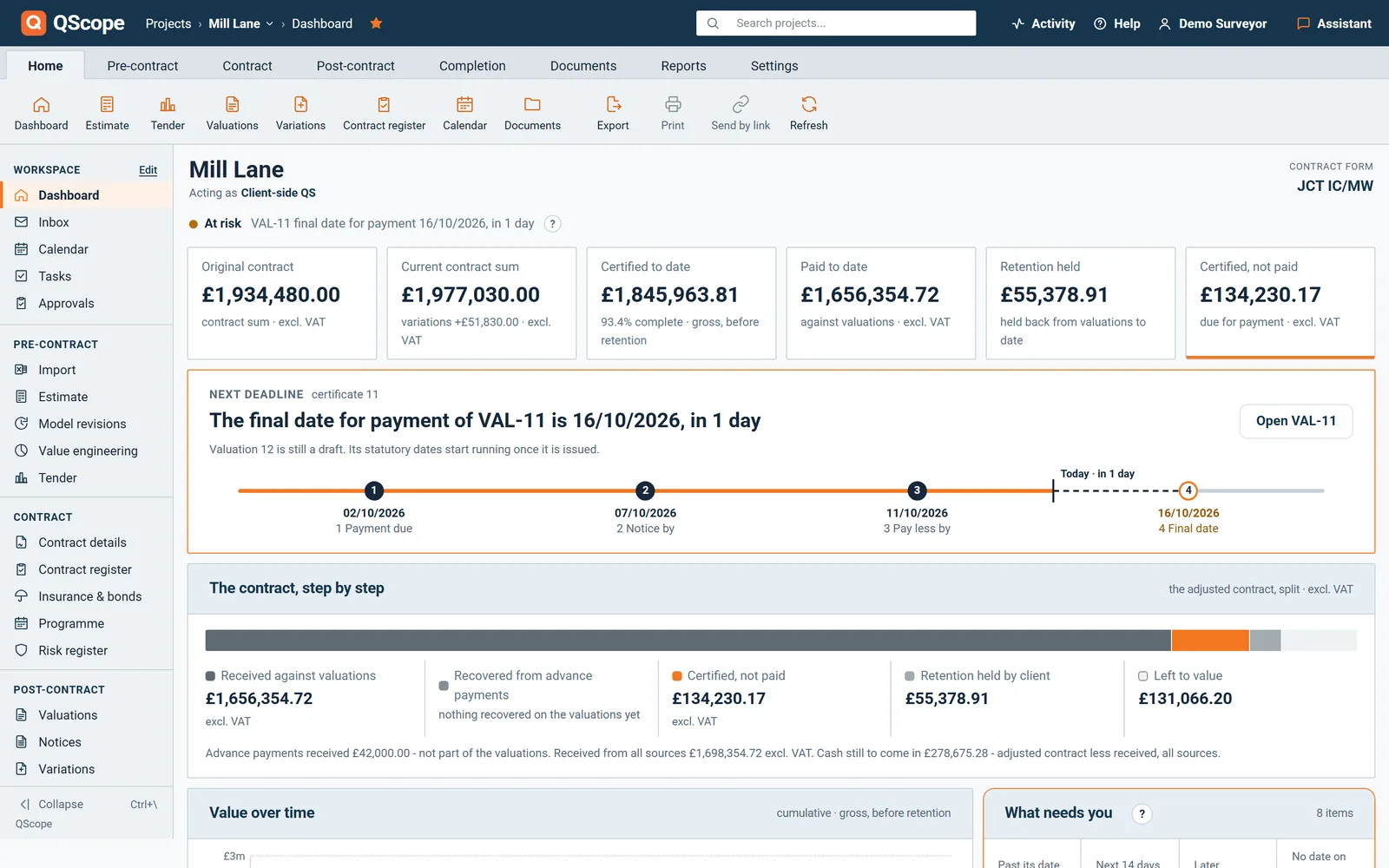
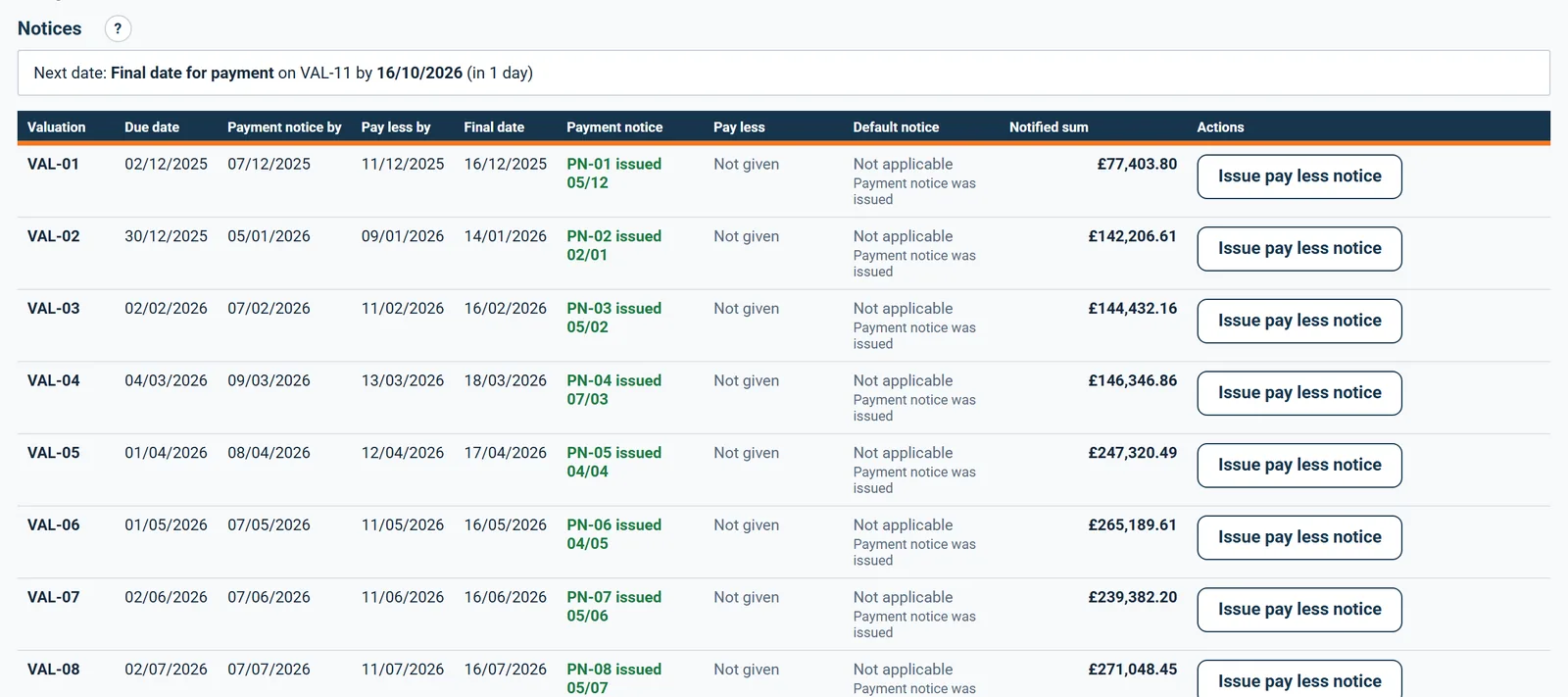
You confirm the four periods once, from your own contract, and QScope counts every notice and final date from them. It does not guess them, and it will not issue a certificate until you have. Miss a pay-less notice and the sum applied for becomes the sum due, so the deadline that costs most is the one nobody counted.
30 days free, no card.
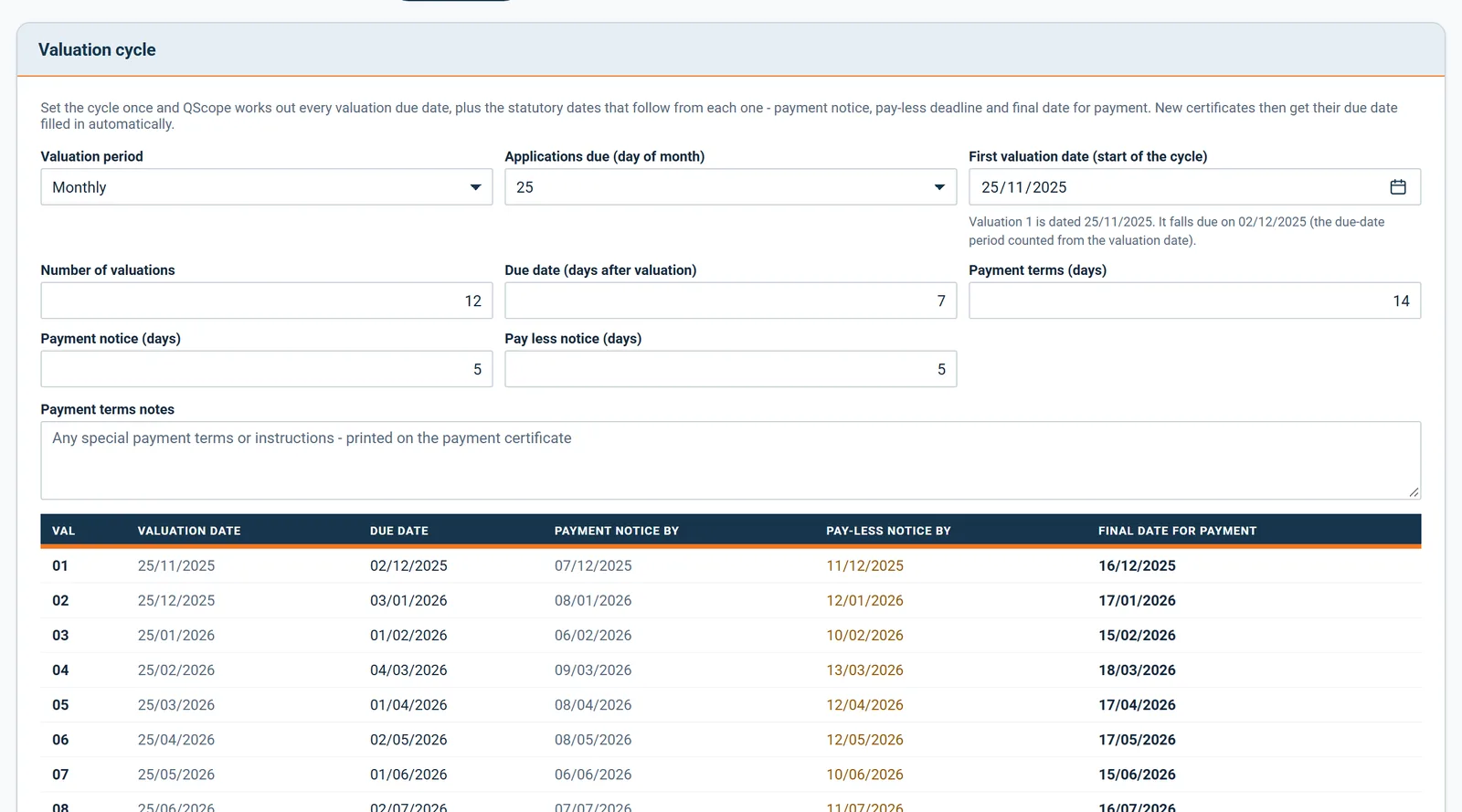
Enter the due date once. QScope returns the whole sequence and recalculates it if the due date moves.
The Housing Grants, Construction and Regeneration Act 1996 sets the payment timetable, and the contract form sets the day counts within it.
Get the form wrong and every date after it is wrong. Enter the due date once. QScope returns the whole sequence and recalculates it if the due date moves.
Payment
The sanction in the Act is not a fine.
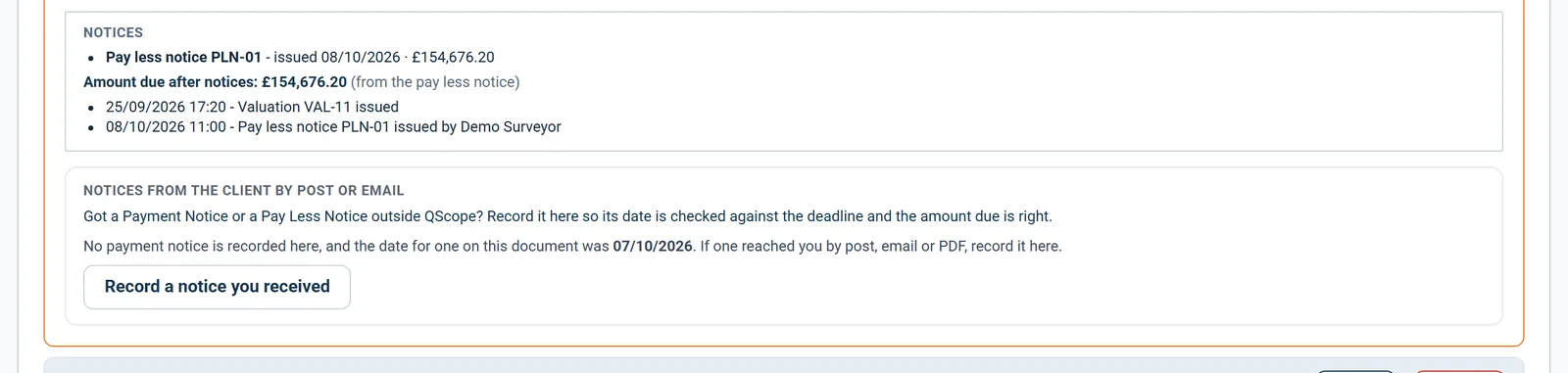
If no pay-less notice is issued by 24 Aug 2026, the sum due becomes £16,400.00, the amount applied for, and not the £14,031.00 you valued.
All projects
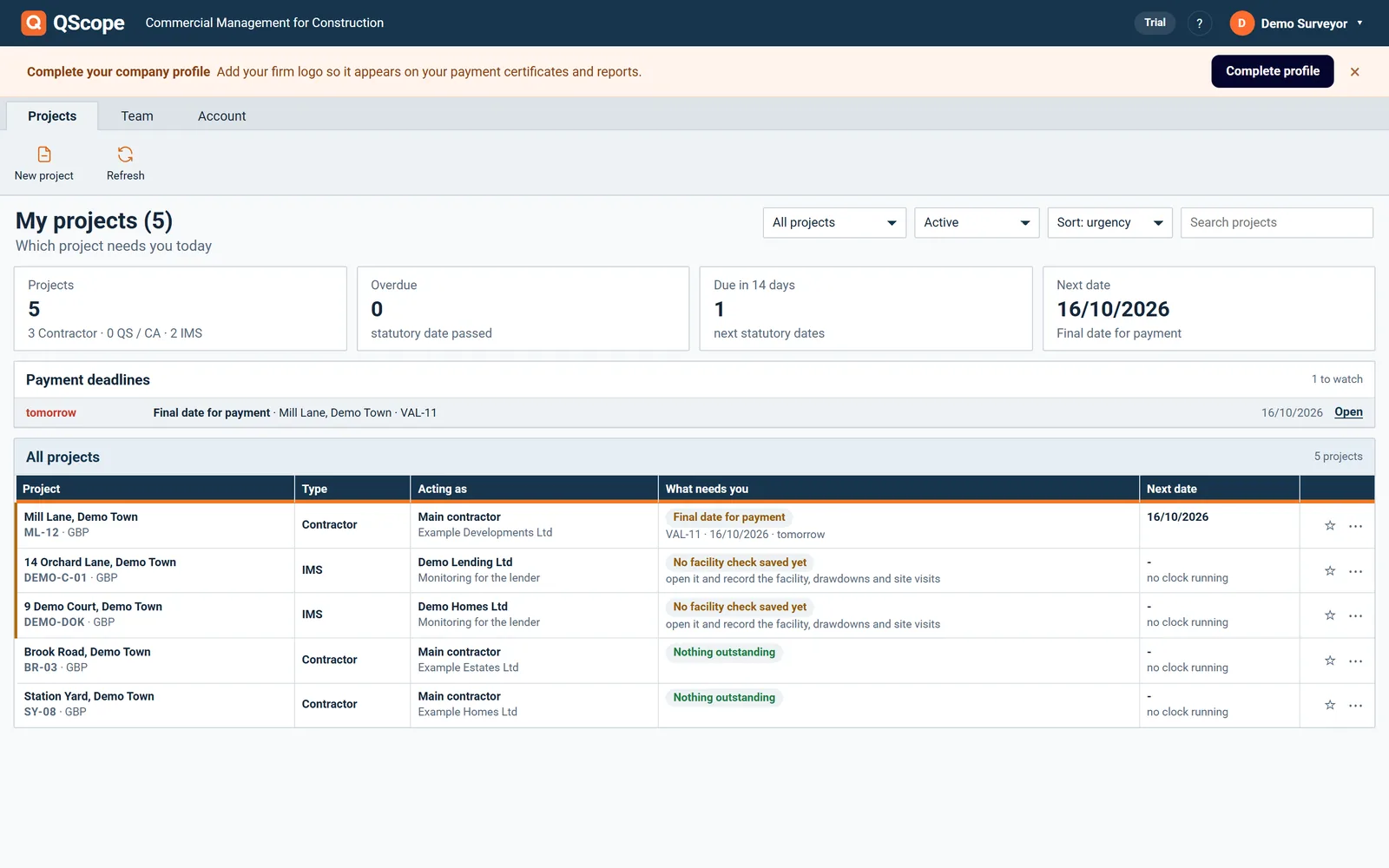
A single job is easy to keep in your head.
The project list carries a deadline panel that sorts by urgency, so the job in trouble reaches you rather than waiting to be found.
Client Valuations
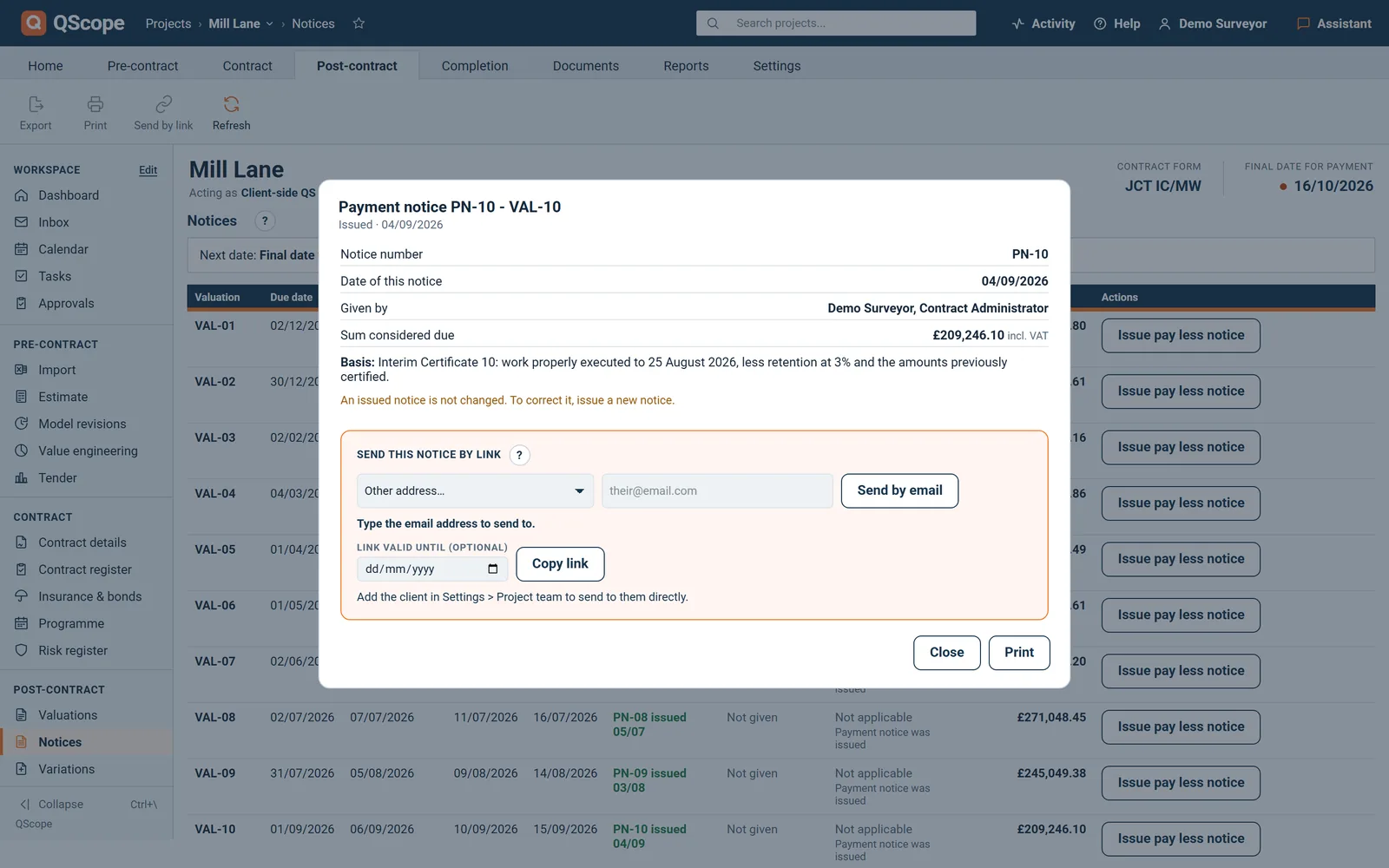
A payment notice under section 110A has to state the sum due and the basis for it.
The sum considered due at the payment due date of 15 Aug 2026 is £14,031.00. The basis on which it is calculated is the valuation above.
Retention
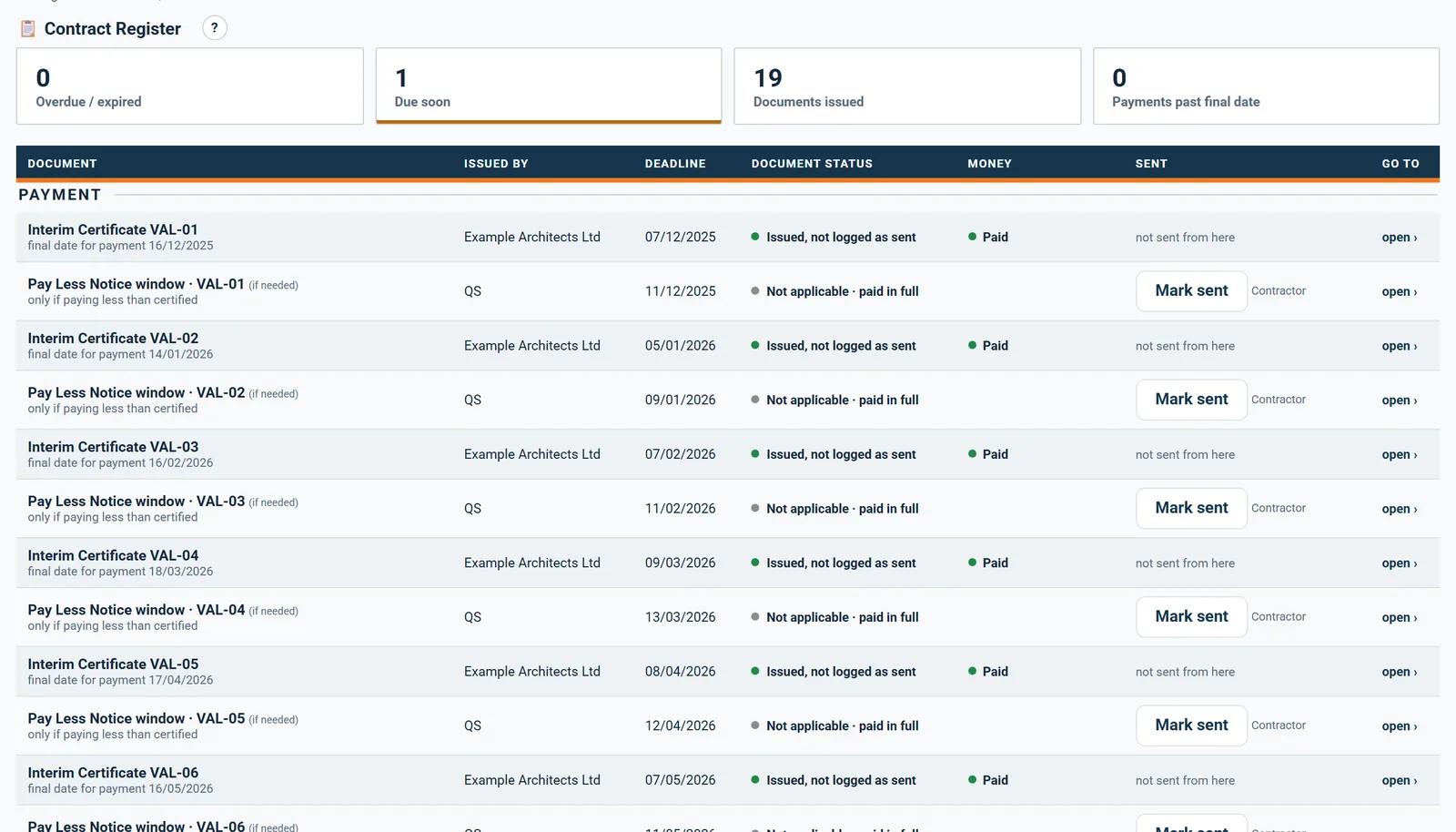
The pay-less deadline is the date that costs money this month.
QScope counts the release from the practical completion date and the rectification period, and warns on the project list as it approaches, the same way it warns on payment deadlines.
Payment
Outside the UK the timetable comes from the contract, not a payments Act.
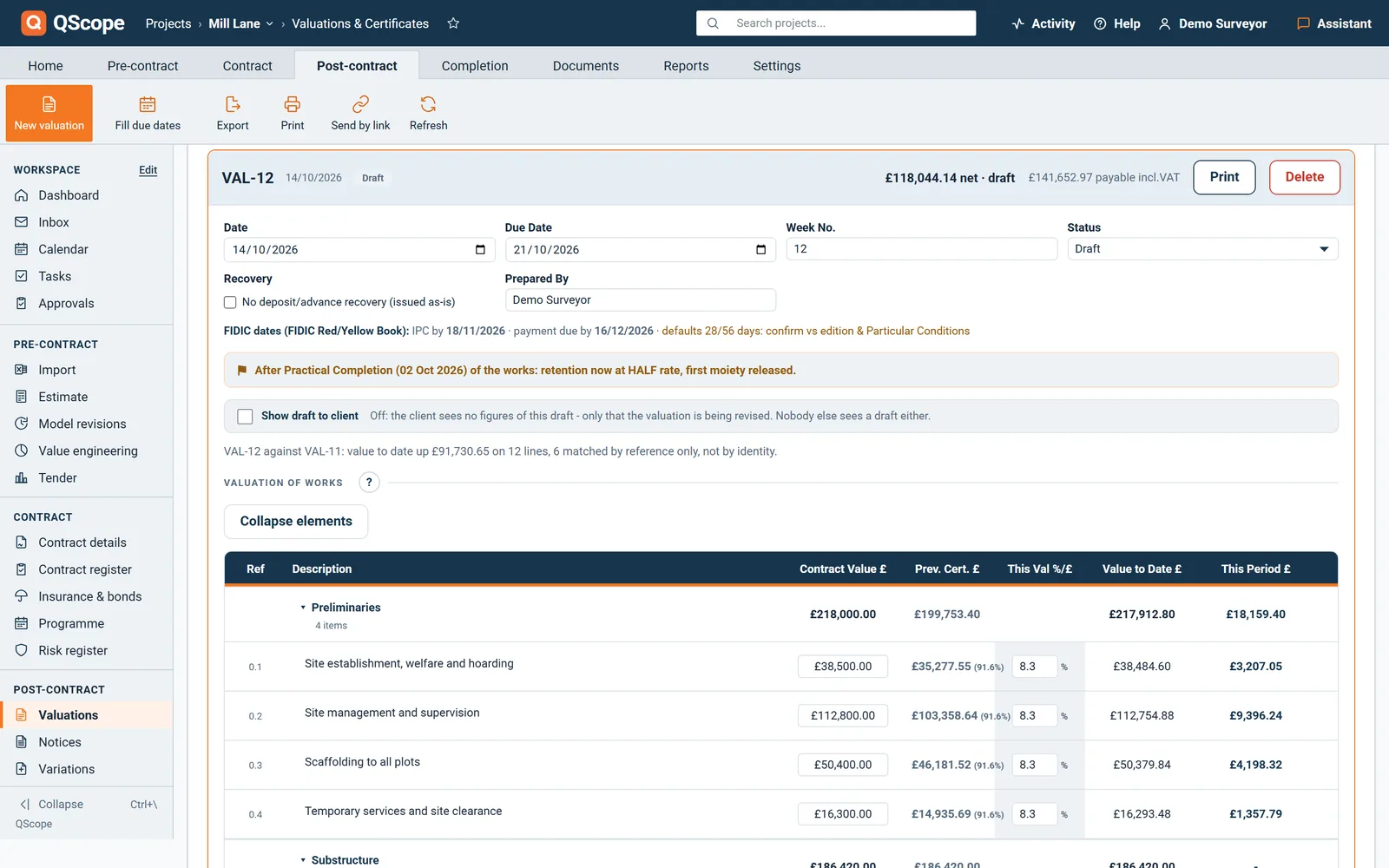
Calendar days, not working days. FIDIC has no pay-less notice; the 28 and 56 day periods are the 1999 Red Book defaults and are editable for the Particular Conditions.
Who it is for
You are applying
You start the clock with the applicationYou send the application and the clock starts. If the payment notice is late or missing, the sum you applied for becomes the sum that falls due.
Applying for paymentYou are certifying
Your notices are what the Act readsYou issue the notices, and the dates on them are the ones the Construction Act holds you to. A missed pay-less deadline is not an argument you can win.
Certifying paymentYou are doing both
You count the dates with nobody checkingYou send the application yourself and count the same four dates, with nobody to remind you which notice has to leave this week.
Doing both yourselfYou are reporting
You lend against dates that must holdYou confirm the drawdown timetable against the contractual payment dates, so the facility releases against dates that will actually hold.
Recommending a drawdownThe client, the architect and the tenderer are not on this list. They are the people you let in on a link: they see the one document you sent them, answer it, and that answer is written into the record. No account, no licence, no charge, on every plan.
The questions this page raises most often, answered without a sales pitch at the end.
JCT SBC and Design and Build, JCT Intermediate and Minor Works, NEC3 and NEC4 ECC, and the Scheme for Construction Contracts. Each carries its own day counts for the final date for payment and the pay-less notice.
Yes. The calculation excludes weekends and England and Wales bank holidays, which is where hand counting usually goes wrong, particularly around Easter and the August bank holiday.
Enter it in the project settings and QScope uses your figure instead of the default for the contract form. The pay-less deadline is then counted back from your final date for payment.
Yes. Select the FIDIC contract form and QScope dates the Interim Payment Certificate at the Statement date plus 28 days and payment at the Statement date plus 56 days, counted in calendar days on the 1999 Red Book defaults. There is no payment notice or pay-less notice under FIDIC, and the periods are editable for the Particular Conditions.
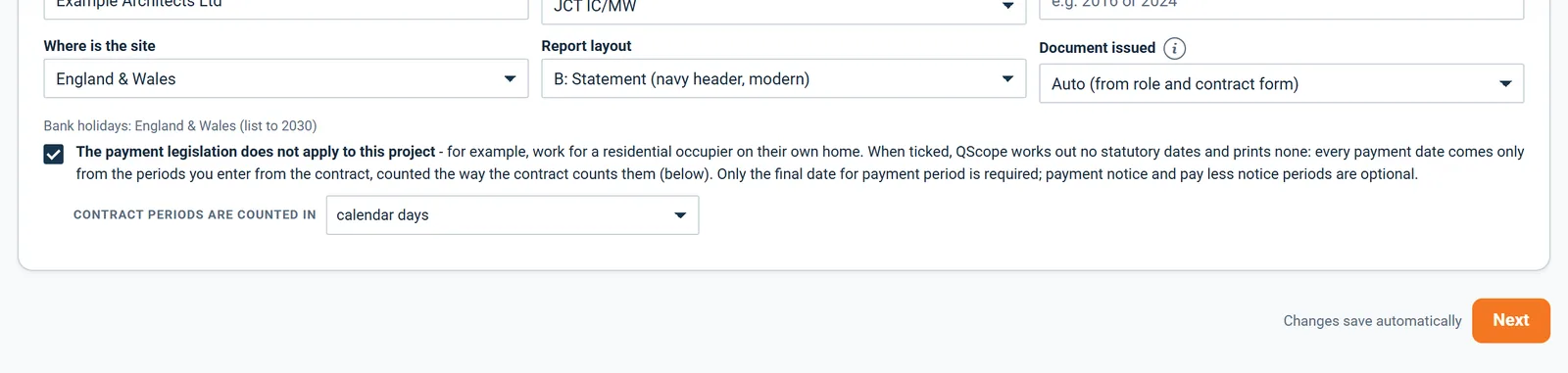
From your own contract. QScope does not assert them: you confirm the four periods once, and every date is counted from those. The standard positions for JCT, NEC and the Scheme are shown beside the fields as information, never filled in for you. FIDIC is counted in calendar days, straight through weekends and bank holidays.
No. QScope calculates dates from the figures and contract form you enter. It does not check that the form you selected is the one that actually applies, and the notices you issue remain your professional responsibility.
From the blog
Three pieces from the same corner of a contract as this page, answered at length and without a sales pitch at the end.
Court fees are published and start at 35 pounds; on bigger claims the issue fee is 5% of the sum. Adjudication has no fee table: each side carries its own costs. Which route eats less of the debt, with sources and read dates.
Read nowIn England and Wales, no. There is no construction lien, and materials built in belong to the property whether or not you have been paid. What you actually have instead, and the mistake that turns their debt into your problem.
Read nowIt can be, and the difference decides whether your figure becomes the sum they must pay. What a payment application needs, how long you have to send one, and why the wrong day can cost a whole cycle.
Read nowKeep reading
You confirm the four periods once, from your own contract, and QScope counts every notice and final date from them. It does not guess them, and it will not issue a certificate until you have. Miss a pay-less notice and the sum applied for becomes the sum due, so the deadline that costs most is the one nobody counted.
30 days free, no card.
Rather ask first? Write to help@qscope.co.uk and you will get a reply within one working day, Monday to Friday.