Functions 1 to 14
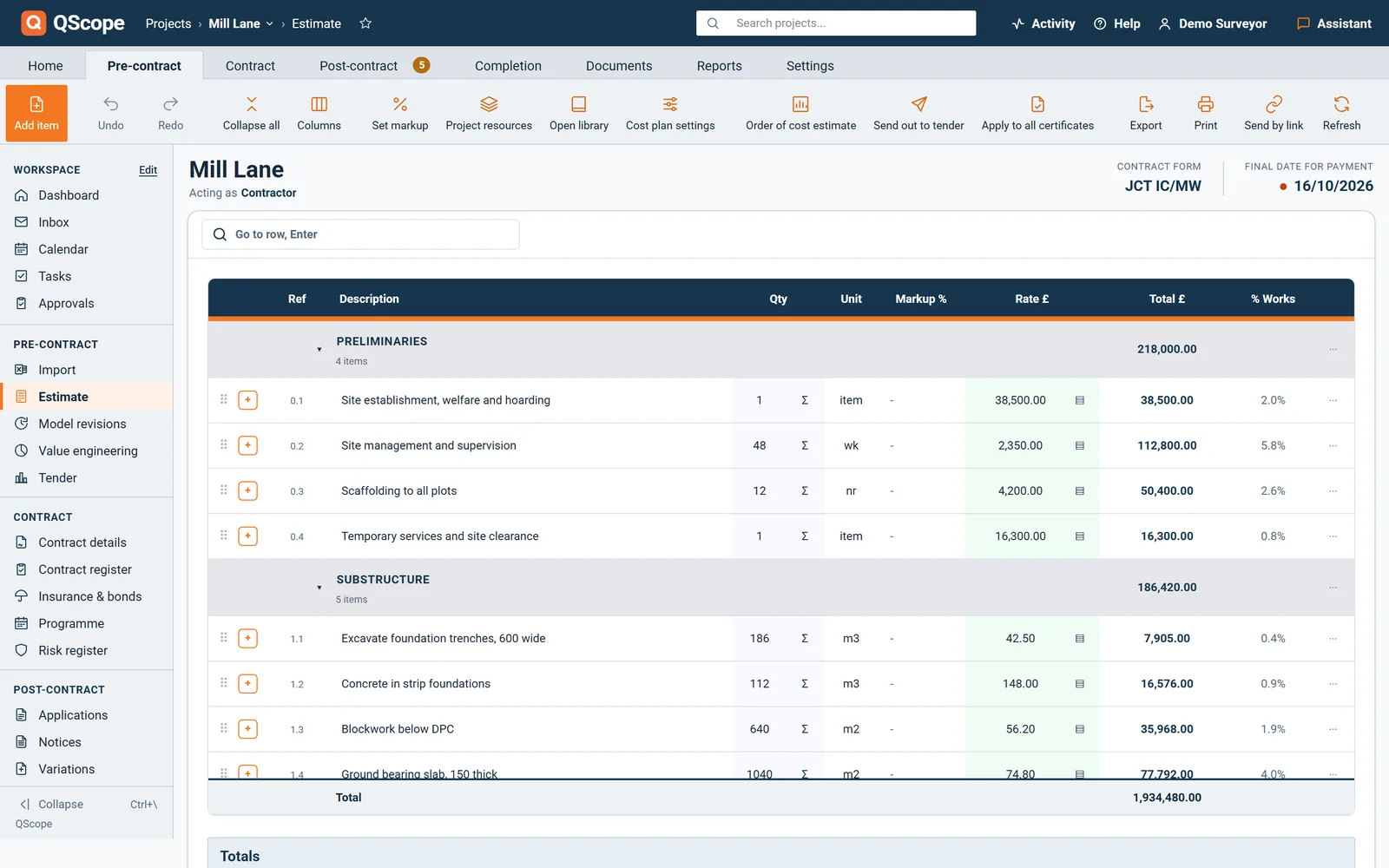
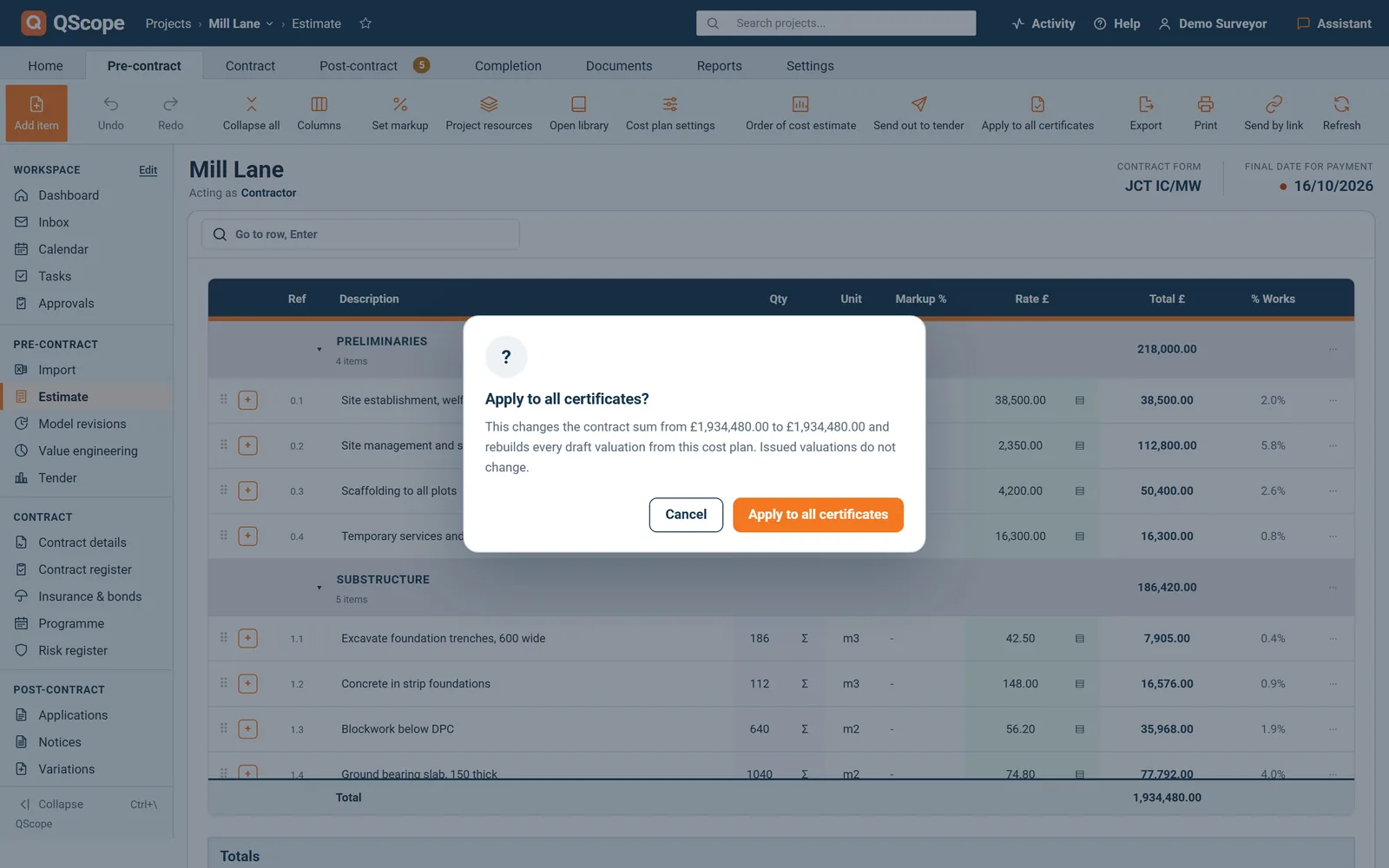
01+ Add item puts a new item at the end of the estimate, scrolls to it and puts the cursor in the description.
02The + beside a row adds a priced item directly below that row, ready to type into.
03Press Enter in the last field of a row and the next item opens underneath it.
04Drag a row or a section heading by its handle to move it, and draft valuations take the new order.
05An empty estimate offers two ways in: add the first line, or load a file in the Import tab.
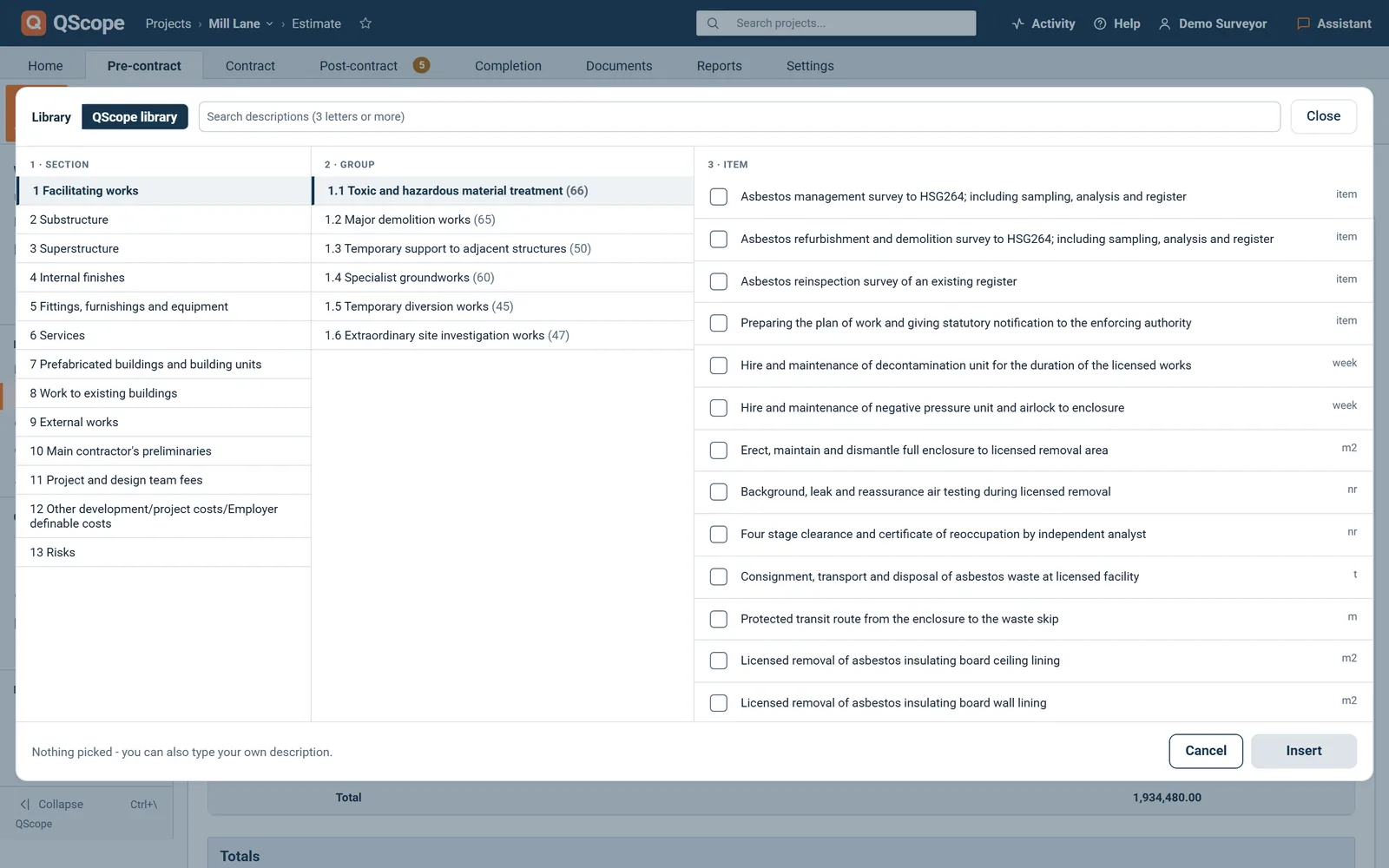
06The More menu on each row adds a row below, inserts a section, opens the library at that row, omits or restores the line, or deletes it.
07The menu on a section heading renames it, inserts another section, sets markup for that section or deletes the heading while the lines under it stay.
08Lines above the first heading sit under Unsectioned until you press Name this section.
09Unit offers the usual units and also takes your own, which then appears on the list for that project.
10The % Works column shows each line's share of the estimate total.
11After inserting from the library, the cursor selects the first * in the description so you can type the dimension, and Tab moves to the next one.
12The items without a rate button above the table takes you to the first line still waiting for a rate.
13Columns lets you tick which columns to show, Description and Total always stay, and your choice is kept for you on that project.
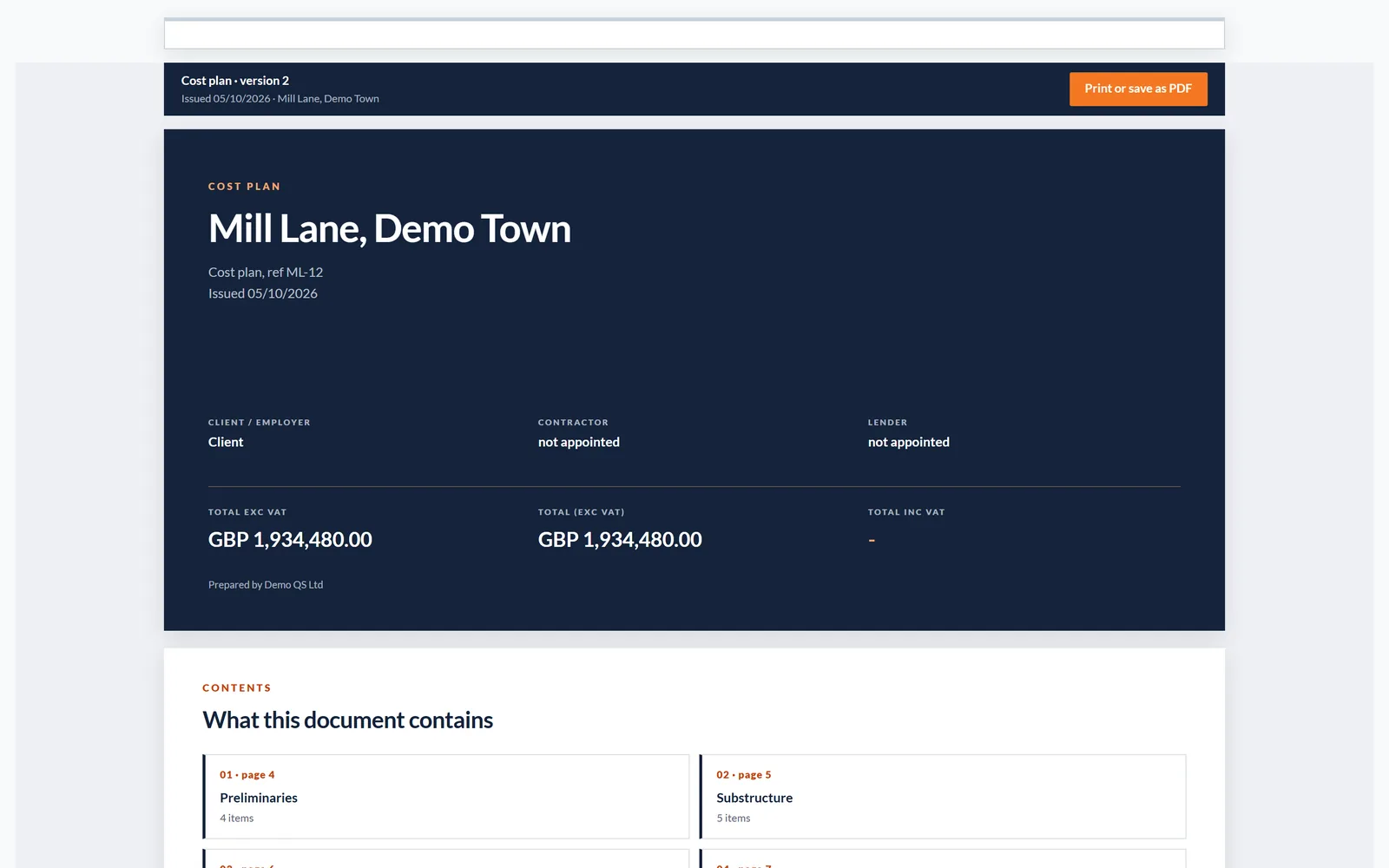
14Send to (email) sends a saved version to someone outside the project team at the level you choose, scope and quantities by default.
Functions 15 to 27
15Restore an earlier version lists saved copies with their row counts and lets you restore the cost plan only or the whole project.
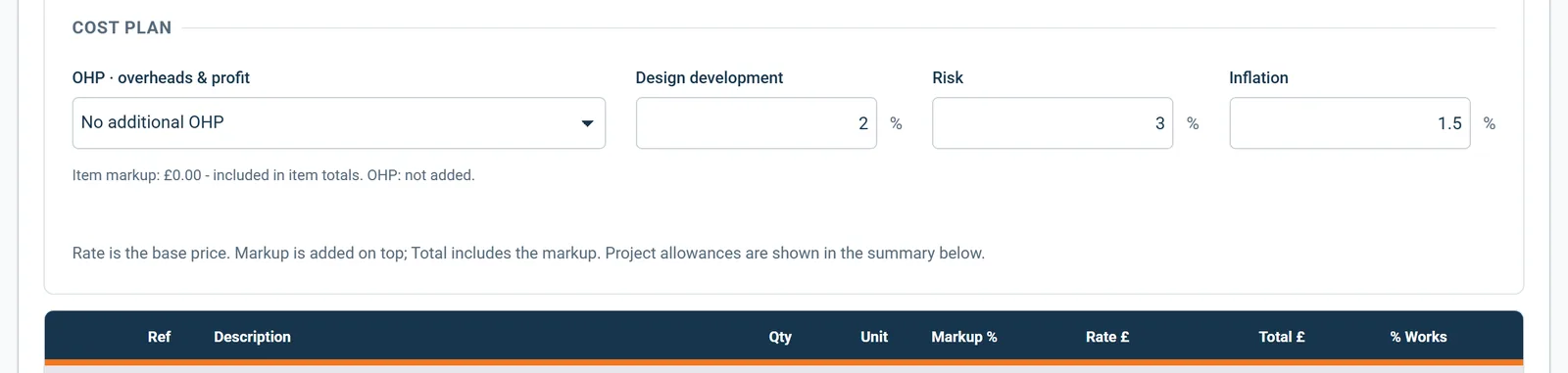
16A line under the table shows the item markup already inside the totals, apart from any additional OHP.
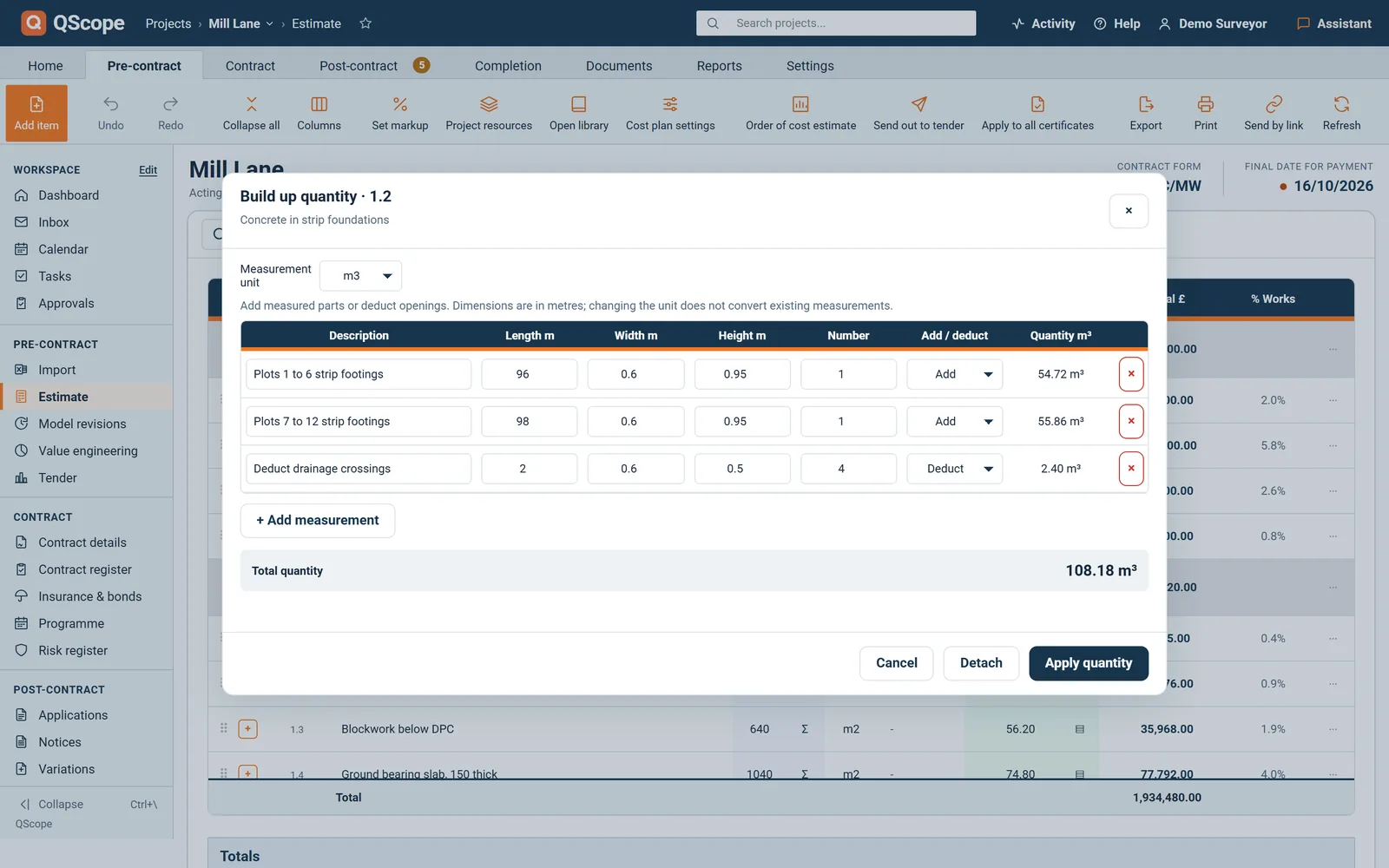
17A measurement that deducts more than it adds is refused, so the quantity never goes below zero.
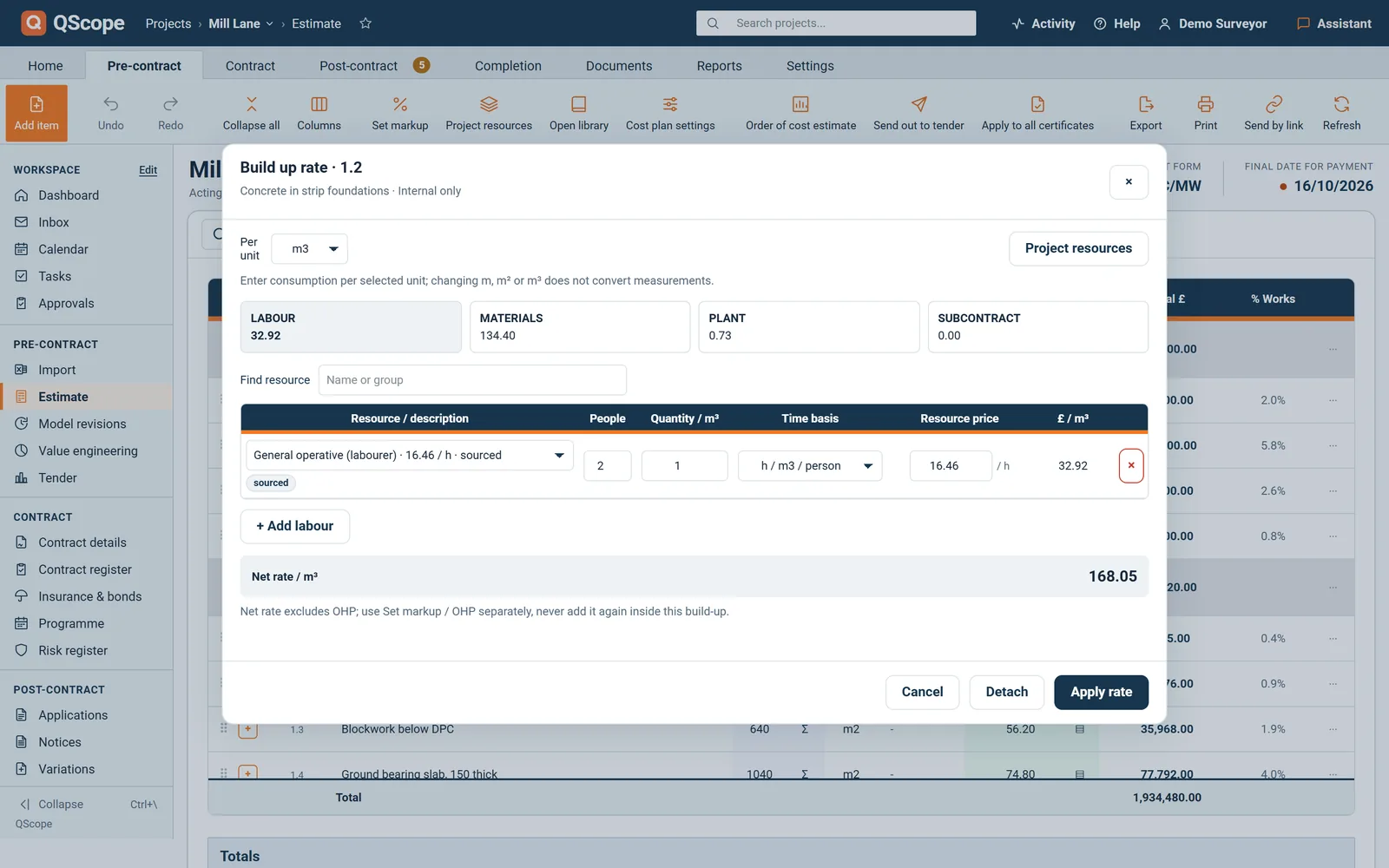
18A resource used in a build-up cannot be deleted or change its type, so no build-up loses a price without you knowing.
19On a narrow window Columns hides % Works, Markup %, Ref and the drag handle first, so the description keeps its width.
20Undo refuses a step that would change a line an issued valuation stands on, and says which valuation.
21Cost and margin details show Sub Cost Plan, Projected Margin and Margin %, with a dash until every line has a cost.
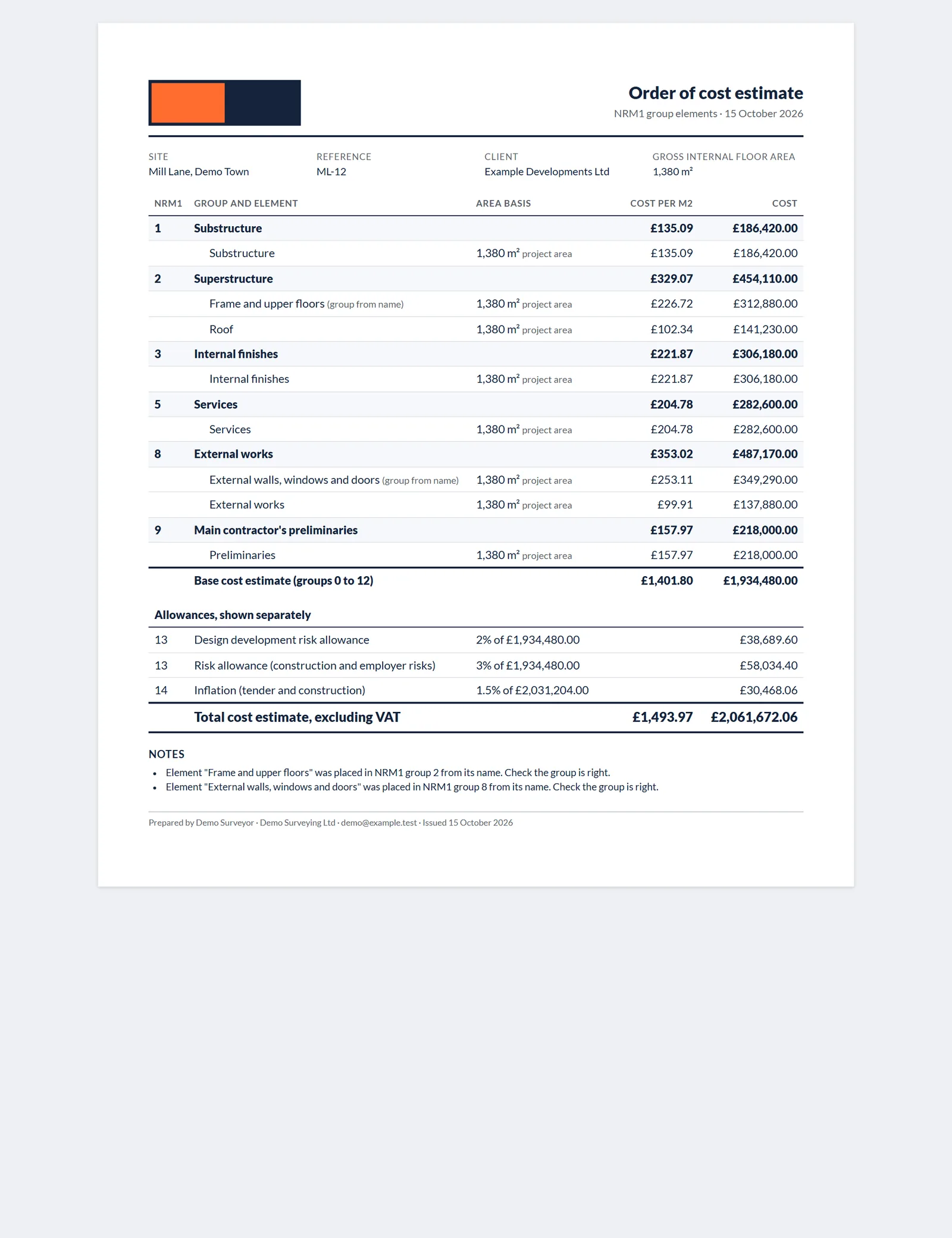
22The order of cost estimate places each element in its NRM1 group by name and lists anything it cannot place as Not classified.
23Notes on the order of cost estimate warn when risk or inflation may be counted twice, or when no floor area is set.
24Subcontractors and guests without the client side never see the allowances or the order of cost estimate.
25The email arrives with the subject Cost plan for your review followed by the site address.
26When a link cannot go, the panel says why, for example no role that receives the cost plan or no email address in Project team.
27If the screen shows an empty estimate while the saved one has rows, the save is refused and you are offered an earlier version.