Traceability
A valuation is challenged long after the person who prepared it has moved on. The question is never what the number was. It is how it was arrived at, and by whom.
30 days free, no card.
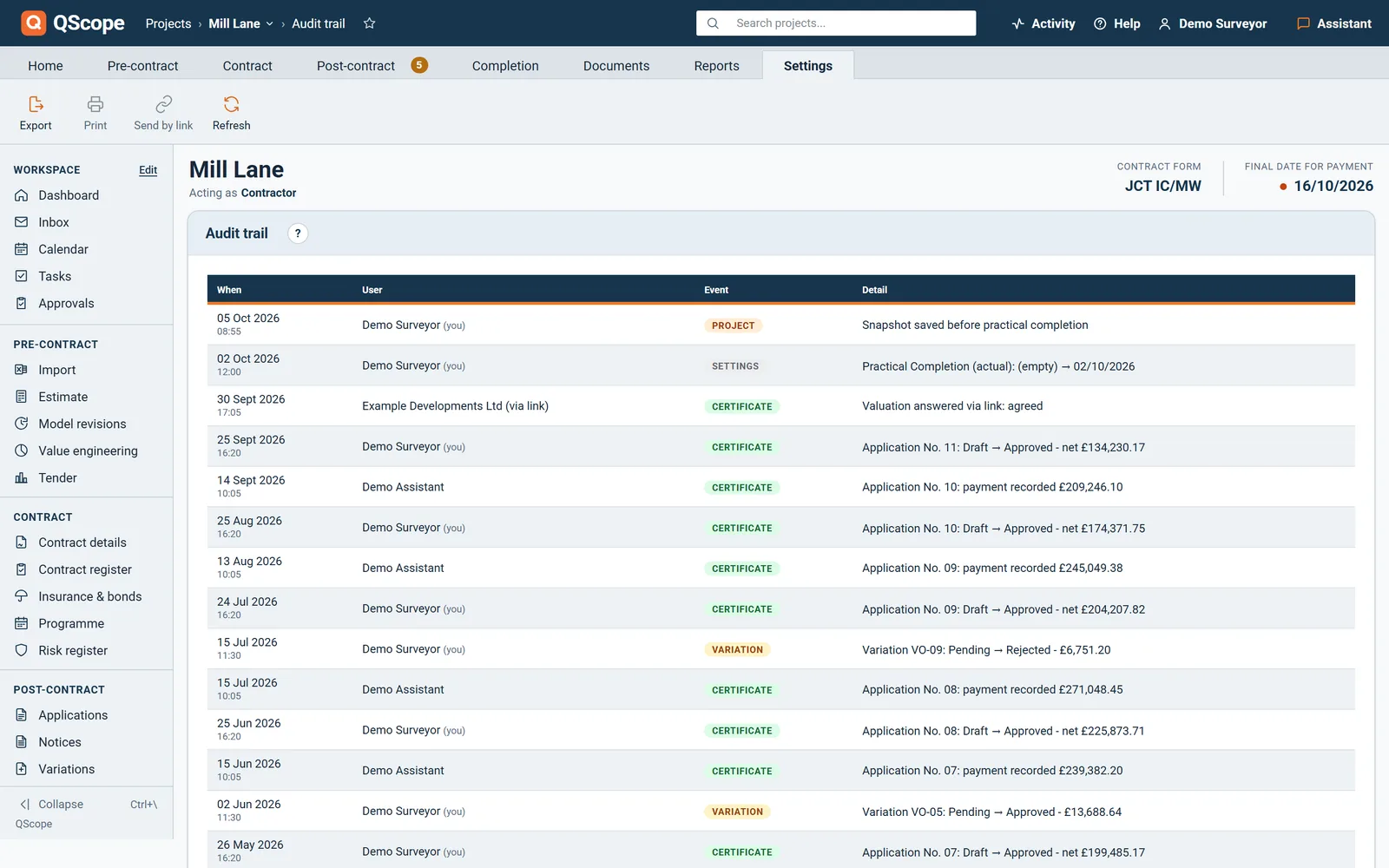
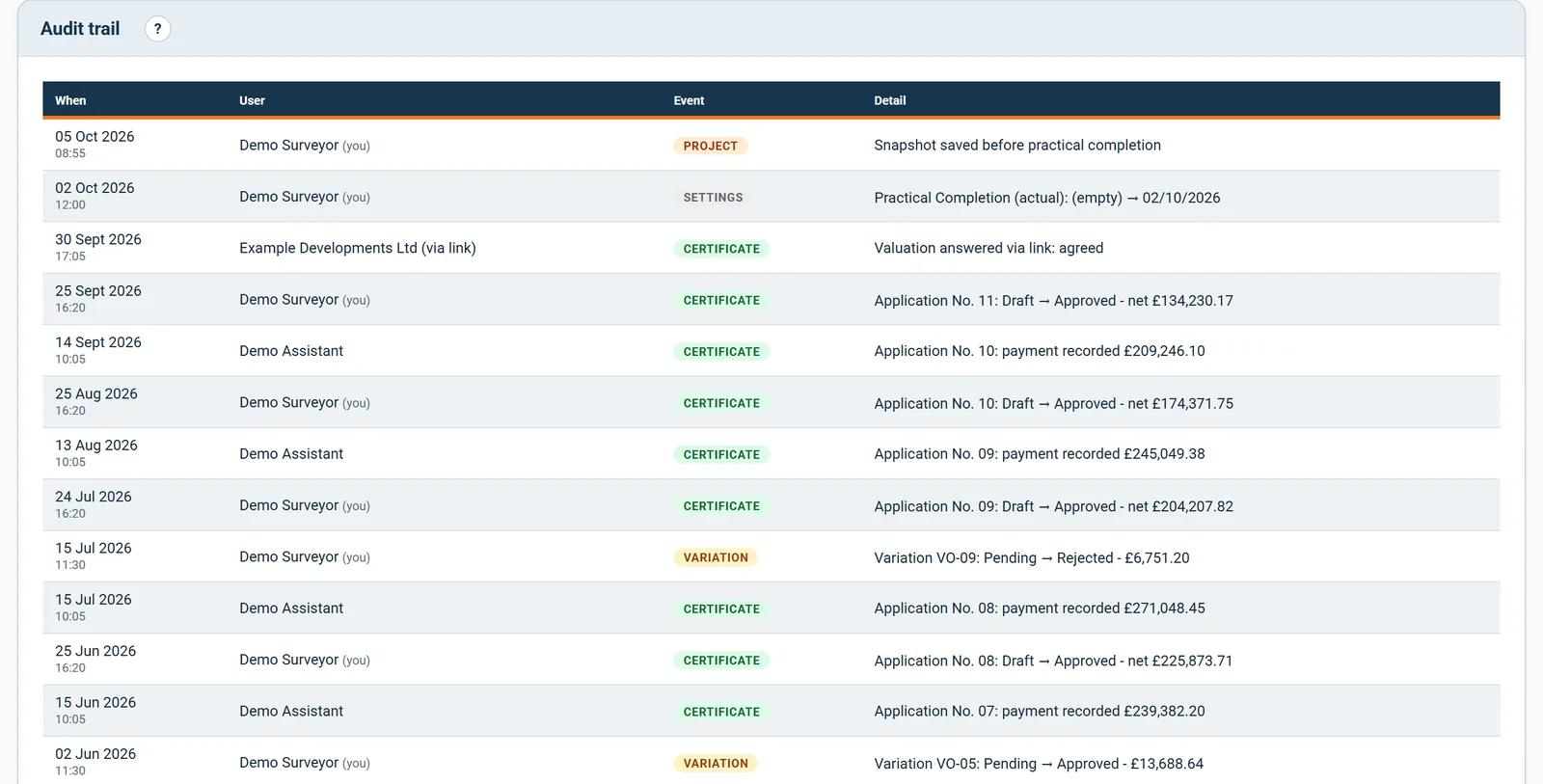
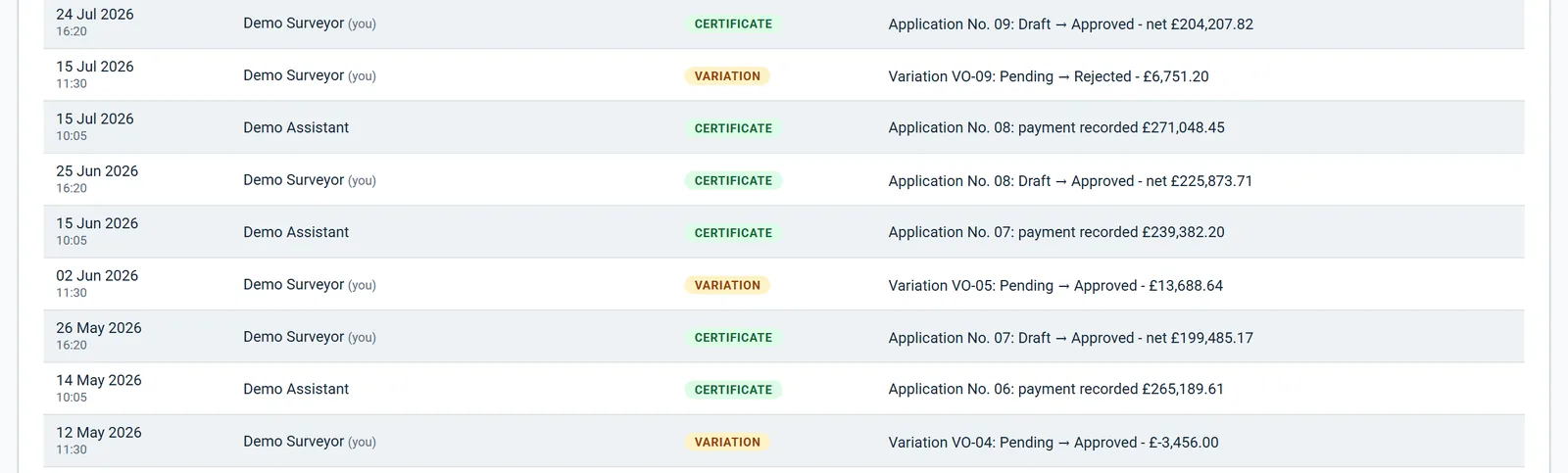
QScope records each variation as it is raised, approved, rejected or removed, so the history of the change survives the people who made it.
A variation is challenged more often than anything else in a final account.
What is asked for is not the amount but who instructed it, under which clause, and when it was approved. QScope records each variation as it is raised, approved, rejected or removed, so the history of the change survives the people who made it.
Audit trail
An audit trail you have to remember to write is not an audit trail.
Nothing in the interface can alter or delete an entry. That is the whole point: a record that can be quietly amended is worthless as evidence.
Activity
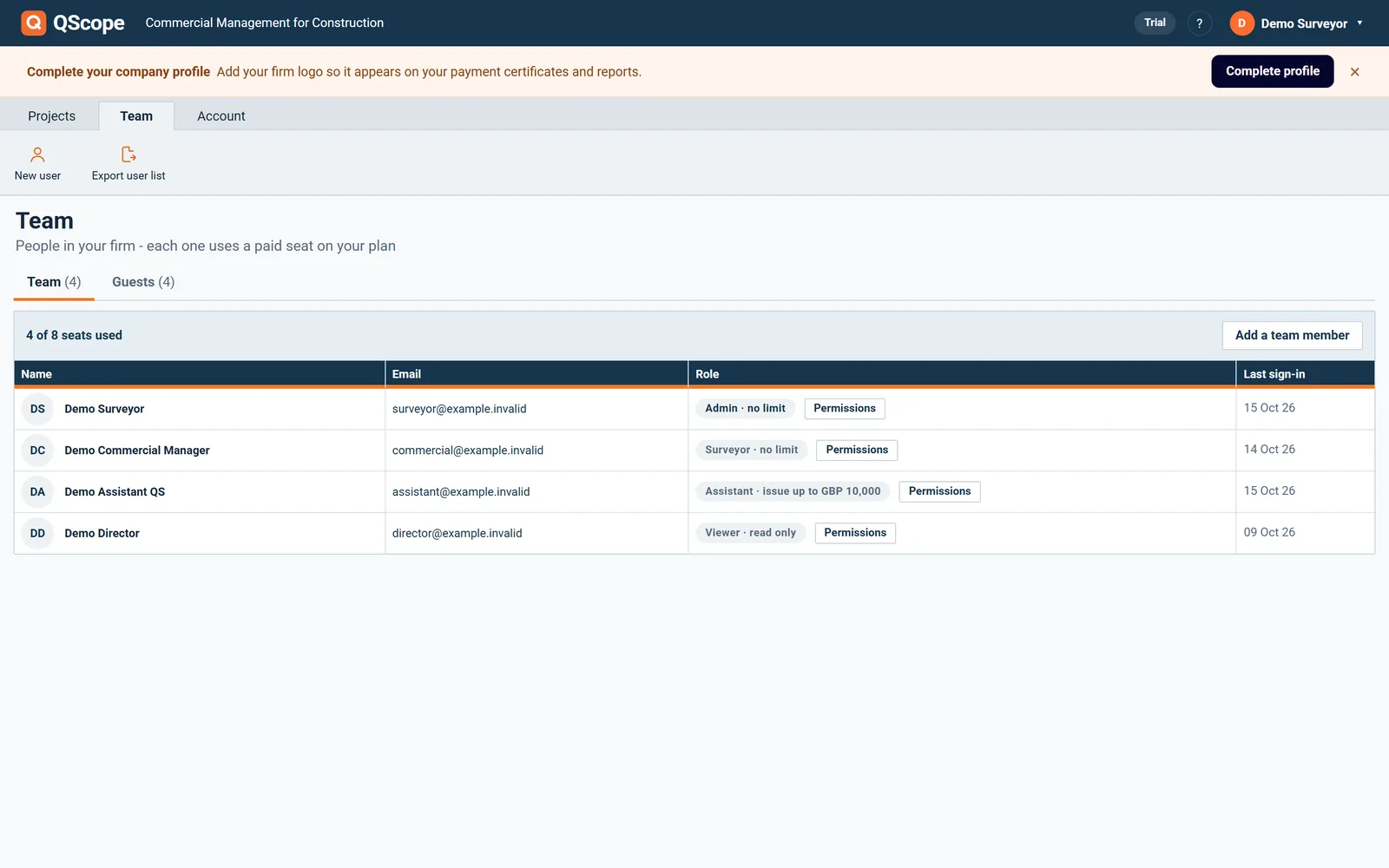
A shared login makes every entry say the same name, which is the same as recording nothing.
QScope prices by the people who sign in rather than by the job, partly so that giving everyone their own login never costs you a project.
Project record
An audit trail proves who changed a figure.
Held on the same project, every file carries its own trail entry, so a superseded drawing can be shown as the version that was current on the day the work was valued.
Client Valuations
Most audit entries are about money.
The valuation is where those figures are set, and every change to it lands in the trail with the old value and the new.
Who it is for
You are applying
The record defends your own figuresYou keep the record that defends your own applications: who changed which figure, and the documents behind every line.
Applying for paymentYou are certifying
The trail holds when yours are challengedYou certify on the strength of the record, and when a figure is challenged the audit trail is what stands between you and an argument.
Certifying paymentYou are doing both
The file protects the one who kept itYou keep the paperwork yourself, and the file that assembles as you go is the one that protects you when memories differ.
Doing both yourselfYou are reporting
The record is all the site you seeYou rely on the record more than anyone: bonds in force, access controlled, every figure traceable, because you were never on site.
Recommending a drawdownThe client, the architect and the tenderer are not on this list. They are the people you let in on a link: they see the one document you sent them, answer it, and that answer is written into the record. No account, no licence, no charge, on every plan.
The questions this page raises most often, answered without a sales pitch at the end.
No, and that is deliberate. Nothing in QScope can amend or remove an audit entry. A record that the holder can edit proves nothing, which defeats the reason for keeping one.
Yes. Contract sum, retention rate, contract form and key dates are recorded with the old and the new value, because a quietly changed retention rate moves every certificate after it.
Yes, to CSV, per project. It opens in Excel with a byte order mark so names with accents are not mangled, which matters when the file goes into a bundle.
RICS does not mandate a particular system, but the Black Book expects a quantity surveyor to be able to show how a valuation was reached. An automatic record is the cheapest way to be able to answer that a year later.
From the blog
Three pieces from the same corner of a contract as this page, answered at length and without a sales pitch at the end.
An advance payment bond is a guarantee that if you take the money and fail, the client gets it back from a bank or surety instead of chasing you. What it costs, how it reduces as the advance is recovered, and the wording that quietly makes it dangerous.
Read nowInstead of the client holding 5% of every payment for two years, a surety guarantees the same protection and you keep the cash. When the swap genuinely pays, what the premium and the counter-indemnity really cost, and the client objections worth taking seriously.
Read nowTitle to site materials passes to the employer once their value is certified and paid. But a contractor can pass only the title it holds, and a supplier's retention of title clause can defeat the employer even after payment.
Read nowKeep reading
A valuation is challenged long after the person who prepared it has moved on. The question is never what the number was. It is how it was arrived at, and by whom.
30 days free, no card.
Rather ask first? Write to help@qscope.co.uk and you will get a reply within one working day, Monday to Friday.