Functions 1 to 16
01Each bidder takes its name from the file name, and you can correct it before it goes on the comparison.
02Remove any single bid with its cross, and the rest of the comparison stays as it was.
03Preview the tender document in two views: My estimate with your rates, values and total, and What the bidder sees, which is exactly what leaves QScope.
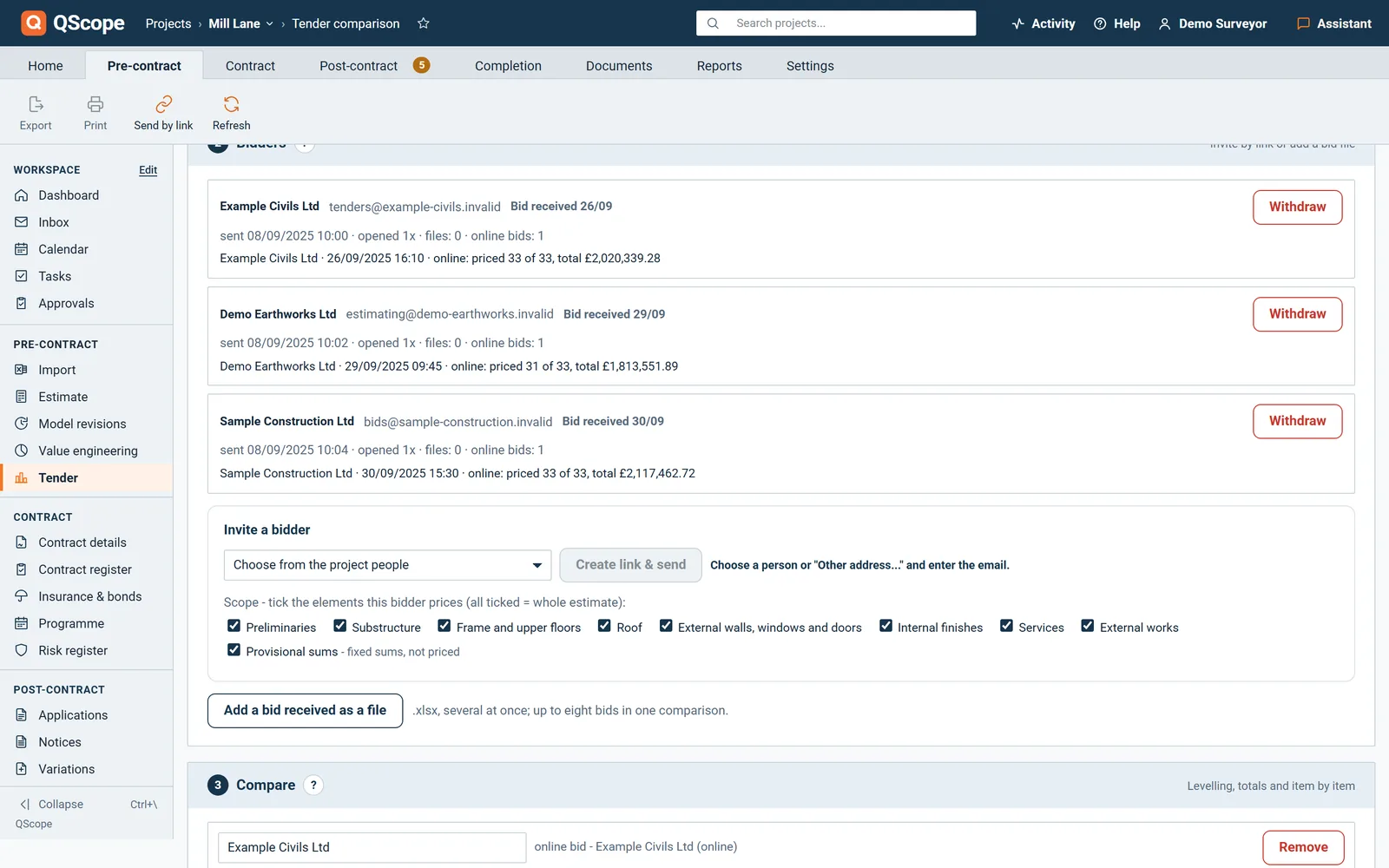
04Tick the elements of the estimate each bidder prices, so a groundworks contractor sees only the groundworks.
05A returned bid file goes into the comparison with one click on Add to comparison, or you can download it.
06An online bid shows its priced count, total, overheads and profit and added items, and Add to comparison puts it in the table.
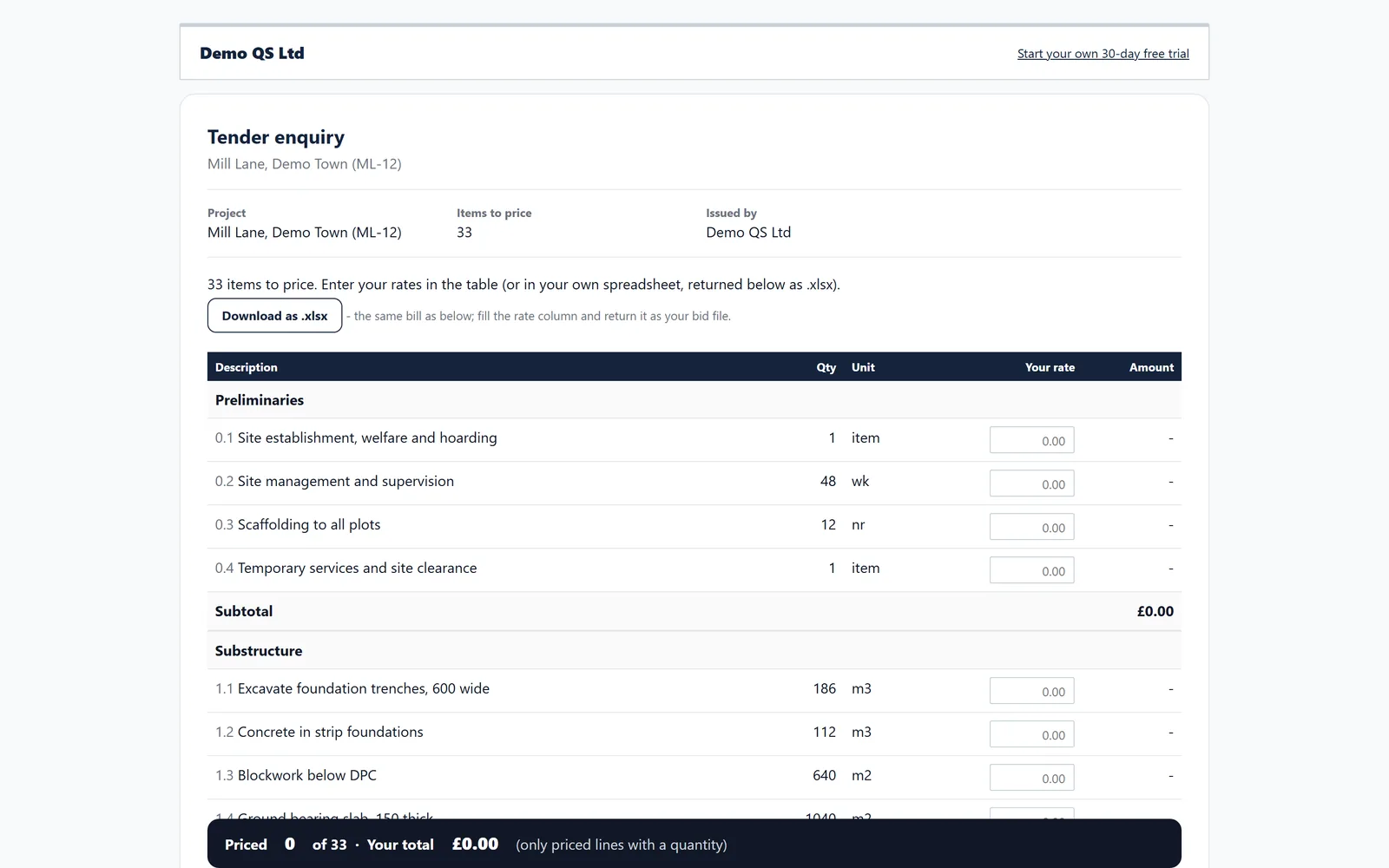
07The bidder can download the scope as an .xlsx file with the amount formula, subtotals and a total already in place.
08The bidder gives a name once, and it goes with the online bid, the file and any question.
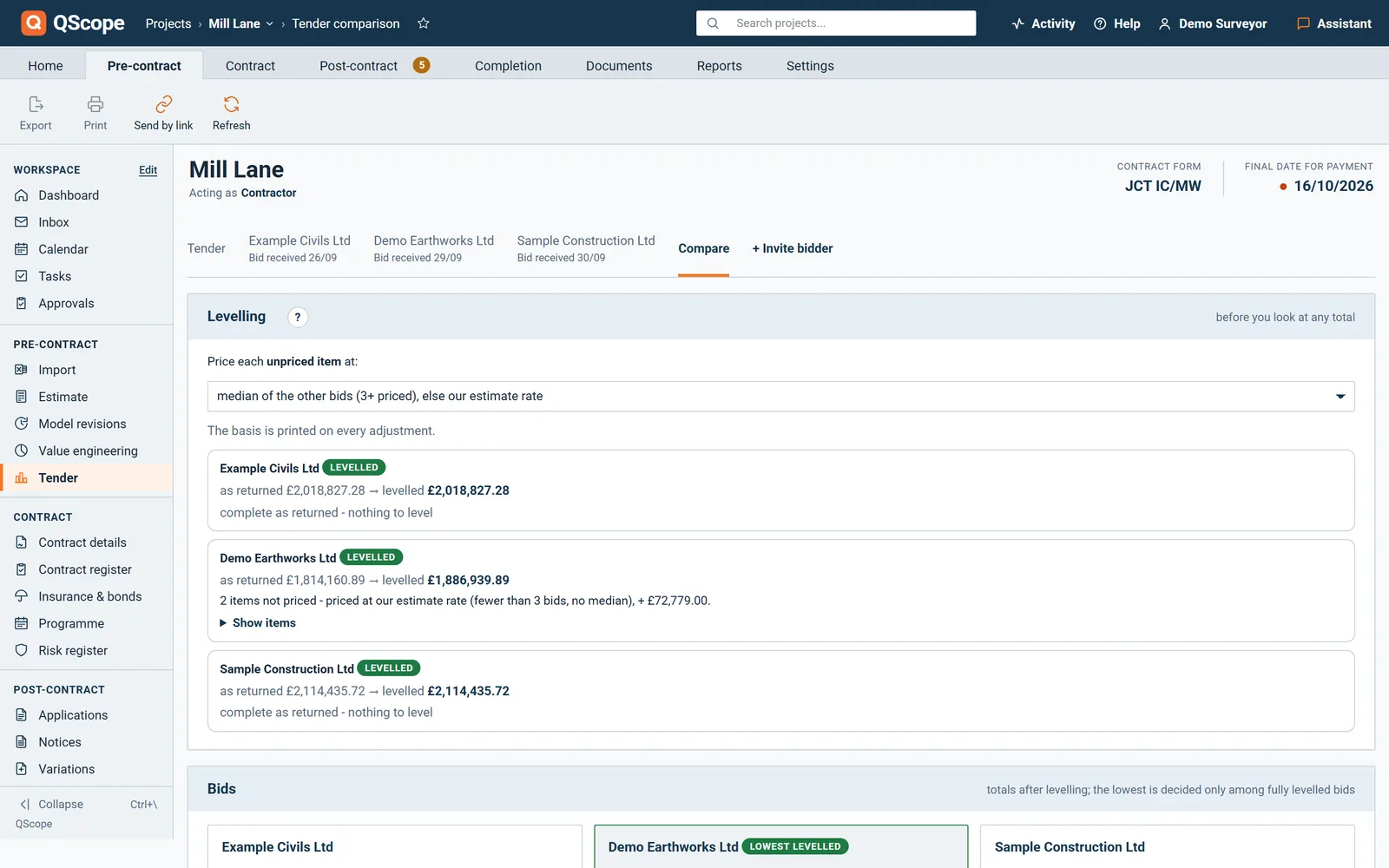
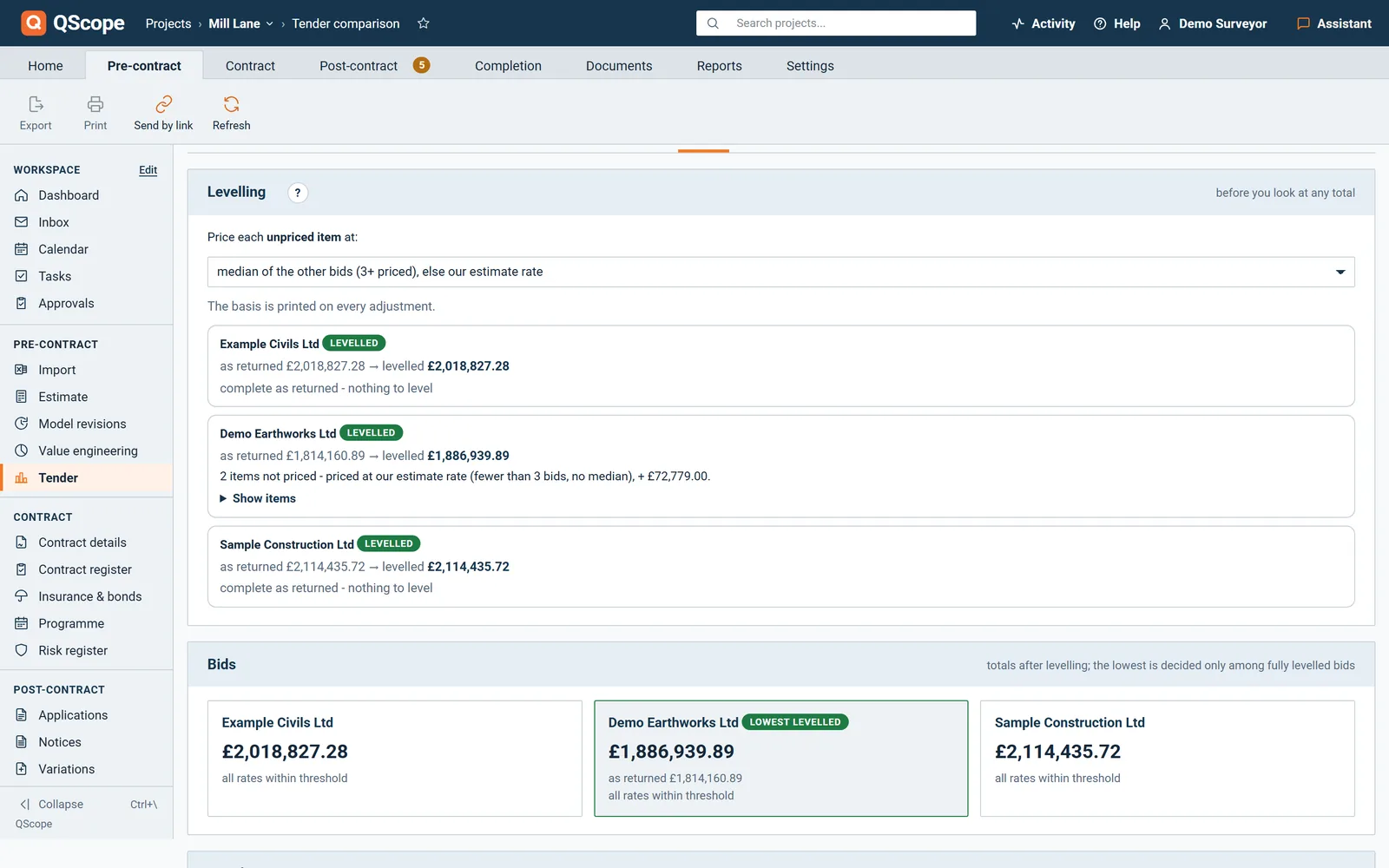
09Tender comparison has a tab for your Tender, one tab for each contractor you sent it to, and a Compare tab.
10Load the current estimate and QScope tells you how many measured items go out and what stays home: omitted lines, description-only lines, the VO line, contingency and provisional sums, and unmeasured items.
11A file with no priced rows, a file already loaded or a ninth bid is skipped, and the screen names each skipped file and the reason.
12A bid file is read where quantity times rate equals the amount to the penny, and a file without those three columns is named, not half read.
13A gap with no basis, such as a median with fewer than three other rates, is marked with a question mark and holds the bid back from the comparison.
14The overheads and profit percentage from an online bid is added before levelling, so bids are compared on what you would actually pay.
15A bid that cannot be compared yet says why: gaps with no basis, qualifications with no amount, changed sums or repeated items.
16When the total written in a bid file does not match its own lines, the bid card shows the stated total and the difference.
Functions 17 to 32
17If your own document repeats an item reference, QScope lists the repeated references so you know a rate lands on both rows.
18A rate that stands out shows by how much: against the median of the market when three or more bids priced the line, otherwise against your own rate.
19Rows in a bid that are not in your document are counted and listed under the table, and kept out of the totals.
20When two or more bidders add the same item, QScope says so, as a sign that the item may be missing from your estimate.
21Once the comparison is saved to the project, later changes save themselves every few seconds, and closing the tab with unsaved changes asks first.
22Open Tender comparison again and the saved set comes back, ready for the next bid to be added.
23If a colleague saved the comparison after you opened it, your save is refused and nothing is overwritten.
24Bid files are read in your browser and the files themselves are never uploaded.
25A new link to the same email address replaces the old one, so one bidder never holds two live links.
26The list of enquiries shows when each link was sent, how many times it was opened, and how many files and online bids came back.
27The bidder's page groups items by element and works out each subtotal as rates are typed.
28A bar at the foot of the bidder's page shows how many items are priced, the total and the total with overheads and profit.
29When a bid file arrives you are emailed the bidder's name and the file name, with a button to open the comparison.
30Saving the comparison, every bid received and every link created or withdrawn are written to the Audit trail.
31The bidder's pricing is saved as they type, so they can come back from the email and find everything they entered.
32When a bidder returns their price, a badge appears next to Tender comparison in the menu and the bid waits in the comparison.