Functions 1 to 26
01Fill blank due dates on certificates fills only the empty due dates from the schedule and overwrites nothing.
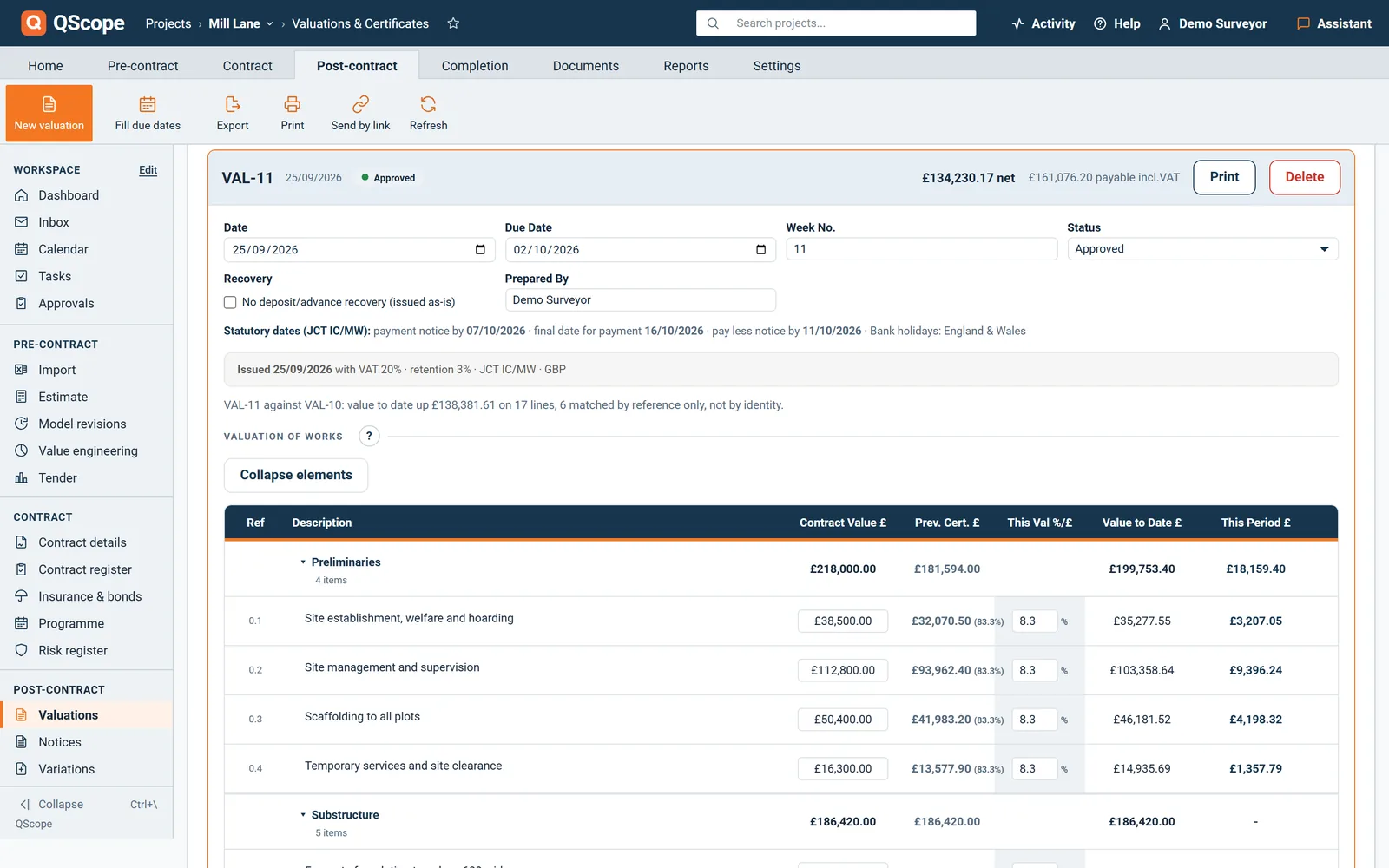
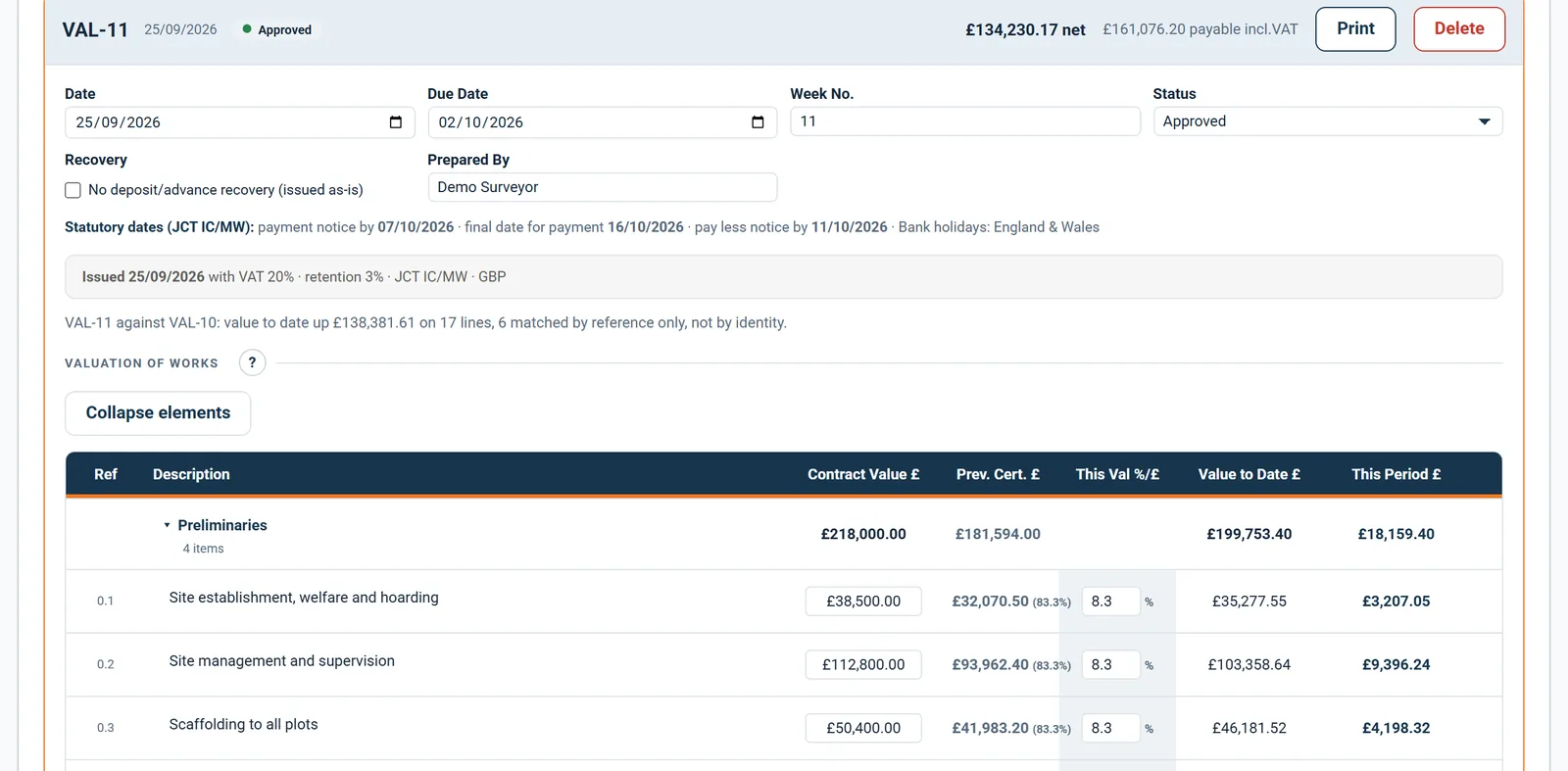
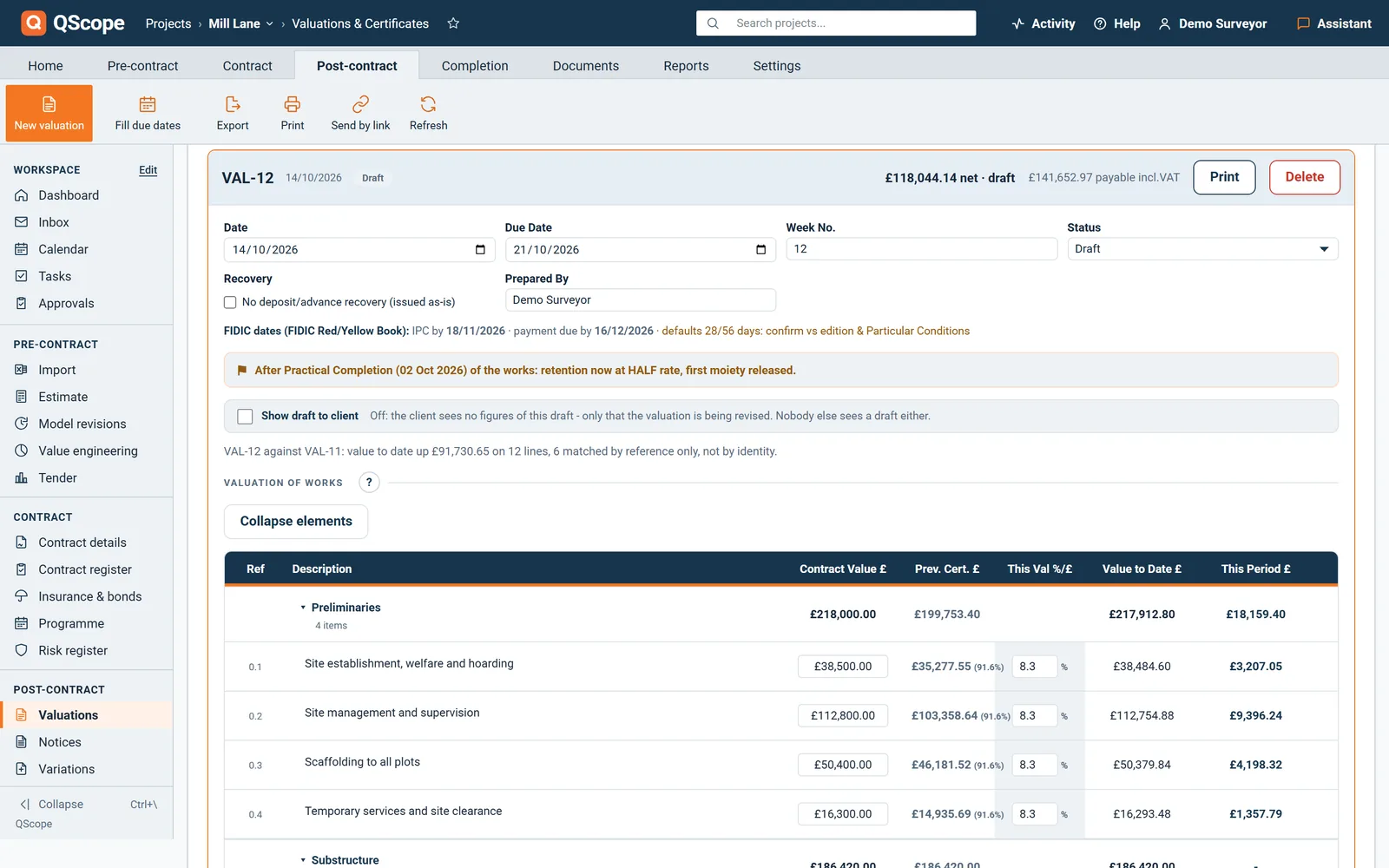
02Each valuation carries its own Date, Due Date, Week No. and Prepared By.
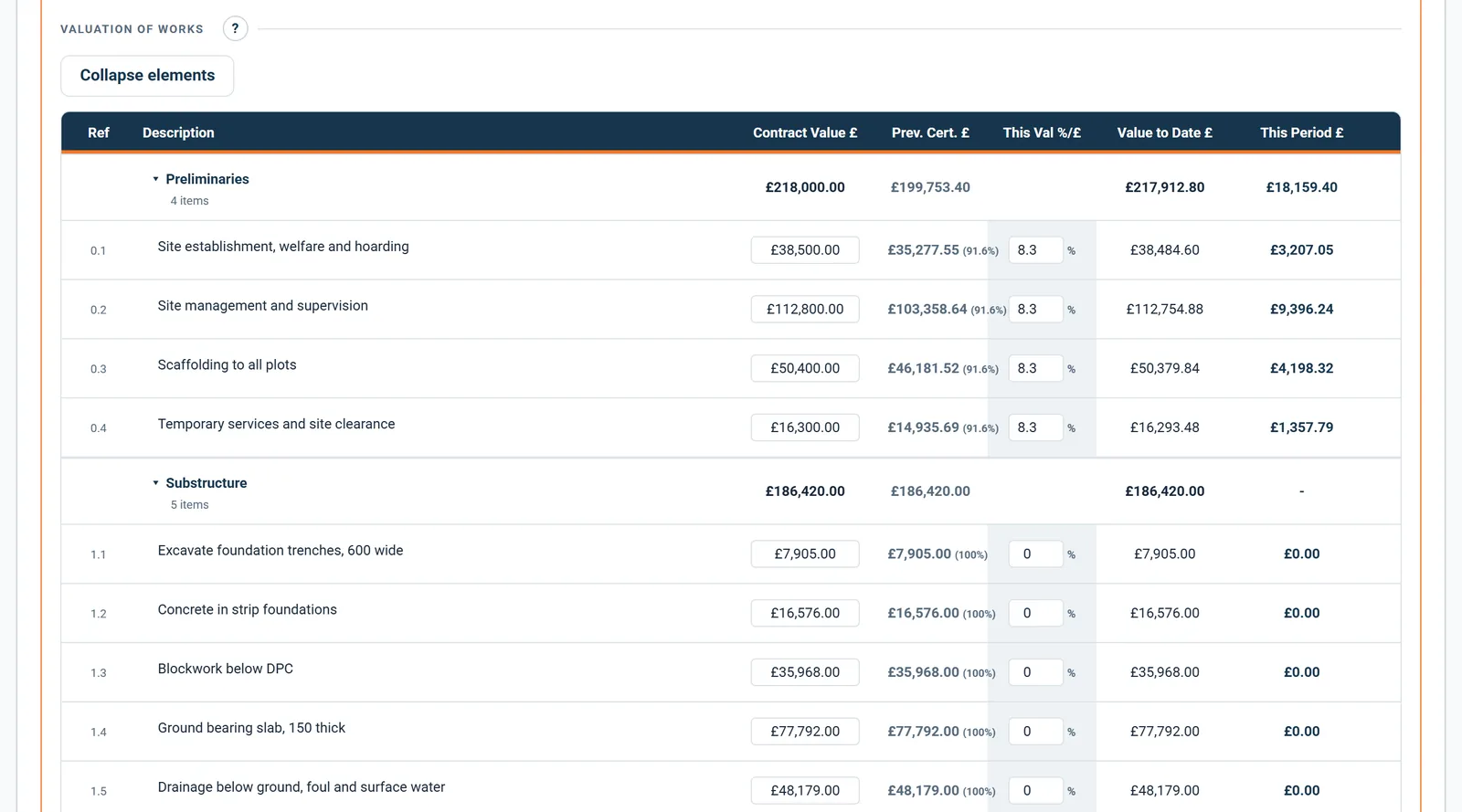
03Lines are grouped by element with subtotals, and Collapse elements folds a long bill down to its headings.
04You can edit the description and contract value of a line or remove it while the valuation is a draft.
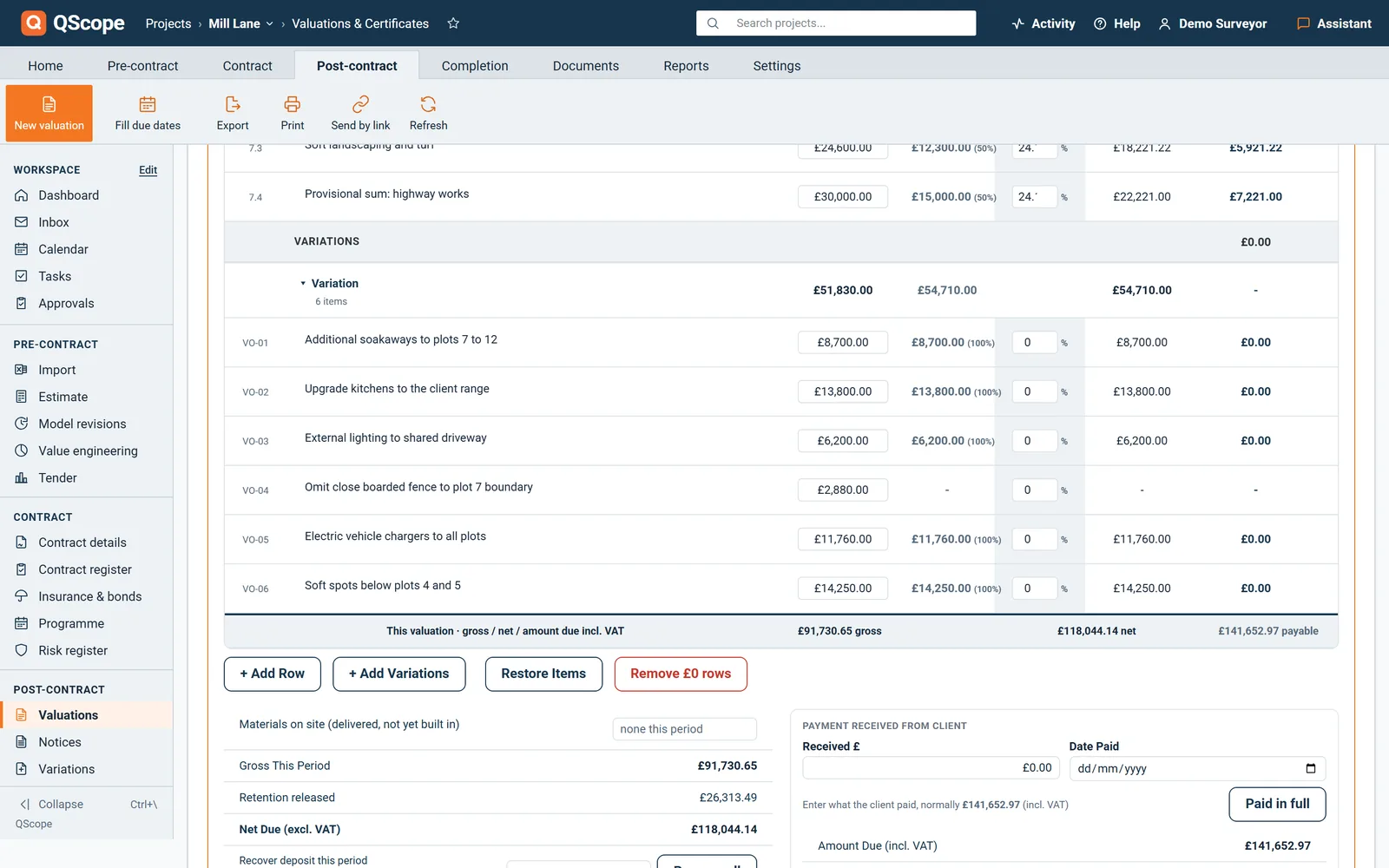
05+ Add Row adds a line that is not in the bill.
06Restore Items puts back any bill lines you removed, with their previous certified value.
07Remove £0 rows clears the lines with nothing claimed this period.
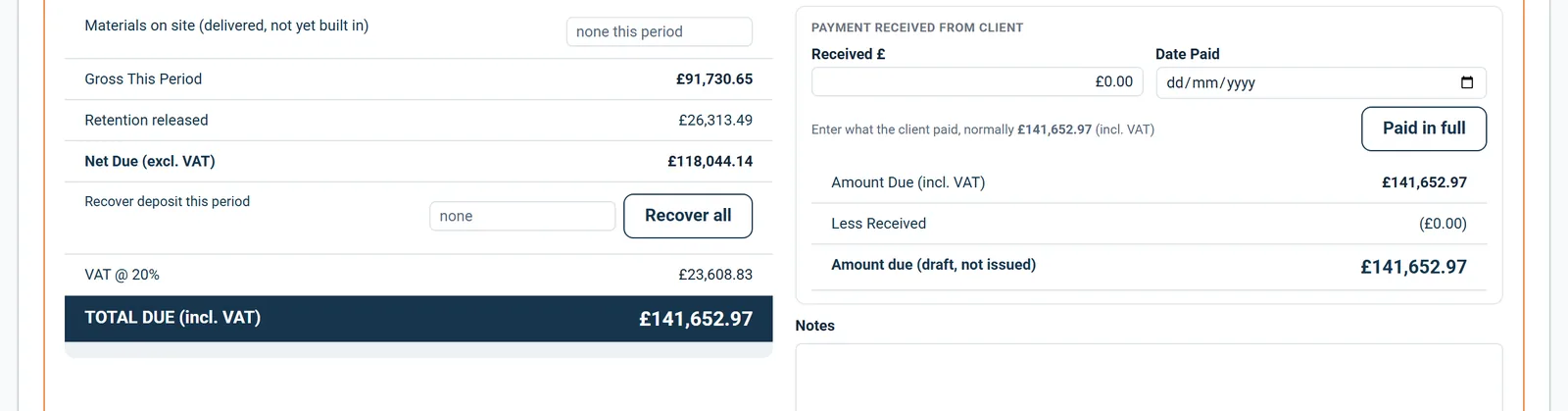
08Enter materials delivered but not yet built in, and they are added to the gross for this period.
09Recover a deposit on any valuation by typing the amount or pressing Recover all.
10Tick No deposit/advance recovery (issued as-is) for a certificate already issued without recovery.
11Record what the client paid and when, or press Paid in full, and the card shows what is still due.
12Notes on the valuation print on the certificate.
13A draft can be deleted, an issued valuation cannot.
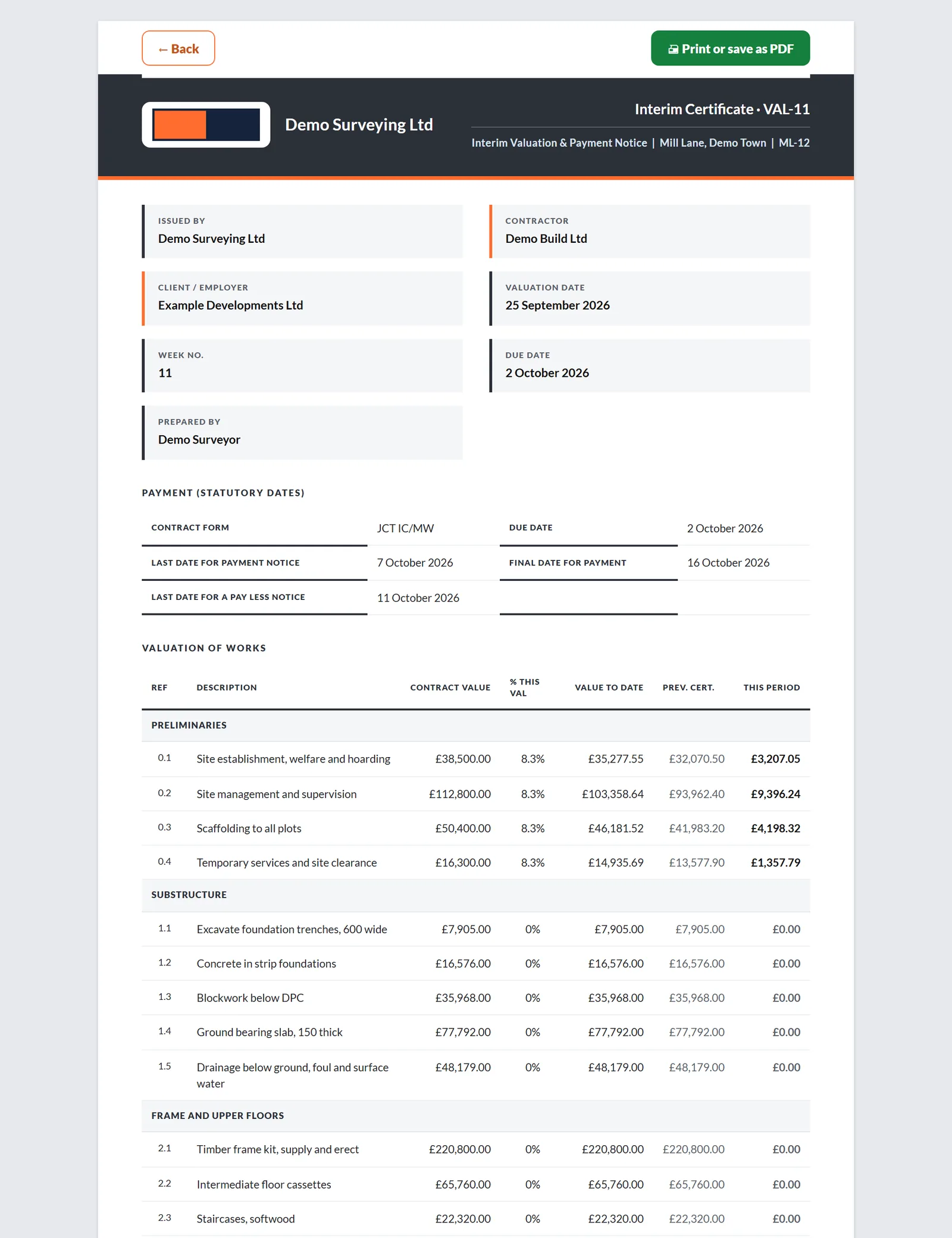
14Choose a modern or a classic monochrome layout for every printed certificate.
15Payment terms notes from Settings print on every certificate.
16If an issued valuation goes back to Draft, the client sees only that it is being revised, with no figures.
17Record a payment notice or pay less notice that arrived by post or email, with its date, amount and basis.
18The client disputes individual lines in their own column, each with a reason, and the total must agree to the penny.
19The client page shows the notice dates, and once a date has passed that answer is no longer offered.
20On a draft the client can only ask a question.
21After an answer you can issue on your figures or on theirs with one button.
22A deadline link opens the right valuation and highlights it.
23Set Acting as and the tab renames itself to Valuations & Certificates on the client side or Payment Applications for a subcontractor.
24Valuations are numbered from the highest number used, so deleting a draft never repeats a number.
25A new valuation takes its due date from the valuation schedule in Settings.
26When a fixed sum differs from the old percentage, the card and the printed certificate say by how much.
Functions 27 to 51
27The foot of the table shows gross, net and the amount due including VAT for this valuation.
28A line with nothing certified shows a dash rather than a row of zeros.
29When retention goes down, the card shows Retention released as a positive figure.
30Advance recovery appears as its own line, naming the advance and the amount recovered.
31A negative valuation is labelled DUE FROM CONTRACTOR rather than shown as a minus figure.
32Where a deposit or advance is recovered, the certificate says whether VAT came off before or after.
33If the due date belongs to a different valuation in the schedule, the draft tells you to check the dates.
34Each valuation states in one sentence how much the value to date moved since the previous one.
35A line with an advance against it shows how much of the advance is included in the certified figure.
36A valuation cannot be issued until a contract form is chosen in Settings.
37Where a deposit or advance is recovered, the valuation cannot be issued until you say whether that payment was invoiced with VAT.
38An unset or out of range rate stops the issue with CANNOT ISSUE CLEANLY and asks you to confirm.
39An issued card shows the date it was issued and the rates it was issued on.
40If a rate is missing, the program warns before printing and marks the certificate INCOMPLETE.
41A printed draft states that its dates are worked out from today's settings and fixed at issue.
42The certificate opens with Print or save as PDF at the top.
43The email to the client is titled Valuation VAL-04 for your review with the site name.
44When the client answers, you get an email naming the valuation and the answer.
45The client's answer sits on the card with their figure, yours and the difference line by line.
46A status set by the client through the link is marked via link.
47If a valuation went out without payment dates, the card says so and explains what the client cannot do.
48When the payment notice date passes with no notice recorded, the card says so with the date.
49Valuations Summary prints every issued valuation with gross, retention, net and the running total.
50Detailed Valuation Report sets the bill against the percentage certified in each valuation you choose.
51The dashboard flags a valuation still in draft after its period has ended.