You are the QS
Value the job, and the certificate, the retention, the VAT and the payment dates follow from it. Variations, dayworks and the final account sit on the same record, so the money reconciles instead of living in six spreadsheets.
30 days free, no card.
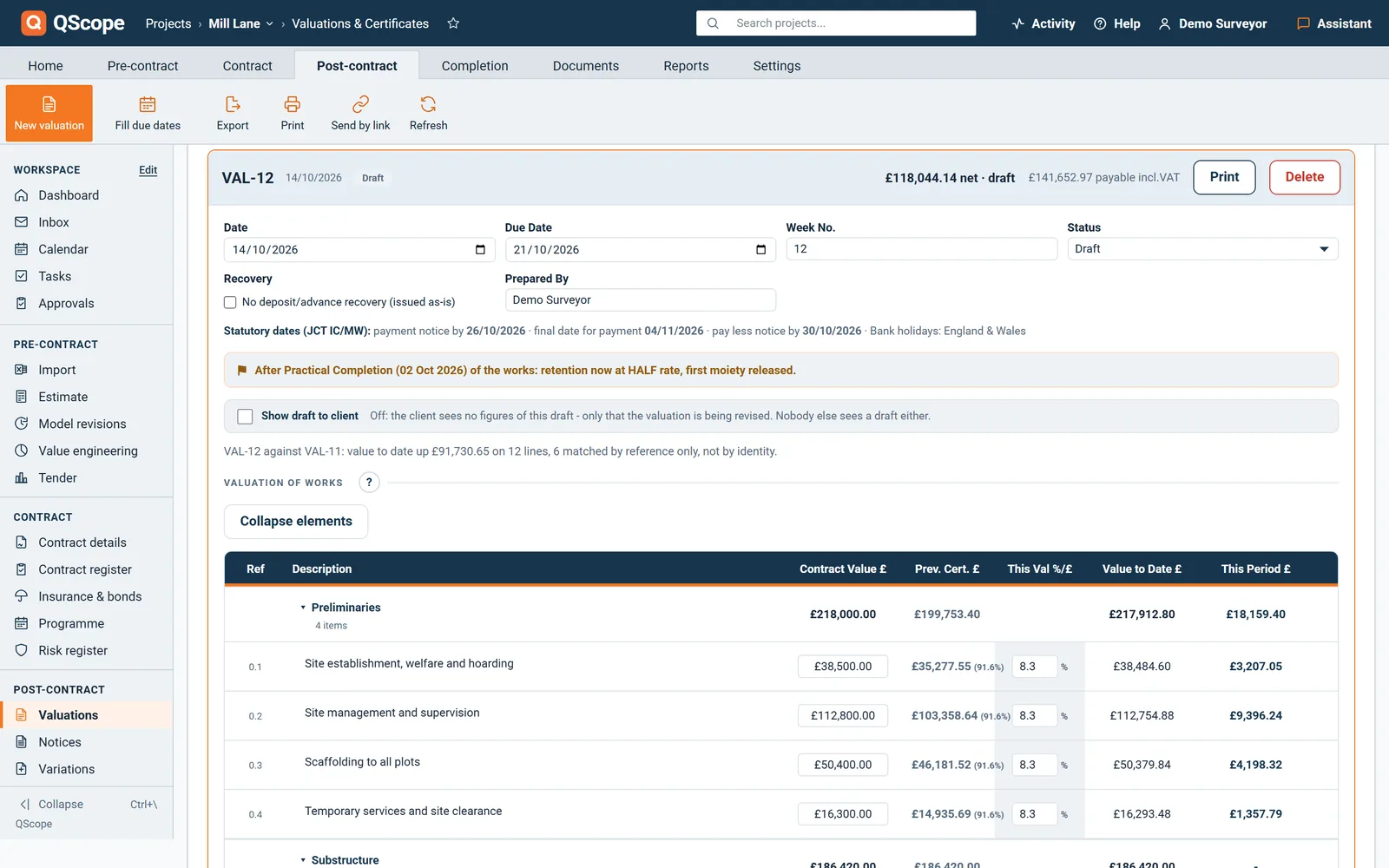
Retention, recoveries and VAT come off in the right order, so the amount due is the amount the client owes, not an estimate you correct later.
You enter one thing: how far each item has moved this period.
QScope produces the certificate from it, deducts retention at the right rate, charges VAT once on the reduced net, and prints the statutory dates the payment runs to. The figure a client certifies real money against is the figure you valued, on your practice letterhead, not a number re-keyed into an accounts package that never sees the contract.
Variations
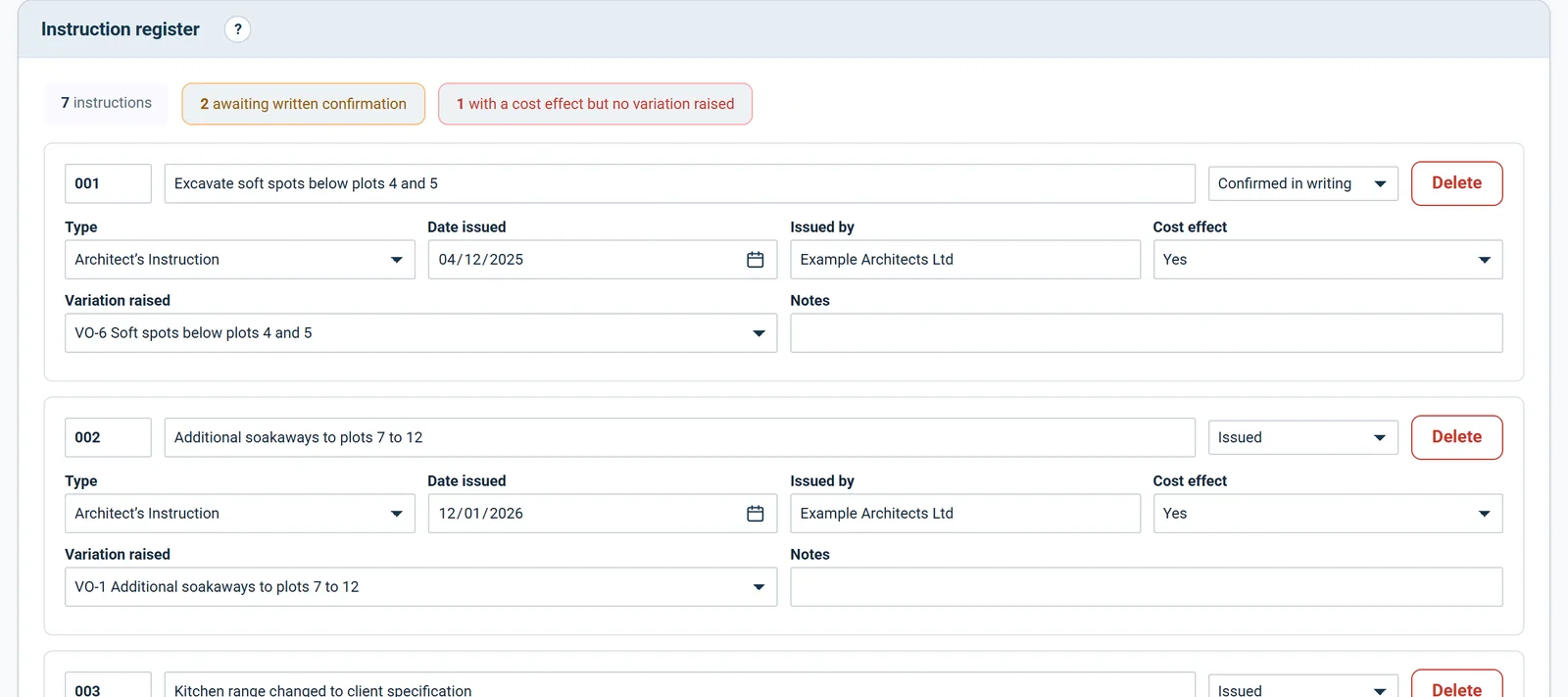
A variation without an instruction behind it is the first thing an auditor pulls.
Every variation carries its valuation rule and its instruction, so the net effect on the contract sum is defensible line by line.
Final Account
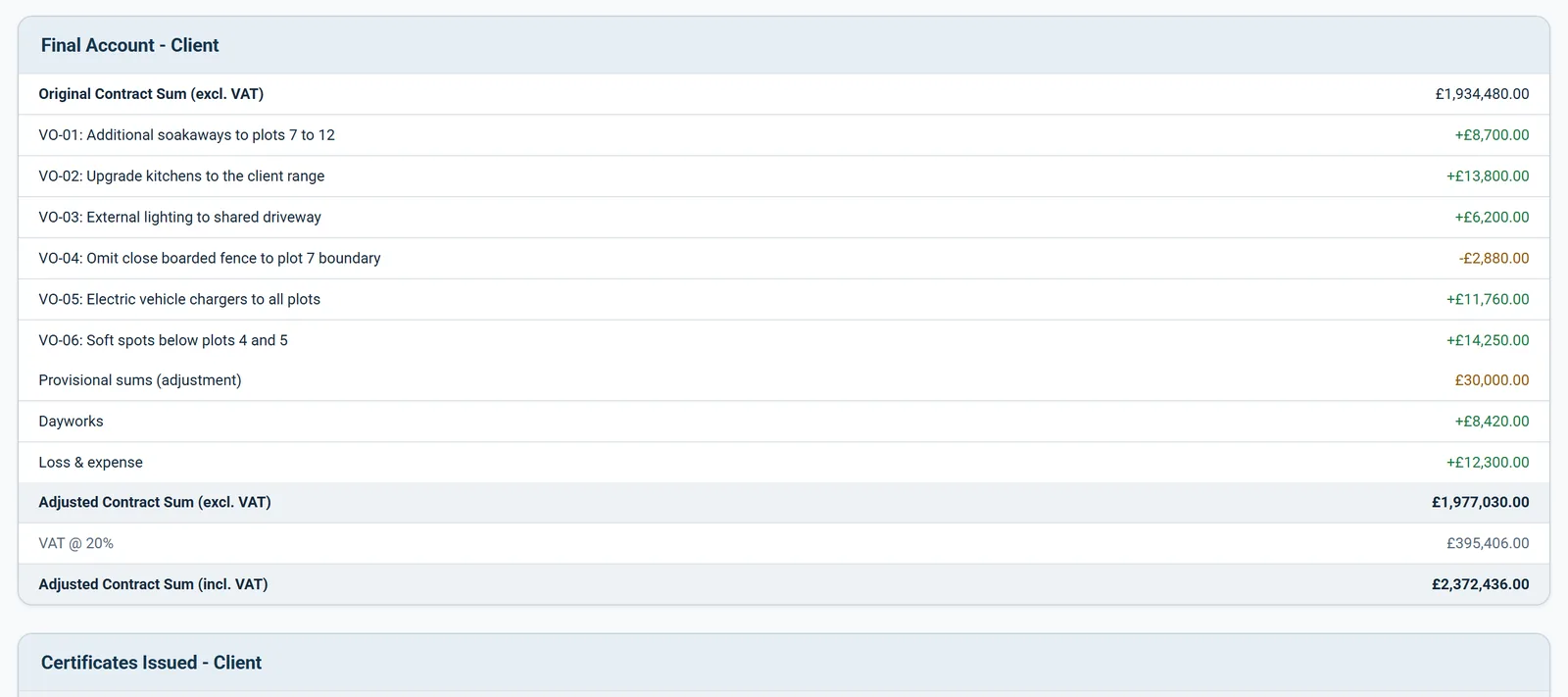
The final account starts from the adjusted contract sum, takes off what has been certified and any unrecovered deposit or advance, adds the retention release, and lands on the balance due.
Adjusted sum less certified is zero, so the balance is the released retention less the damages. No line is counted twice.
Reports
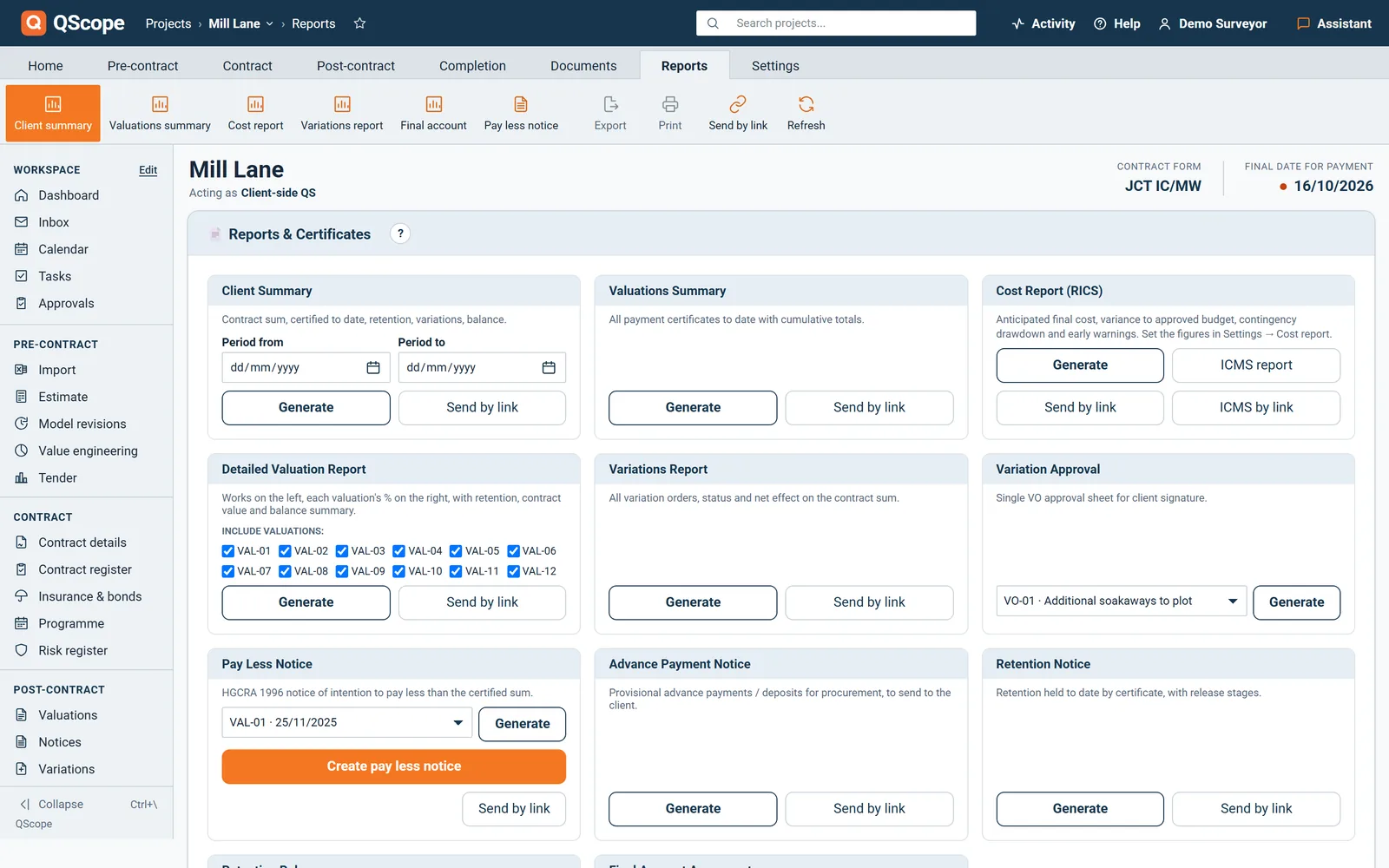
The cost report, the retention notice, the payment schedule and the variation register go out as documents on your own letterhead, alongside the certificate the client is waiting for.
The anticipated final cost carries the committed change and the risk allowance, so the variance is the number a client actually has to plan for.
Who it is for
You are applying
You value it, and the certificate cuts itYou value the work line by line and submit the application. When the certificate lands short, the difference is argued line by line too, and your valuation is the evidence.
You are hereYou are certifying
You cut it, and you sign your nameYou value the same lines from the other chair and issue the certificate. Every percentage you cut has to survive the question of why, a month or a year later.
Certifying paymentYou are doing both
You value your own work, aloneYou price it, you value it and you apply for it yourself, between site visits. The certificate still has to add up as if a surveyor had built it.
Doing both yourselfYou are reporting
You certify value the lender pays onYou certify value in place so the lender can release the next tranche. The valuation is the same arithmetic; the reader was never on site.
Recommending a drawdownThe client, the architect and the tenderer are not on this list. They are the people you let in on a link: they see the one document you sent them, answer it, and that answer is written into the record. No account, no licence, no charge, on every plan.
The questions this page raises most often, answered without a sales pitch at the end.
No. You value the way you already do, by percentage or fixed sum. QScope does the deductions, the VAT and the dates that a spreadsheet leaves you to remember.
Yours. Every document prints on your practice letterhead. QScope is the tool, not the name on the paper the client sees.
No. You enter the tax rate and confirm the statutory days for the contract, so the figures are yours and sit behind the audit trail. QScope calculates from what you enter, it does not assert the number for you.
The audit trail is not editable, which is the point, but your project data is yours and exports to CSV whenever you need it.
From the blog
Three pieces from the same corner of a contract as this page, answered at length and without a sales pitch at the end.
Since the domestic reverse charge, most VAT-registered construction supplies inside CIS swap who accounts for the tax: the customer does, not the supplier. Why the invoice looks wrong and is right, the end user exception, and the cash flow effect nobody warns you about.
Read nowThe honest answer is that either beats a two-page quote, and the choice mostly follows who the client is: RIBA’s domestic forms are written for homeowners, JCT Minor Works for jobs run by a professional. And Minor Works is not a small version of the big forms.
Read nowFor construction the tax point is usually the earlier of invoice or payment. Retention is different: its tax point waits until the retention is received or invoiced.
Read nowKeep reading
Value the job, and the certificate, the retention, the VAT and the payment dates follow from it. Variations, dayworks and the final account sit on the same record, so the money reconciles instead of living in six spreadsheets.
30 days free, no card.
Rather ask first? Write to help@qscope.co.uk and you will get a reply within one working day, Monday to Friday.