Retention
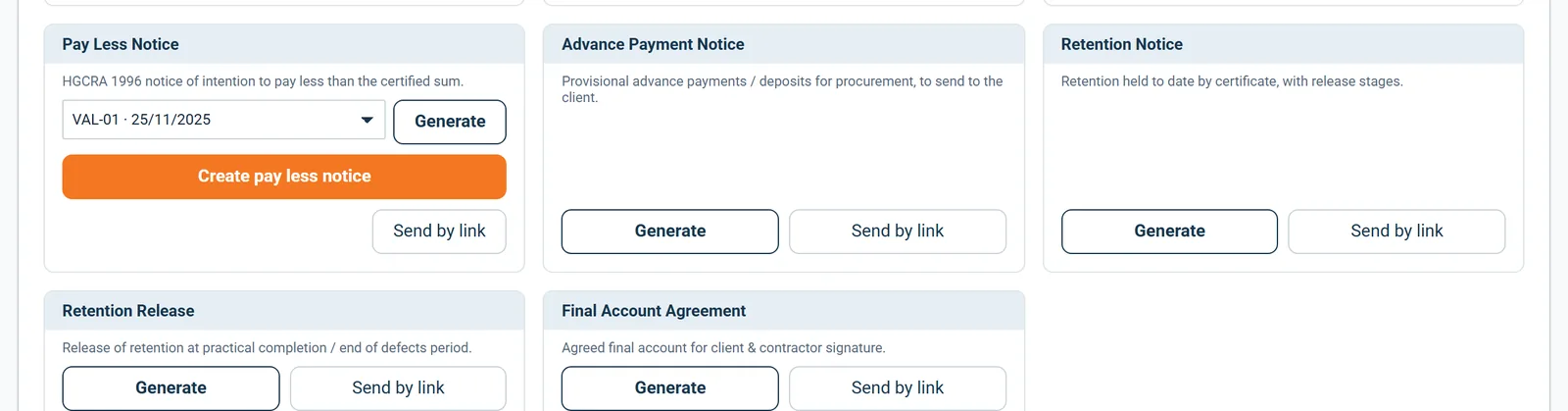
The number on your dashboard and the number on the notice you sent the client have to be the same number. When they are not, the conversation stops being about the works.
30 days free, no card.
Enter the practical completion date and QScope applies the right rate from that valuation onwards, without you touching the setting.
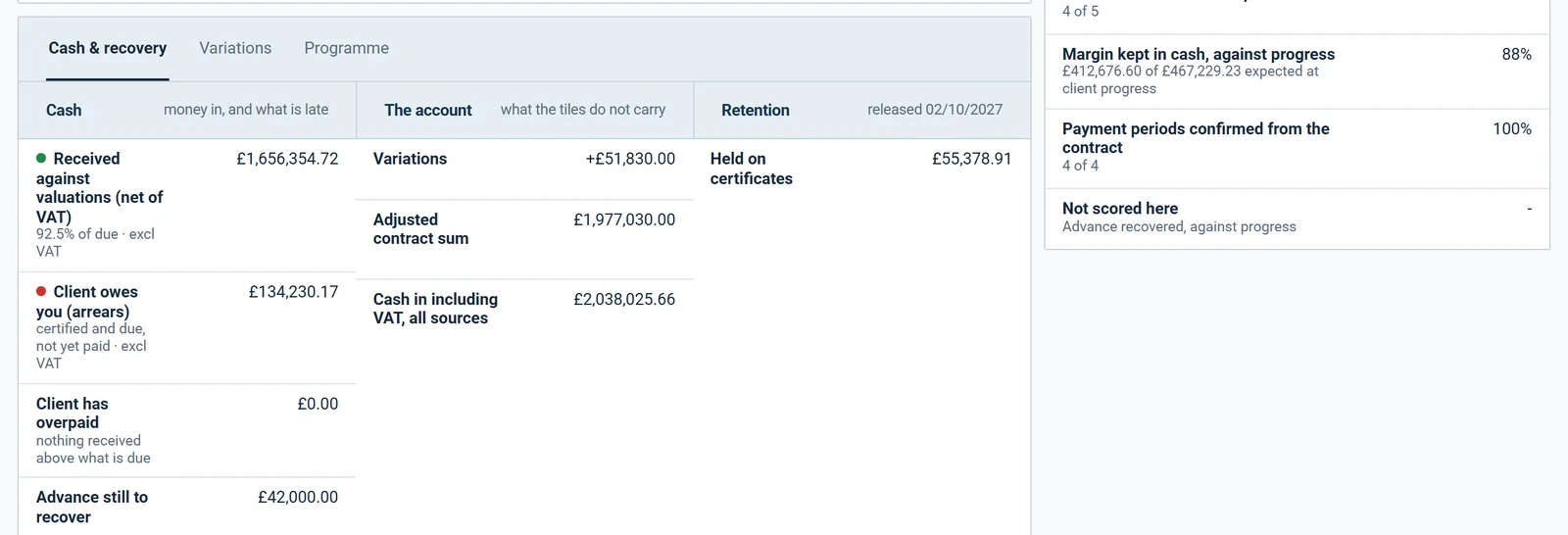
Under JCT the retention rate halves at practical completion and falls away at the end of the rectification period.
Everyone knows that. What goes wrong is remembering to do it in the month it happens. Enter the practical completion date and QScope applies the right rate from that valuation onwards, without you touching the setting.
Reports
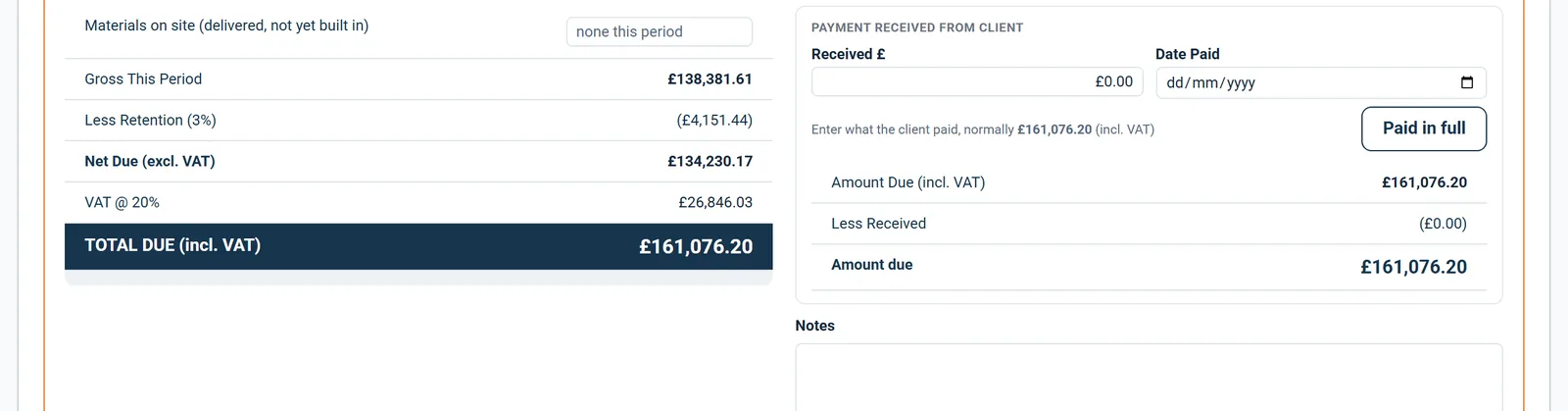
Retention is a deduction from a payment.
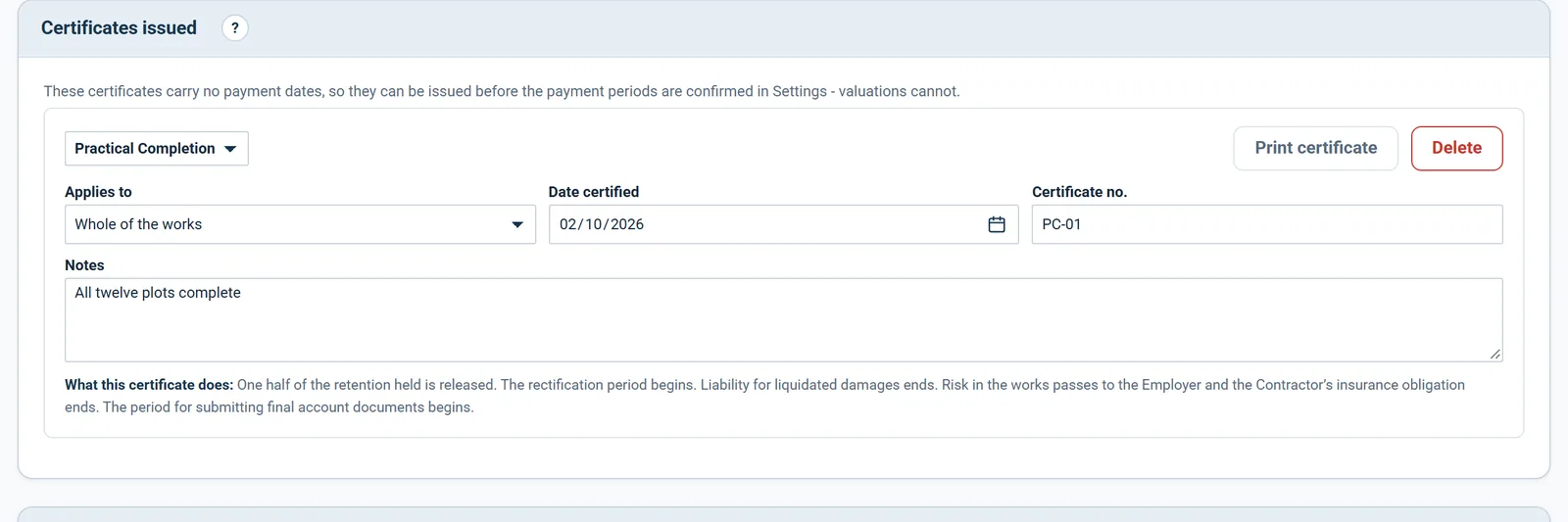
Half of the retention held was released at practical completion on 7 Sep 2026. The balance is due for release on 7 Sep 2027.
Client Valuations
There is nothing to retain from until a payment is certified.
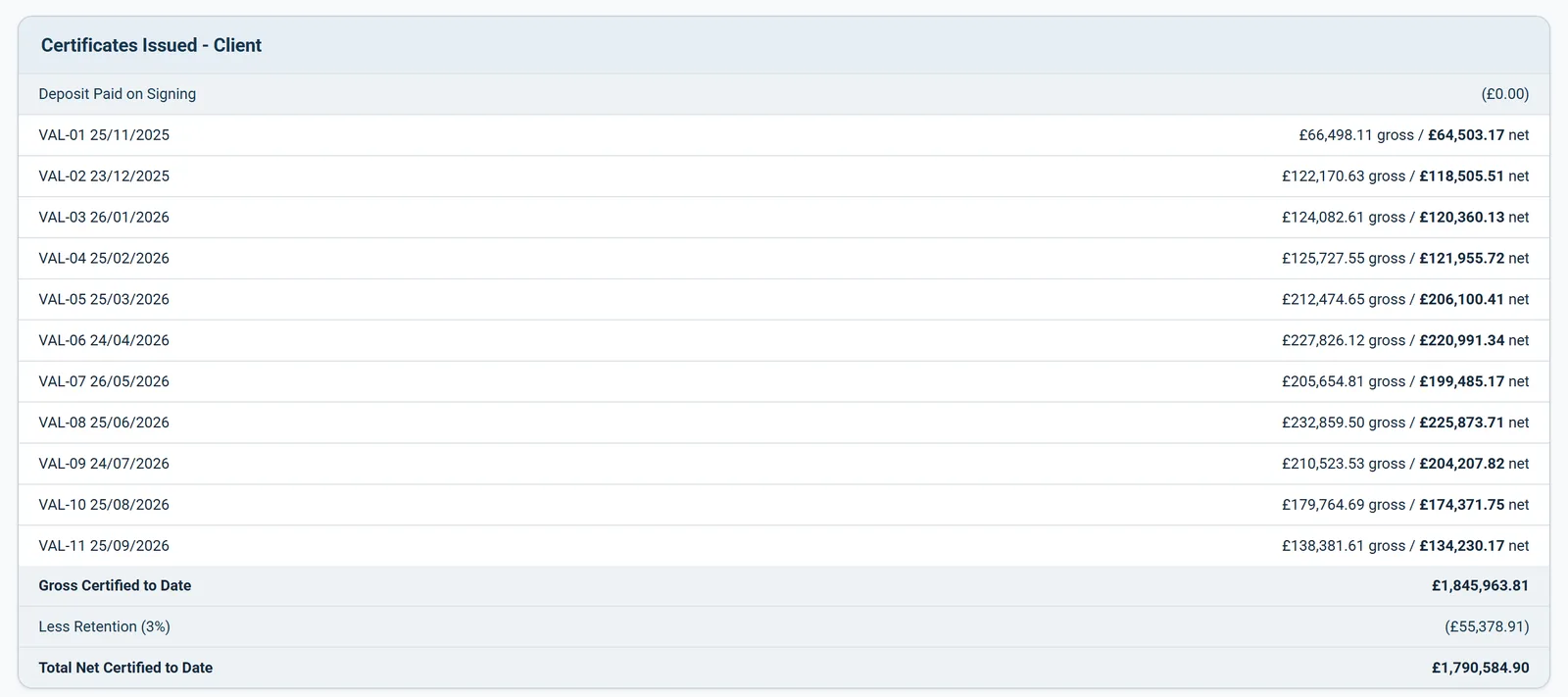
Retention is the £1,209 deducted here. The held figure of £4,205.75 is the sum of those deductions across every certificate to date.
Completion
The rate does not fall on a date typed into a settings field.
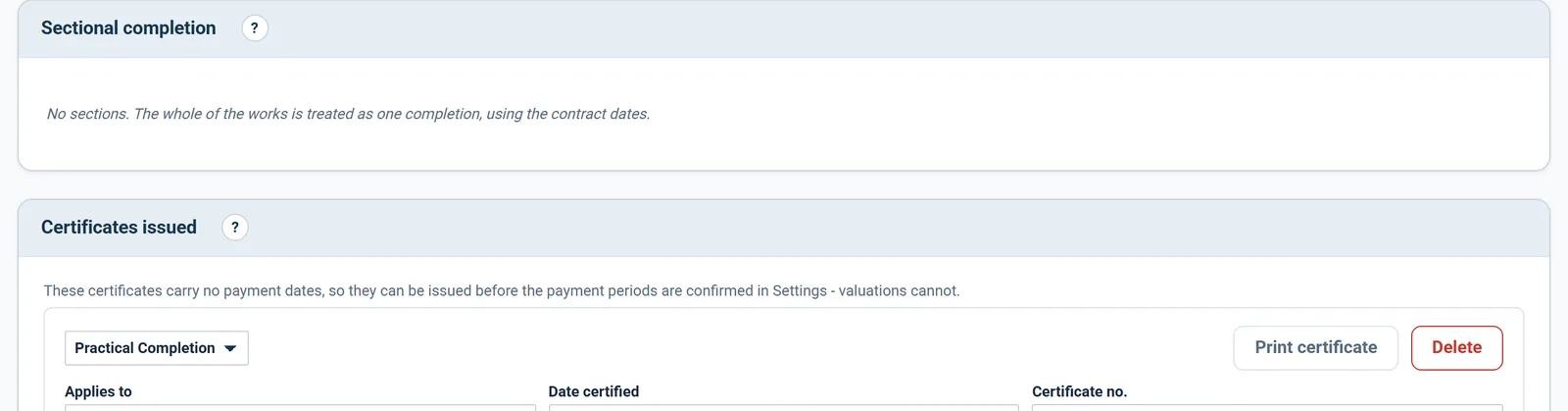
Enter the certified date and QScope halves the rate from that valuation, starts the rectification period and releases the first half of the retention, all from the one date.
Final account
Retention does not disappear at the final account, it is added back.
The retention held is added back explicitly, so the client can see the security returned rather than quietly netted off the account.
Retention
FIDIC has no practical completion and no rectification period.
FIDIC has no practical completion. The first half is released at Taking-Over and the balance at the end of the Defects Notification Period. Percentages and dates are starting points to verify against the Particular Conditions.
Who it is for
You are applying
Your money sits in somebody’s drawerRetention comes off every application you make, and half of it sits there long after handover. Your job is making sure both releases actually arrive.
Applying for paymentYou are certifying
You hold it, and you must release itYou hold retention on certified value and release it on the dates the contract carries. The notice you issue has to match the balance you actually hold.
Certifying paymentYou are doing both
Held on you upstream, held by you downRetention is held on you upstream and held by you downstream, and nobody chases either release on your behalf.
Doing both yourselfYou are reporting
You check the fund before it releasesYou check the retention position before recommending a release: what is held, what has been released, and whether the fund is where the contract says.
Recommending a drawdownThe client, the architect and the tenderer are not on this list. They are the people you let in on a link: they see the one document you sent them, answer it, and that answer is written into the record. No account, no licence, no charge, on every plan.
The questions this page raises most often, answered without a sales pitch at the end.
Whatever your contract says. QScope suggests a default from the contract form you selected, 3 per cent for JCT Standard and Design and Build and 5 per cent for Intermediate and Minor Works, and you can override it on any project or any subcontract.
No, and it usually does not. Each subcontract carries its own rate, and the difference between what you hold down the chain and what is held from you is part of the cash position on the dashboard.
At the end of the rectification period, calculated from the practical completion date and the period length in your project settings. The project list warns you as that date approaches, because unclaimed retention is the most commonly forgotten money in the industry.
Normally not, and QScope lets you set a zero retention rate on an individual variation for exactly that reason.
Yes. On a FIDIC job it deducts retention at the percentage in the Contract Data up to the stated limit under Sub-Clause 14.3, then releases the first half at Taking-Over and the second at the end of the Defects Notification Period under Sub-Clause 14.9, in calendar days. The figures are published starting points to check against your Particular Conditions.
From the blog
Three pieces from the same corner of a contract as this page, answered at length and without a sales pitch at the end.
Many contracts cap the total held. Once the cap is reached the deductions should stop, usually around the point the job is sixty per cent done, and nobody will tell you the month it happens.
Read nowYour money, held back as security that you will come back and fix defects. What the percentage is, when each half is released, and why holding it after the job is done is simply late payment.
Read nowRetention comes back on two triggers your contract names, and it stays stuck for three usual reasons: nobody asked, the triggering certificate never got issued, or the money is quietly funding a different argument. Which one is yours, and the letter for each.
Read nowKeep reading
The number on your dashboard and the number on the notice you sent the client have to be the same number. When they are not, the conversation stops being about the works.
30 days free, no card.
Rather ask first? Write to help@qscope.co.uk and you will get a reply within one working day, Monday to Friday.