Reports
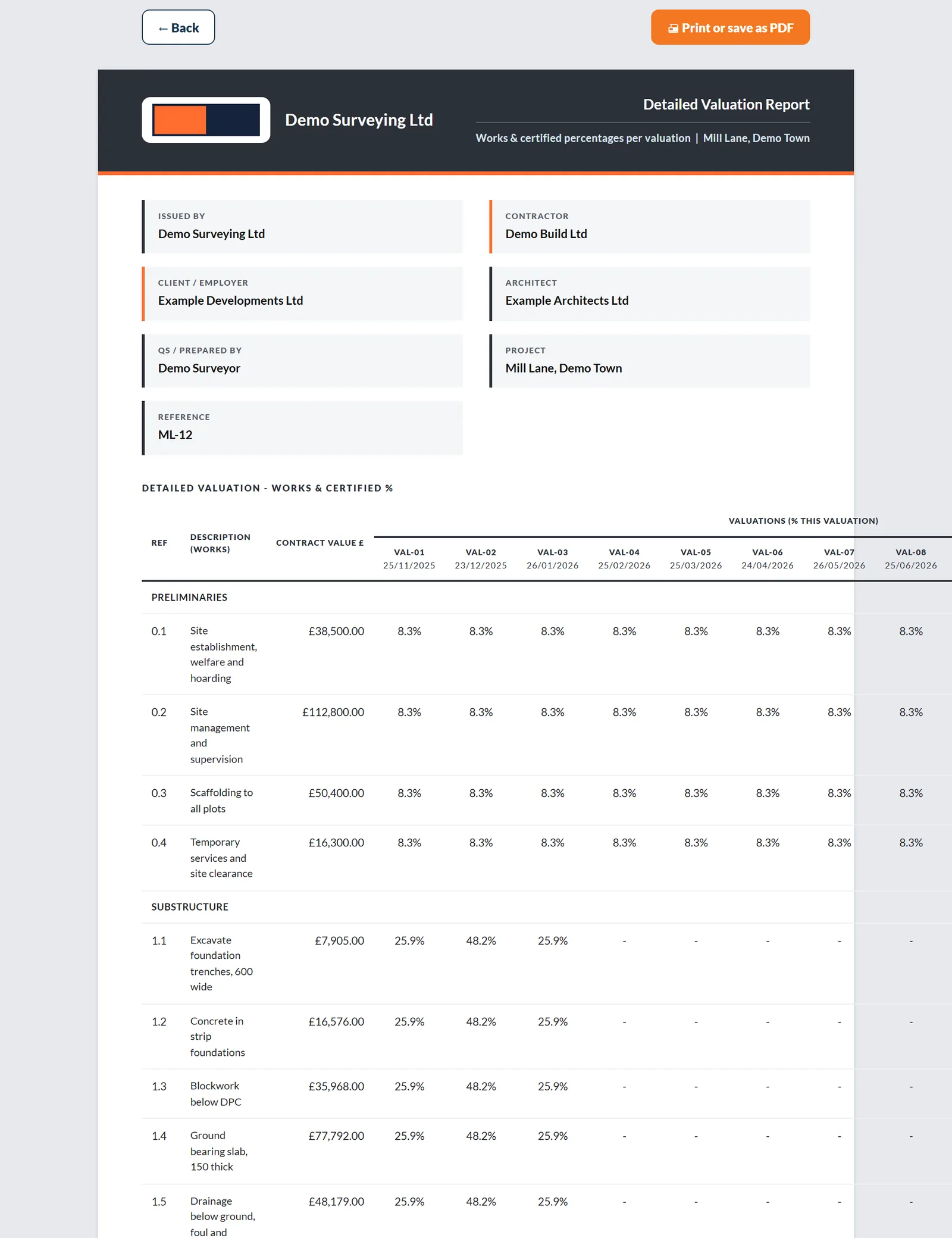
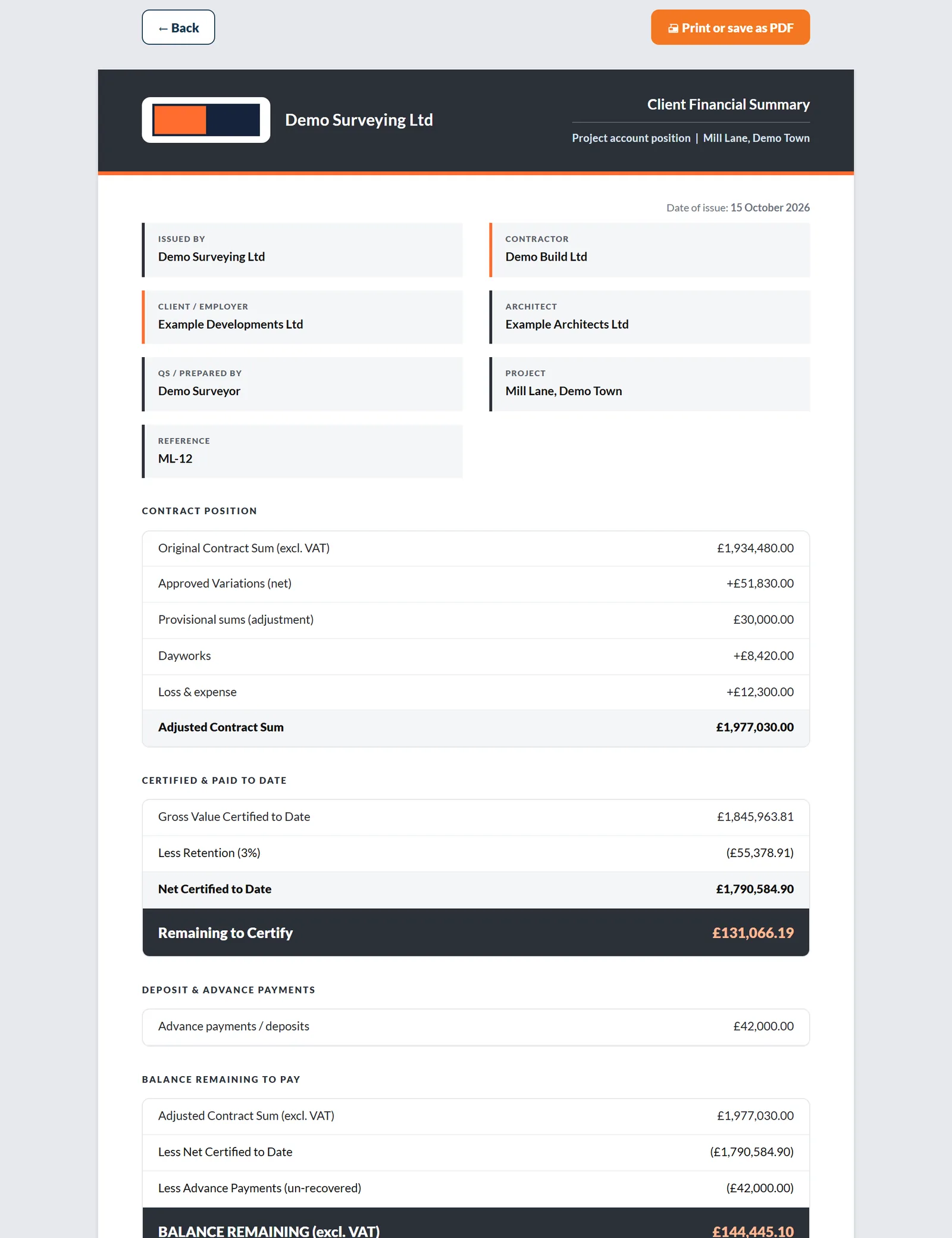
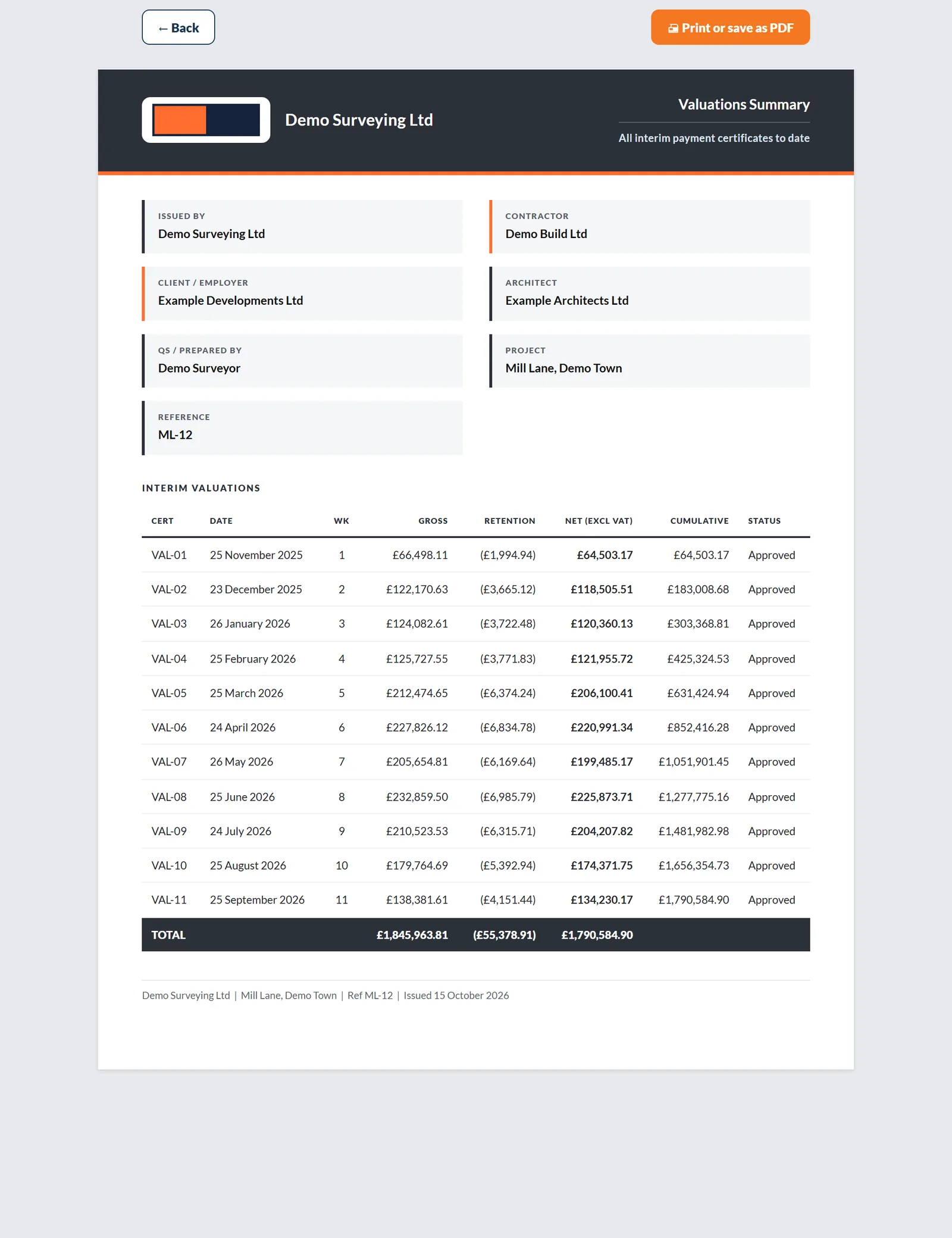
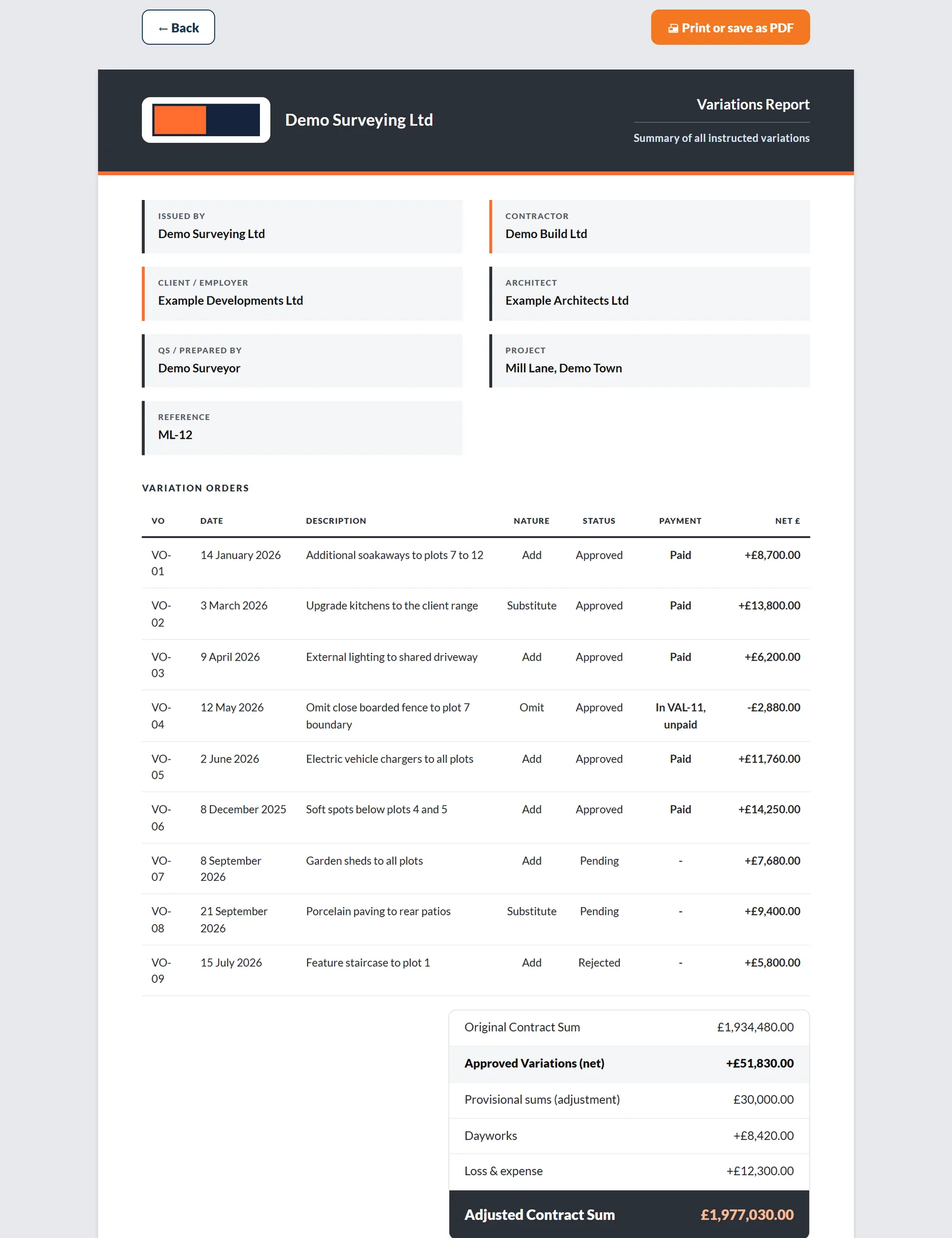
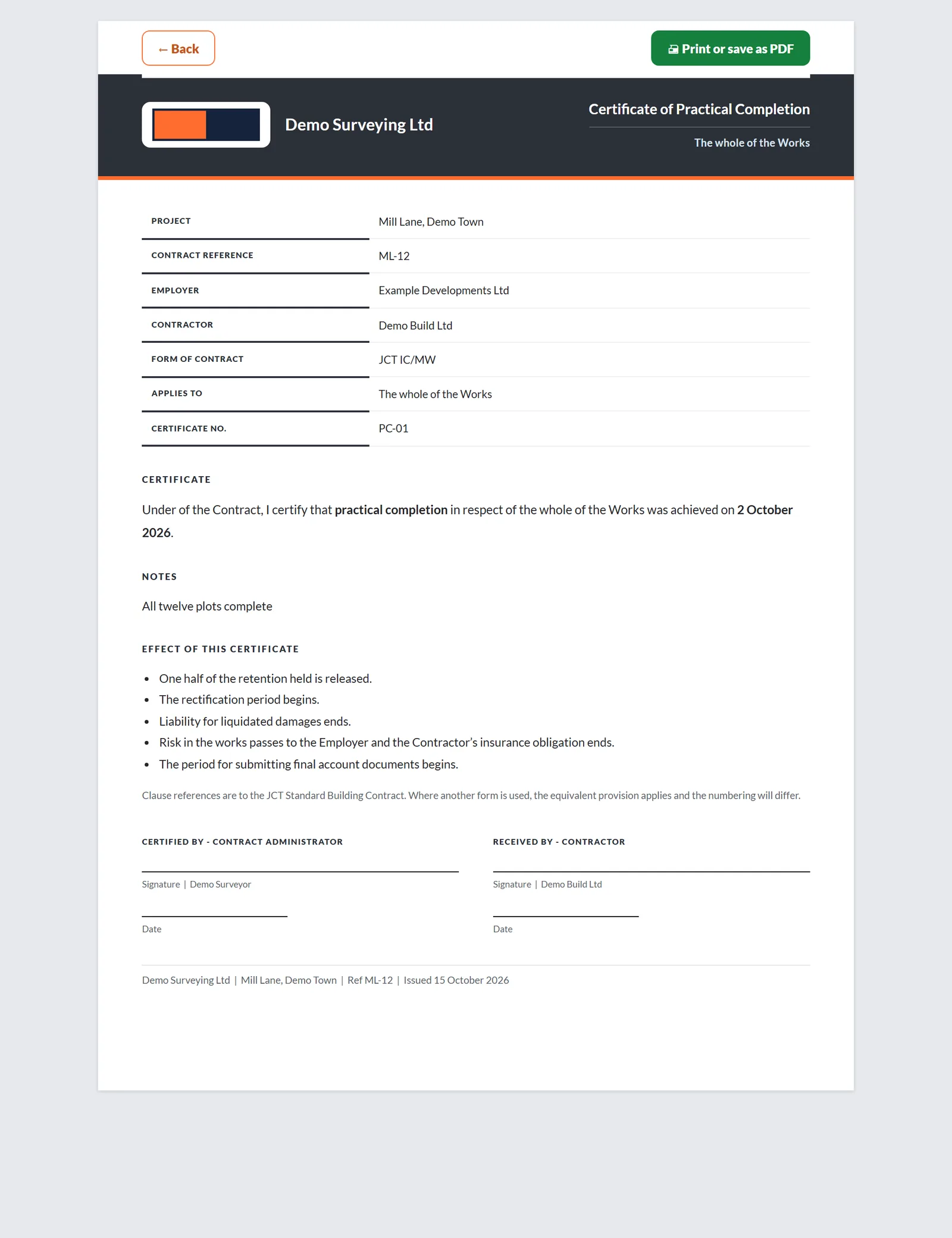
Not a report builder with forty options. Four documents a QS produces every month, each already laid out the way a client expects to receive it.
30 days free, no card.
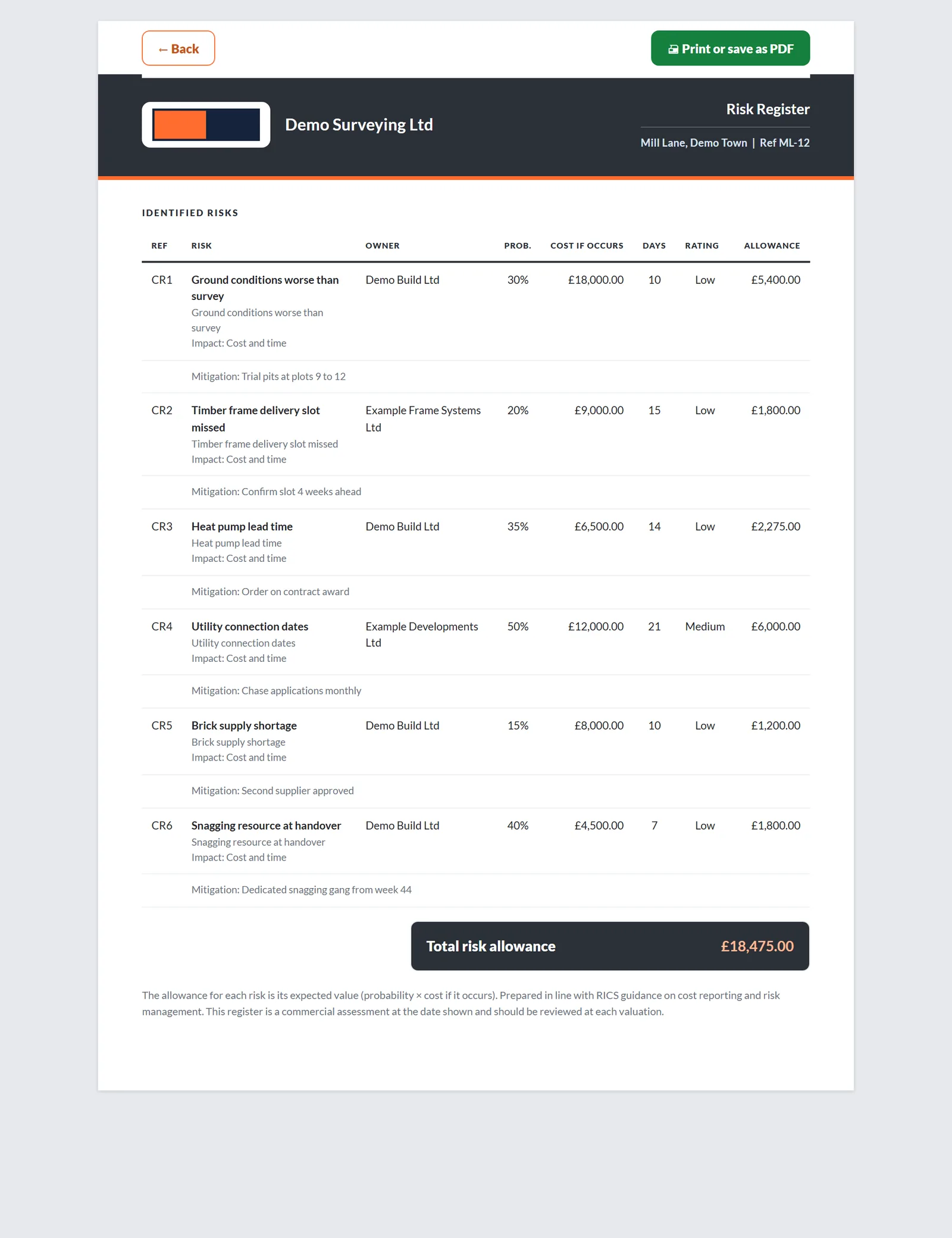
Every document QScope prints is black and white, with negative amounts in brackets and figures set in tabular numerals so columns line up.
Reports get photocopied, scanned and attached to adjudication papers.
Anything that relies on colour stops being readable at that point, and a report that cannot be read is a report that cannot be relied on. Every document QScope prints is black and white, with negative amounts in brackets and figures set in tabular numerals so columns line up.
Reports
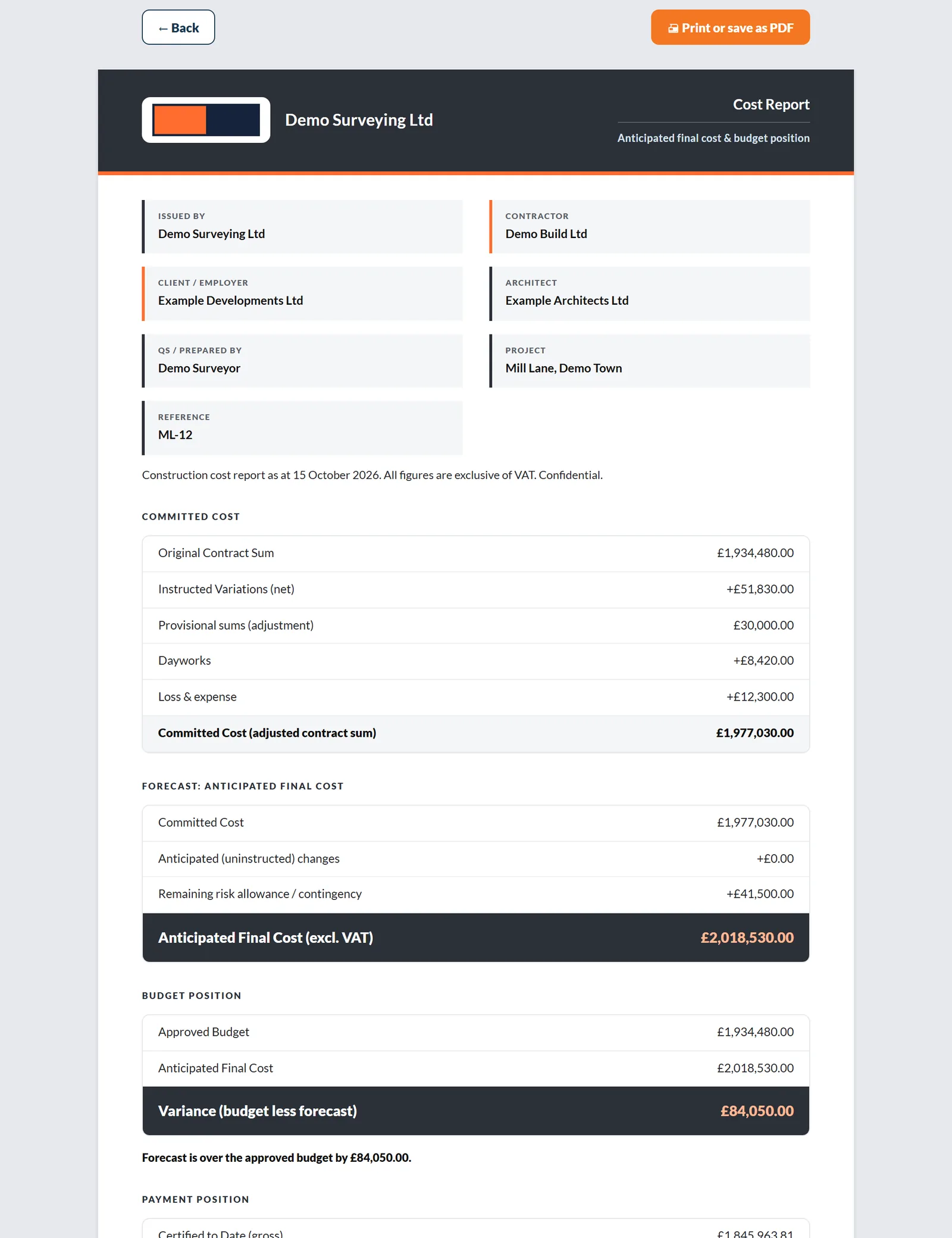
A cost report exists so the client hears about an overrun while something can still be done about it.
Anticipated final cost sits against the approved budget from the first valuation onwards, with the contingency drawn from your risk register rather than guessed.
Reports
Two documents that exist to stop an argument before it starts.
Two documents that exist to stop an argument before it starts. The retention notice tells the client exactly what is held and when it comes back. The payment schedule shows every certificate, what was due and what was received.
Cash flow
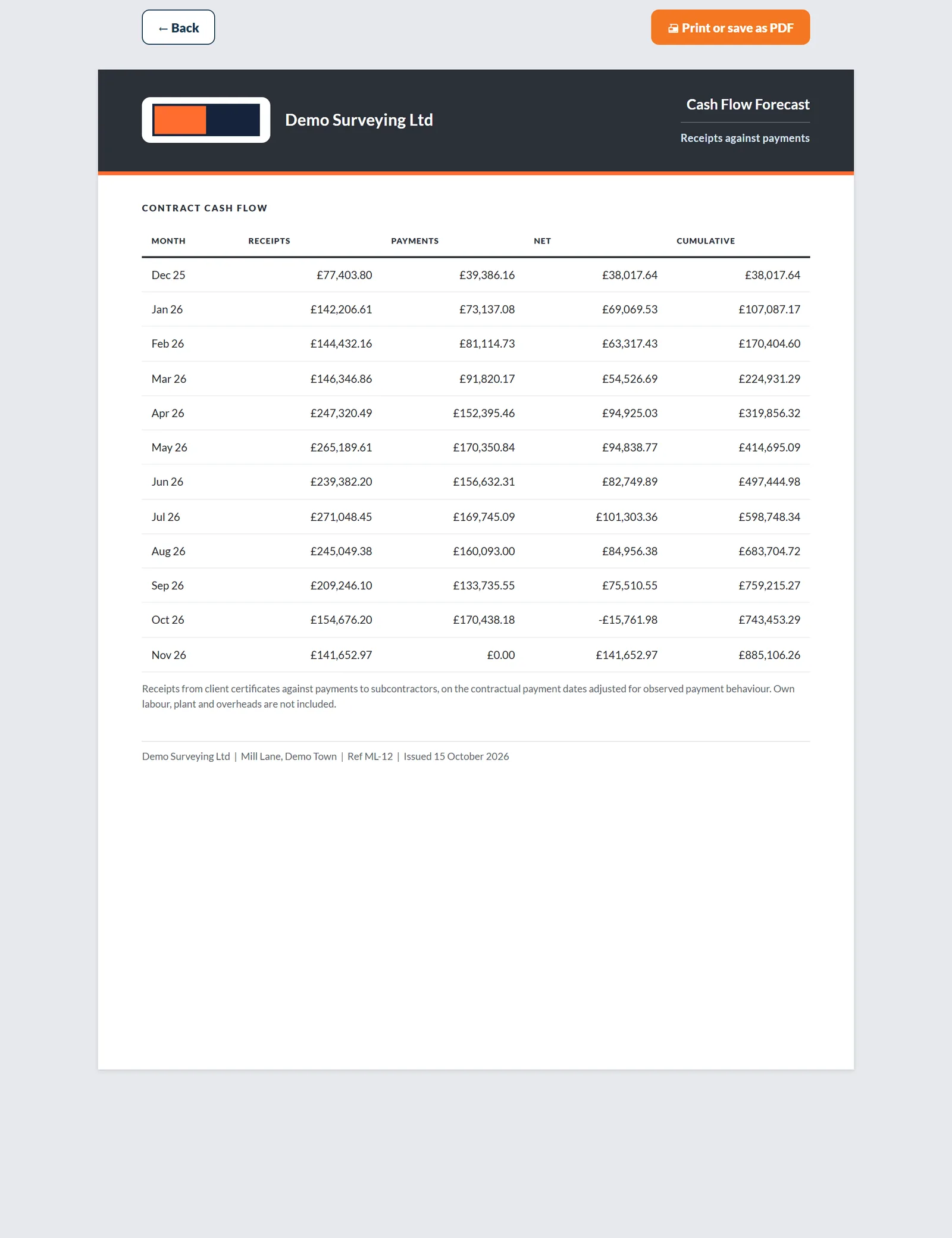
A cost report tells the client where the final number is heading.
The forecast is built from the certificates already issued and the valuation schedule ahead, so the peak funding requirement is a document you can hand over rather than a figure defended from memory.
Cost and value
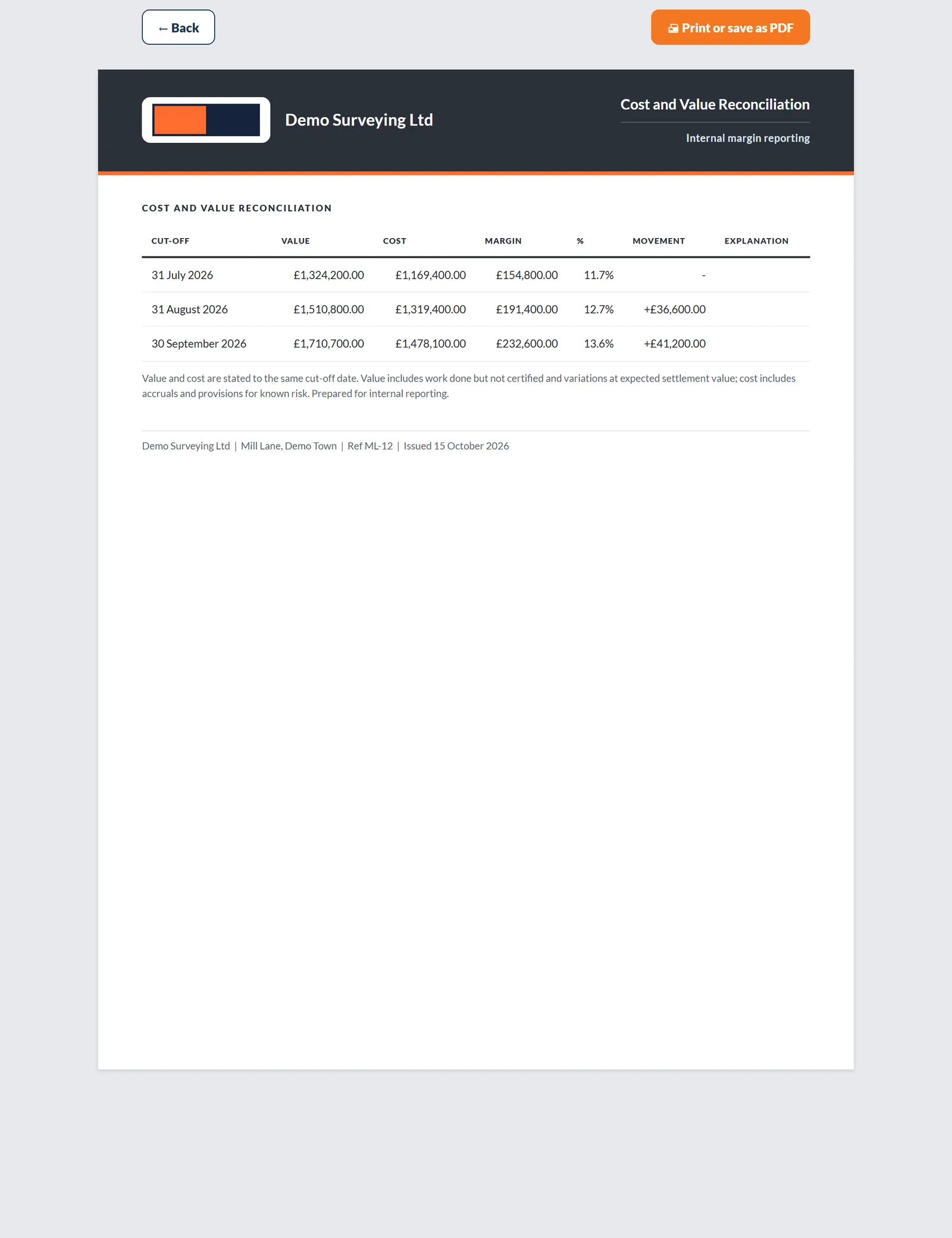
The cost report faces the client and never mentions margin.
Both work from one cut-off date, so the anticipated final cost you show the client and the margin you keep to yourself are two views of the same period, not two different projects.
Dashboard
The reports are not a separate set of numbers you keep in step by hand.
Contract sum, certified to date, retention held and due this period stay current as you value, so the cost report you send and the figure you quote on the phone are the same figure.
Who it is for
You are applying
You report cost against money securedYou report cost against the sum you have actually secured, and the difference between the two is the conversation with your own board.
Applying for paymentYou are certifying
You report on figures you certifiedYou report to the client on a job you certify, and the report has to reconcile with the certificates you signed.
Certifying paymentYou are doing both
Your record is the only report there isYou are the report: what you have applied for, what has been certified and what is still to fund, pulled from your own record.
Doing both yourselfYou are reporting
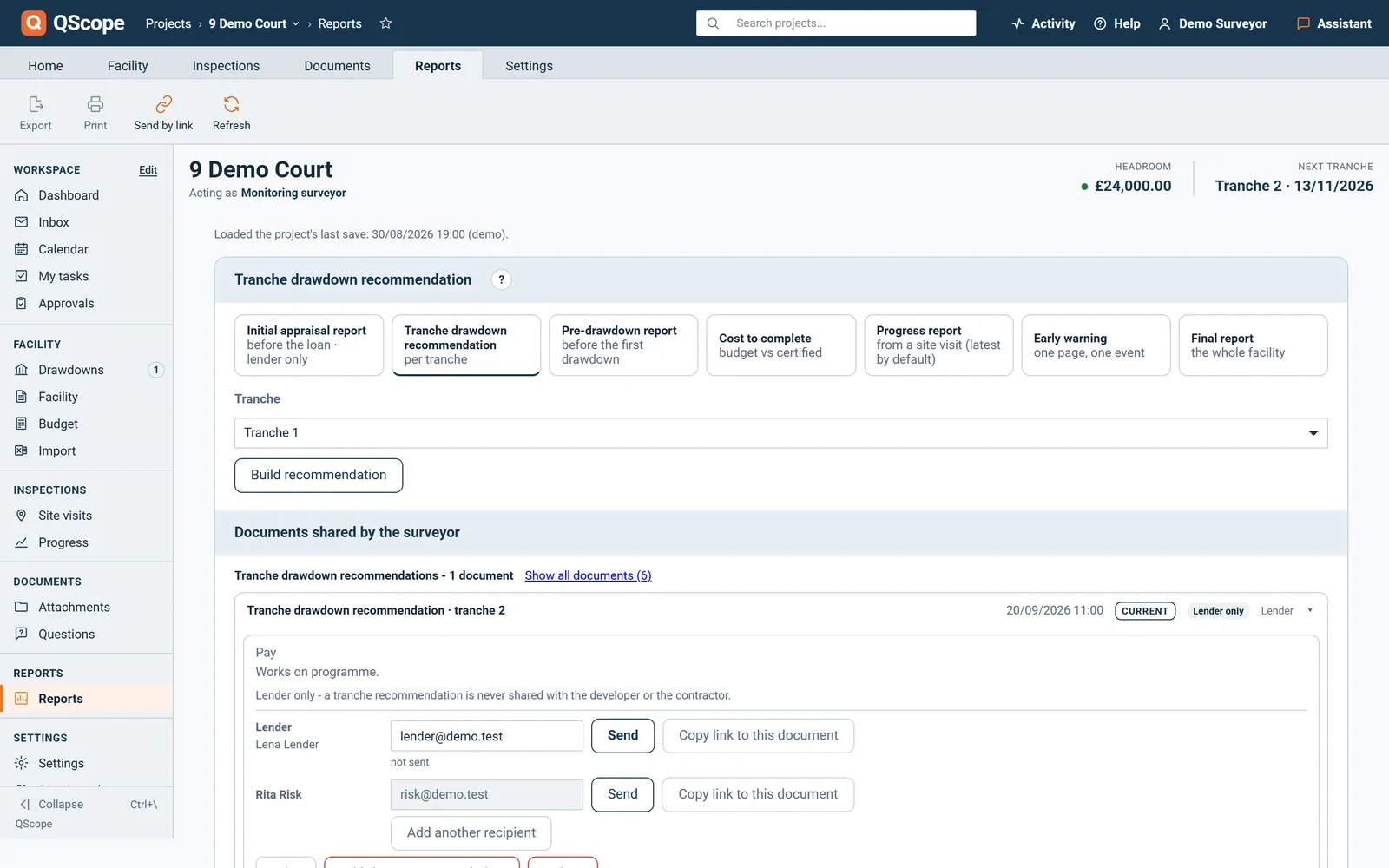
You turn the record into a drawdownYou turn the project record into a drawdown recommendation, and the figures have to reconcile before the lender releases a pound.
Recommending a drawdownThe client, the architect and the tenderer are not on this list. They are the people you let in on a link: they see the one document you sent them, answer it, and that answer is written into the record. No account, no licence, no charge, on every plan.
The questions this page raises most often, answered without a sales pitch at the end.
The layout is fixed, and deliberately so. These are documents that go into client files and adjudication bundles, and a consistent format is worth more than a configurable one. What changes is your logo, your practice name and your client reference.
Because certificates and reports get photocopied and scanned. A figure that is only red stops being a warning once it is grey. Negative amounts appear in brackets instead, which is the accounting convention and survives any amount of copying.
Not unless you print it for them deliberately. It is hidden from guest links by default, because a client who can read your contingency will always want to negotiate it.
Yes. The audit trail exports to CSV, and project data can be exported at any time, including during a trial and for 60 days after a cancellation.
From the blog
Three pieces from the same corner of a contract as this page, answered at length and without a sales pitch at the end.
Walking away does not mean downing tools, that is breach, it means finishing what you owe and declining the next job. The arithmetic of a bad client’s true cost, the difference between a hard client and a harmful one, and how to leave without a war.
Read nowThe handshake is an inch away and the ask arrives: knock a bit off and we are done. It works because you have already spent the evenings and can smell the job. The three answers that keep your margin, and the one response that trains clients to repeat it.
Read nowAnyone who answers with a percentage is guessing about your business with your money. Markup is two numbers wearing one name: overhead recovery, which is arithmetic from your own accounts, and profit, which is a decision. How to work out yours.
Read nowKeep reading
Not a report builder with forty options. Four documents a QS produces every month, each already laid out the way a client expects to receive it.
30 days free, no card.
Rather ask first? Write to help@qscope.co.uk and you will get a reply within one working day, Monday to Friday.