Extensions of time
An award is a number of weeks. What makes it defensible two years later is the sentence explaining how the number was reached, and that sentence is almost never written down.
30 days free, no card.
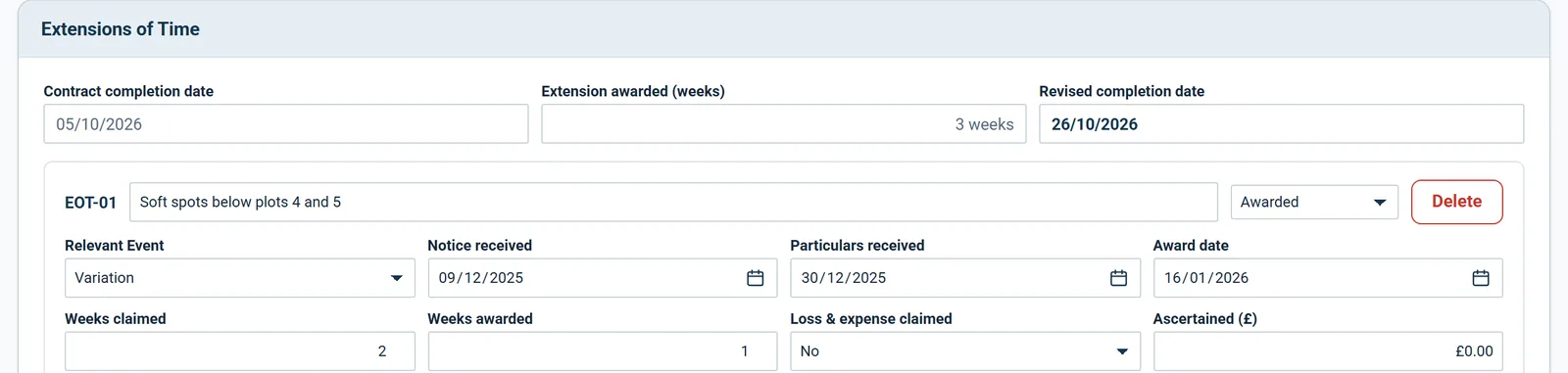
Without the six weeks of extension the works would be eight weeks late. The award reduces the damages the employer can deduct from twenty thousand pounds to five.
The reason an extension matters in money is the completion date it moves.
Damages run against that date, and a week of extension is a week the employer can no longer deduct at the liquidated rate. QScope calculates damages from the completion date after any award, applies any cap, and refuses to let the figure stand while no certificate of non-completion is on the register.
Extensions of time
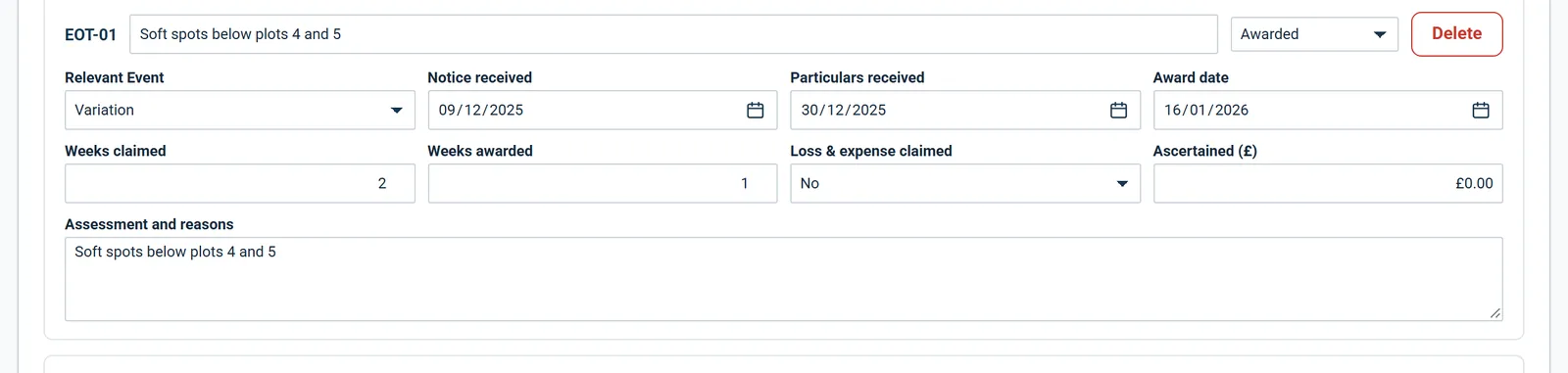
A relevant event under clause 2.29 can carry an extension of time.
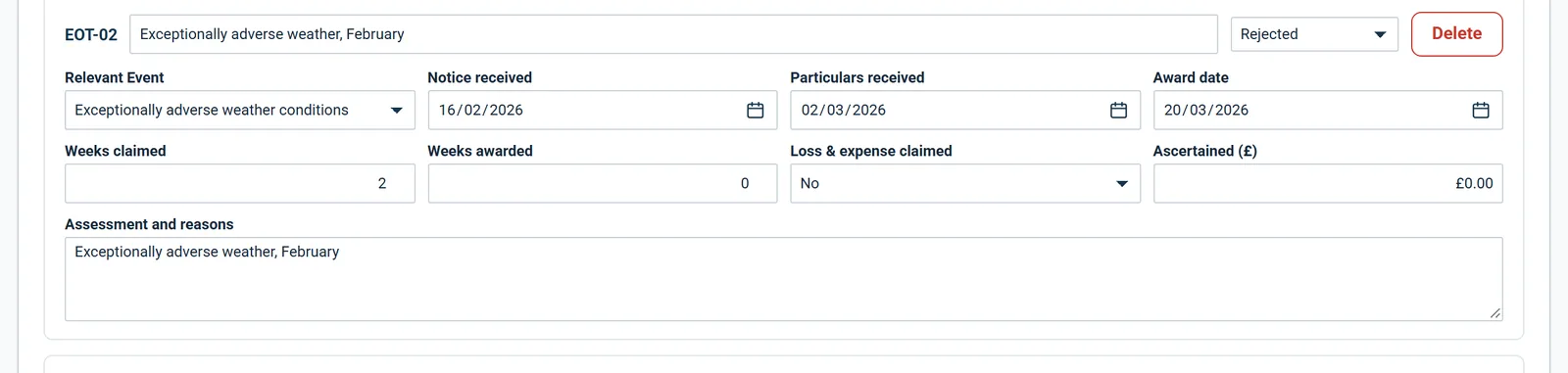
Exceptionally adverse weather is a relevant event under clause 2.29 but not a relevant matter under clause 4.21. It relieves the contractor of damages and carries no money.
Extensions of time
A claim that has been notified but not decided extends nothing.
EOT-02 is claimed at three weeks and has not been decided, so it does not appear in the six weeks applied to the date.
Programme
An extension of time is argued after the event.
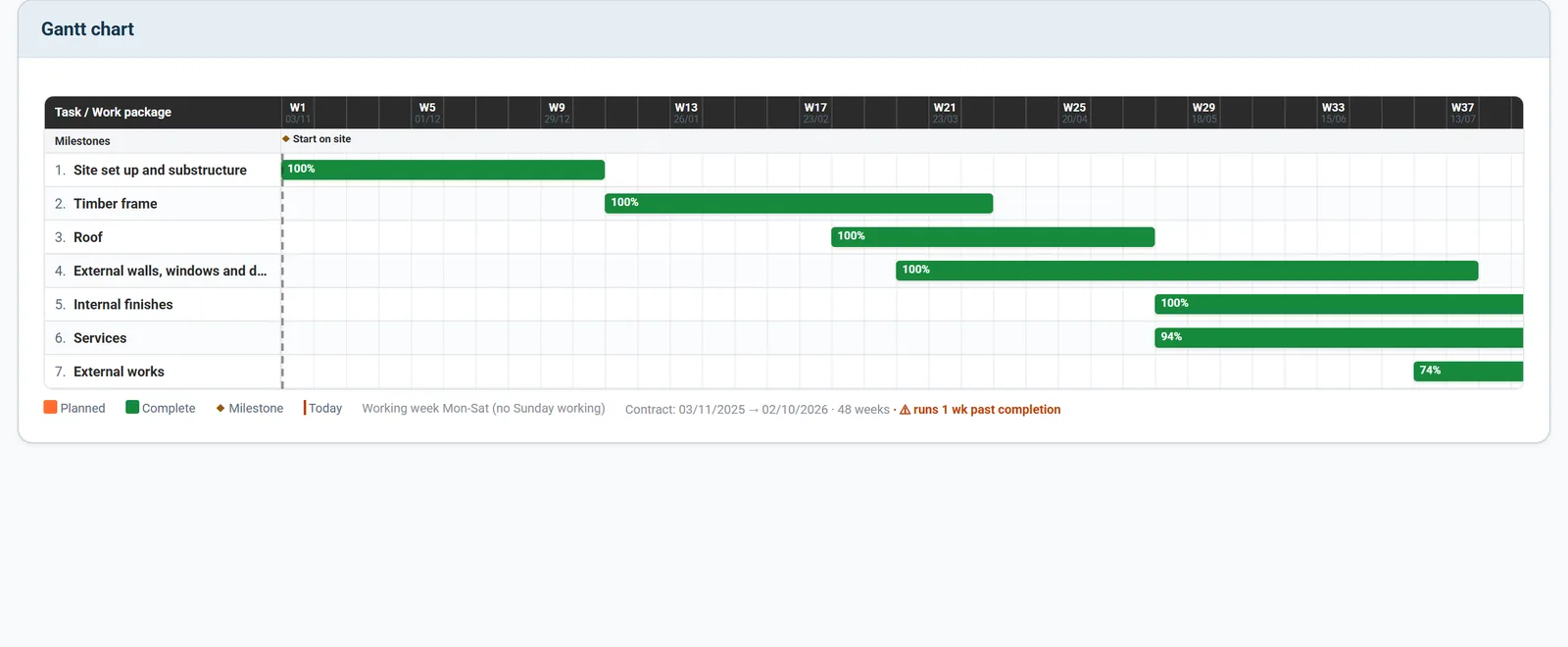
QScope draws the works against the contract period with today marked, so the overrun that supports the claim is a matter of record rather than reconstruction.
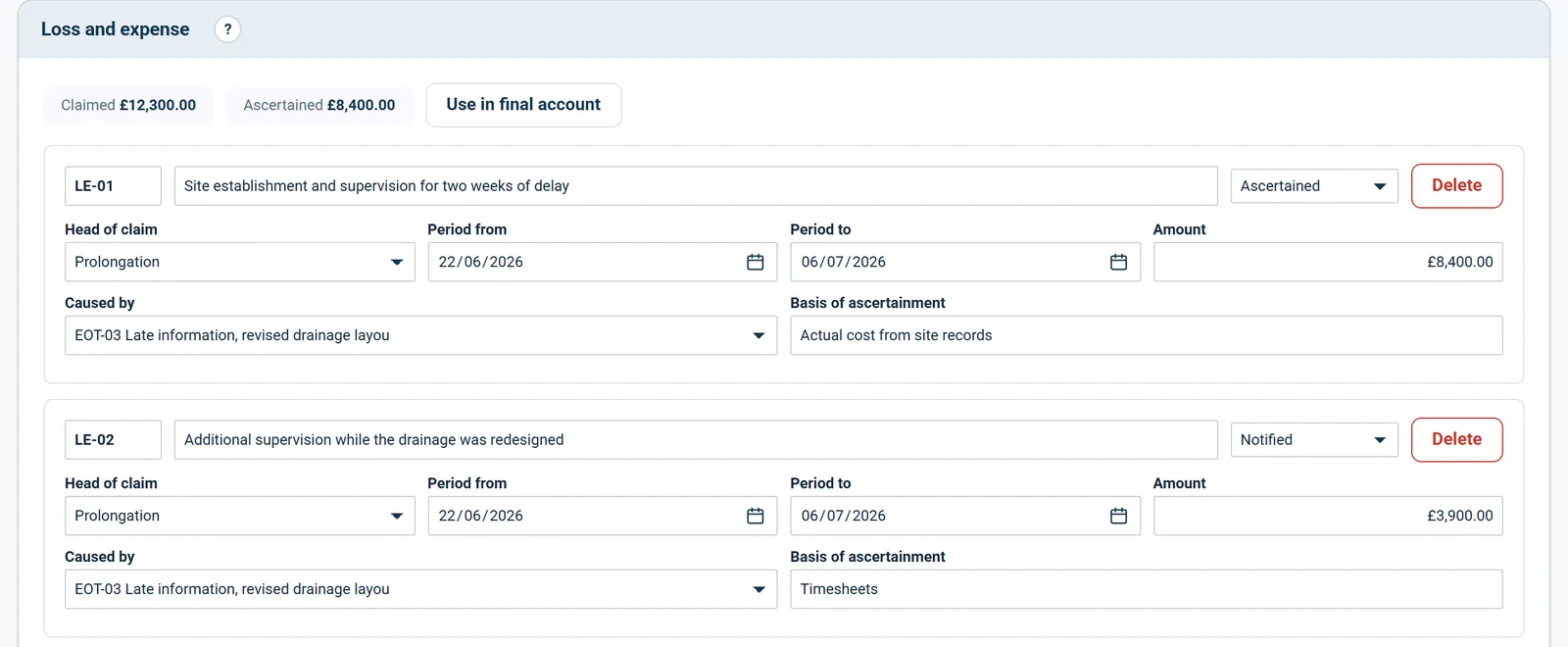
Loss and expense
An extension of time buys relief from liquidated damages.
Exceptionally adverse weather carries time and nothing else. Late information is a relevant matter, so the prolongation arising from EOT-02 can be claimed.
Extensions of time
The JCT relevant event has a FIDIC counterpart.
Notice under Sub-Clause 20.1 is a condition precedent in the 1999 edition. Served on day 21 of 28, the claim survives; served late, the entitlement can be lost whatever the delay. Counting is in calendar days. These are published starting points to verify against the Particular Conditions.
Who it is for
You are applying
You claim the time before damages runYou notice delay, name the relevant event and claim the time before the damages clock does the arguing for you.
Applying for paymentYou are certifying
You award the weeks and stop the clockYou assess the extension from the other chair, and the completion certificate you issue halves retention and stops the damages clock.
Certifying paymentYou are doing both
Your delay is your own money waitingYou run the programme and the money together, and a completion date that slips moves the whole payment tail with it.
Doing both yourselfYou are reporting
A late job is a loan running longYou track completion against the facility term, because a job that finishes late is a loan that runs longer than the model.
Recommending a drawdownThe client, the architect and the tenderer are not on this list. They are the people you let in on a link: they see the one document you sent them, answer it, and that answer is written into the record. No account, no licence, no charge, on every plan.
The questions this page raises most often, answered without a sales pitch at the end.
No, and it should not. The assessment is a judgement made by a named person under the contract. QScope holds the dates, the claim, the award and the reasoning, and does the arithmetic that follows from your decision.
The list follows the JCT standard forms. Where you are working under an amended contract or a different form, the categories still work as a way of classifying the cause, and the clause numbering will differ.
Yes. It carries the FIDIC grounds for an Extension of Time for Completion under Sub-Clause 8.4 alongside the JCT relevant events, logs the notice date, and flags the 28 day condition precedent under Sub-Clause 20.1 in the 1999 edition. Time and cost are pursued together through the claims machinery rather than as a separate loss and expense head, and dates count in calendar days. The figures are published starting points to verify against your Particular Conditions.
It is cancelled and has to be reissued against the new completion date. QScope flags any damages calculation where no valid certificate is on the register.
Yes, and that is the point of linking them. The heads of claim live in the loss and expense register and each one points back at the event that caused it.
From the blog
Three pieces from the same corner of a contract as this page, answered at length and without a sales pitch at the end.
A defect is work that does not match the contract, and half the items on an angry snag list fail that test: they match the contract and not the client’s imagination. How to sort a defects schedule into its four real categories, and answer it without a war.
Read nowThe dividing line is simpler than the clause lists make it look: delay from the client’s side of the fence gives time, delay from yours does not, and neutral events give whatever the contract chose to give. Where weather really sits.
Read nowAlmost certainly yes: the defects period ending did not end your responsibility, it ended a retention mechanism. How long liability really runs, six years on a signed contract, twelve on a deed, and how to respond to the call.
Read nowKeep reading
An award is a number of weeks. What makes it defensible two years later is the sentence explaining how the number was reached, and that sentence is almost never written down.
30 days free, no card.
Rather ask first? Write to help@qscope.co.uk and you will get a reply within one working day, Monday to Friday.